With a multipronged strategy, San Antonio has managed to achieve the nearly impossible - keeping water use flat while accommodating substantial growth - rightfully earning it the title "Water's Most Resourceful City," reports Mose Buchele.


"[B]y dramatically cutting consumption, pioneering new storage techniques
and investing in water recycling and desalination projects," San Antonio has become the envy of cities across America now reeling from a record drought. According to Buchele, "There are so many programs and projects that Chuck Ahrens of Water
Resources and Conservation with the San Antonio Water System can hardly
keep track."
Although Ahrens has a hard time naming them all, "These are the things that have allowed San Antonio to be one of the
fastest-growing cities in the country while not increasing water
consumption," writes Buchele. "In fact, the city still uses about the same amount of water
it did in the early '90s even though it has added more than 300,000
residents."
Read the full story: How A Texas Town Became Water Smart

The Texas Miracle: Looking Beyond the Impressive Growth Numbers
Texas is booming—its growth in people and jobs puts it in a league of its own. But another set of growth data pales by comparison: Infrastructure, particularly in the water and transportation needed to accommodate the growth, is woefully lacking.
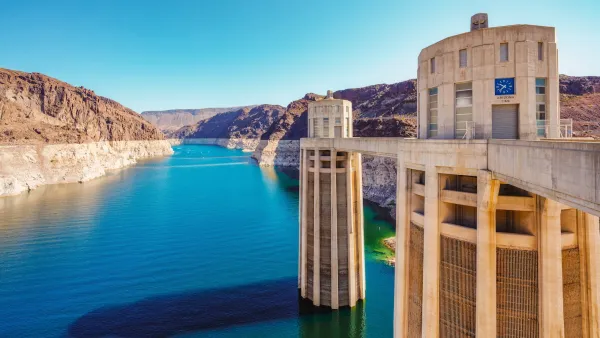
Federal proposal calls for mandatory water cuts to Arizona, California and Nevada
The Bureau of Reclamation stepped in after states failed to come to an agreement over Colorado River water use reductions.
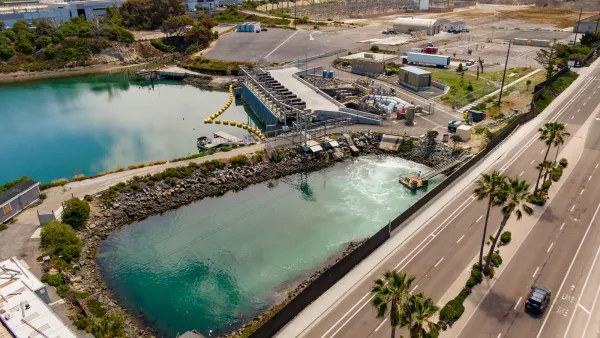
New agreement would let Arizona, Nevada use water from California desalination plant
The plan will help reduce strain on Lake Mead during extreme drought periods.

Planetizen Federal Action Tracker
A weekly monitor of how Trump’s orders and actions are impacting planners and planning in America.

Amtrak, CN end decades-long dispute with eight-year agreement
The new operating agreement establishes an updated framework for the companies to work together, including processes to resolve disputes.

Judges permit Denver to divert 77,000 acre feet from the Colorado River for reservoir expansion
Overuse and climate change have caused the Colorado River’s water levels to plummet.

Maryland local governments examine if they should have more power to raise property taxes
Maryland’s housing market is out of reach for the majority of moderate-income residents.

Northwest rail fans eager for Sept. 30 debut of Amtrak’s Airo fleet
Get ready for that new train smell and more seats. But they won’t go faster or run more frequently on the Cascades route in Washington and Oregon.

NYC DOT wants faster, more permanent street upgrades
The city is examining ways to build more concrete infrastructure without getting entangled in 'decades-long' projects.

FREE Course: Walkable City 1: Why Walkability?
After describing his path towards focusing on walkability as the essence of good planning, Jeff Speck marches through his five principal reasons for making more walkable places.
Reinventing Malls: Planning Alchemy—Turning Gray Fields Into Gold
The course focuses on the opportunities and imperatives that shape reinvention of mall sites.

Harvard University Graduate School of Design
KFH Group Inc.
Greater Baltimore Committee
The Architects Foundation
University of Cincinnati Online
The Pocatello Development Authority
The Urban Renewal Agency of the City of Pocatello