Edward Jensen responds to a recent attention grabbing op-ed in The Arizona Republic with his own list of priorities to help enliven the core of the sixth-largest city in the country.


Jensen takes issue with a recent op-ed by Steven Beschloss lamenting the lack of "creative urban energy" in downtown Phoenix, and his focus on the need to attract "a solid core of college grads" to drive a "creative dynamism."
Jensen, instead, focuses on four primary elements (shade, connection, grocery, and density) that he believes should build on each other as the basis for creating a dynamic, active, livable downtown.
Although Jensen critiques Beschloss's recommendations as generic and "something that downtown inherently cannot solve," we would argue that the creative dynamism sought by Beschloss and the livable environment sought by Jensen are not mutually exclusive, but are connected ingredients for creating the type of lively downtown that both seek. In fact, the physical environment described by Jensen is essential to attracting and growing such a culture.
We'll be paying attention, and hope you will to, as Jensen details his recommendations over the next month.
Read the full story: Priorities for Downtown Phoenix
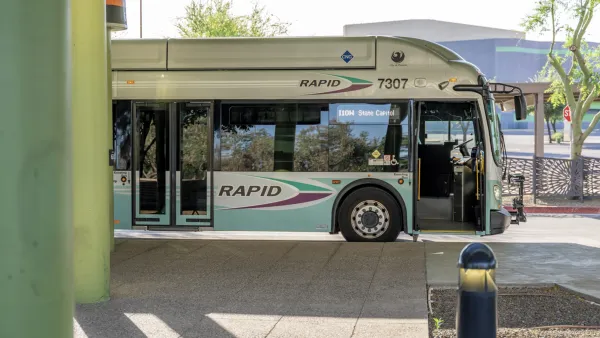
Phoenix announces new on-demand transit service, more frequent RAPID buses
Both new services will launch in October, and are part of Phoenix's Project Effective Access Solutions for Easing Congestion.
Phoenix cuts transit fares for low-income riders, tables fare-free days
The city council tabled discussions of four free transit days until it could do more research on the economic impact.
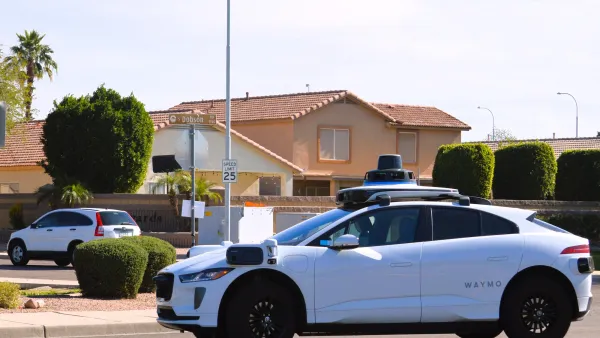
Uber and Waymo part ways in Phoenix
The companies ended a three-year pilot program, with Waymo saying it plans to keep its Phoenix robotaxi fleet available through its own app.

Planetizen Federal Action Tracker
A weekly monitor of how Trump’s orders and actions are impacting planners and planning in America.

Eastern Nebraska is running out of electricity
Data centers and electrification are straining eastern Nebraska’s grid, throttling economic development.

Study reveals best places in the U.S. for cycling, walking
New research from Streetlight Data examines bicycle and pedestrian miles per capita in the 100 largest U.S. cities by population.

DSA members accuse Mamdani of 'abandoning values' over housing redevelopment
New York City's mayor plans to replace about 2,000 units of public housing with private, mixed-income housing.

All sides of BRT debate unhappy with CDOT’s most recent move
The Colorado Department of Transportation is no longer considering center-running bus lanes for Colorado Boulevard.

Massachusetts bogs generate both power, and cranberries
Putting solar panels above farmland is one way Massachusetts is advancing toward its goal of net-zero carbon emissions by 2050.

FREE Course: Walkable City 1: Why Walkability?
After describing his path towards focusing on walkability as the essence of good planning, Jeff Speck marches through his five principal reasons for making more walkable places.
Reinventing Malls: Planning Alchemy—Turning Gray Fields Into Gold
The course focuses on the opportunities and imperatives that shape reinvention of mall sites.

City of Rosemead
Rutgers University, Edward J. Bloustein School of Planning and Public Policy
One Hundred Miles
University of Michigan School for Environment and Sustainability (SEAS)
Hunter College, City University of New York (CUNY)
The Architects Foundation
City of Cambridge
The Pocatello Development Authority
The Urban Renewal Agency of the City of Pocatello