Following on historic new powers granted recently to cities across England, RIBA and ResPublica have published a new paper arguing for greater collaboration with local communities in neighborhood planning, writes Irina Vinnitskaya.


The new report, "Re-thinking Neighbourhood Planning: From consultation to collaboration" [PDF], authored by the Royal Institute of British Architects (RIBA) and ResPublica, an independent, non-partisan UK think tank, responds to the "dramatic power shift" initiated by the recent passage of the Localism Act, "which transfers
power away from big government to local authorities and communities."
According to Vinnitskaya, "The paper...discusses the value of 'real community-led planning' in which
professionals, developers, local authorities and communities create
partnerships in preparation for planning and design work. The report
supports community engagement and outreach, investing in the belief that
partnerships and collaboration will bring trust and understanding to
the relationship between planners and the communities that their
policies affect."
The paper discusses the benefits of community collaboration and suggests methods by which to encourage such participation.
"In order to emphasize the possibilities of the Localism Act, the paper
suggest two ways in which Neighborhood Planning can be taken to the next
level:'A Community Right to General Assets' and 'A Community Right to
Invest in Real Estate', both of which suggest ways in which people
within a community can become part of the investing and decision-making
body."
Read the full story: RIBA Rethinks Neighborhood Planning

Montana Land Use Reform Overhauls Public Participation Rules
In a bid to streamline housing permits, new state legislation limits public input to the land use planning stage.
The Slow Streets Reckoning
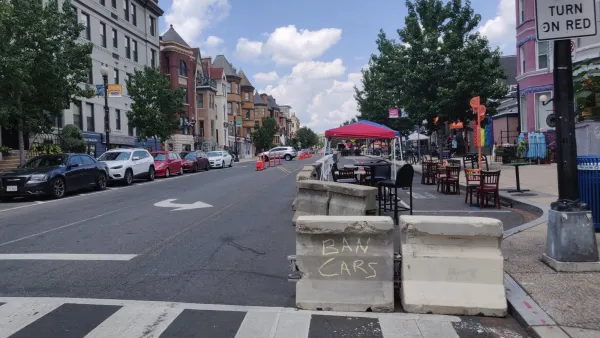
Slow streets programs provided a quick short-term solution and paved the way for some permanent street closures and realignments. Now, these programs are getting a second look as community groups react to the changes.
Pandemic Planning Must Reconcile With the Inequities of the Past
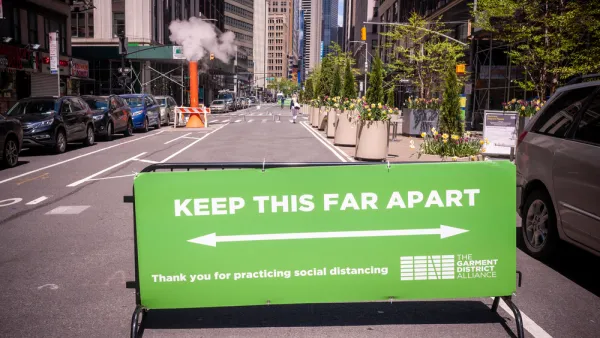
The ongoing debate about the role of marginalized communities in the emergency planning programs of the pandemic has now been detailed on the pages of the New York Times.

Planetizen Federal Action Tracker
A weekly monitor of how Trump’s orders and actions are impacting planners and planning in America.

California plans to bury El Niño’s downpour
If the state plays its cards right, it may be able to store a billion acre-feet of El Niño’s water in aquifers.

Desperate measures: Advocates weigh draining Lake Powell to fill Colorado River
Draining the reservoir could reduce evaporation losses by a couple hundred thousand acre-feet.

In Texas, data centers are swallowing promised parkland
Residents who moved to Taylor, Texas for a rural community now have to contend with three data centers in their backyard.

How a Chicago-sized wind farm beat the odds and powered on
The project spanned five presidential administrations and a standoff with a U.S. military base.

MTA gives itself 30 days to transform pit into basketball court
The site has been under construction since 2022; the city originally estimated it would finish the court in 2024.

FREE Course: Walkable City 1: Why Walkability?
After describing his path towards focusing on walkability as the essence of good planning, Jeff Speck marches through his five principal reasons for making more walkable places.
Reinventing Malls: Planning Alchemy—Turning Gray Fields Into Gold
The course focuses on the opportunities and imperatives that shape reinvention of mall sites.

City of Rosemead
Rutgers University, Edward J. Bloustein School of Planning and Public Policy
One Hundred Miles
Hunter College, City University of New York (CUNY)
The Architects Foundation
University of Cincinnati Online
City of Cambridge
Montrose County
The Pocatello Development Authority