James Howard Kunstler has a new book, which goes deeper into an idea he's often explored: that the U.S. has a misguided sense that new technologies will save the American lifestyle.


Josh O'Conner talks to Kunstler about the new book. Kunstler says that the trend towards living in cities and away from suburbs will continue, because the suburbs will collapse, but he thinks cities will be radically different in shape in the future:
"Our giant, "metroplex" cities are not scaled to the resource realities of the future either. They're too big. They will have to contract substantially around their old cores and waterfronts (if they are fortunate enough go have them). The process will be painful and disorderly and will involve a massive loss of notional wealth."
Kunstler, who has always been a proponent of New Urbanism and a frequent CNU presenter, takes a new pessimistic tone towards the practice:
"The projects the New Urbanists actually built were secondary to that rescue of culture, though some are great achievement on their own. Anyway, the New urbanism must be viewed as a transitional movement between the old template and the new requirement to return to traditional modes of inhabiting the landscape."
Read the full story: Interview with James Howard Kunstler – Author and Urbanist Critic


Amtrak, CN end decades-long dispute with eight-year agreement
The new operating agreement establishes an updated framework for the companies to work together, including processes to resolve disputes.

Judges permit Denver to divert 77,000 acre feet from the Colorado River for reservoir expansion
Overuse and climate change have caused the Colorado River’s water levels to plummet.
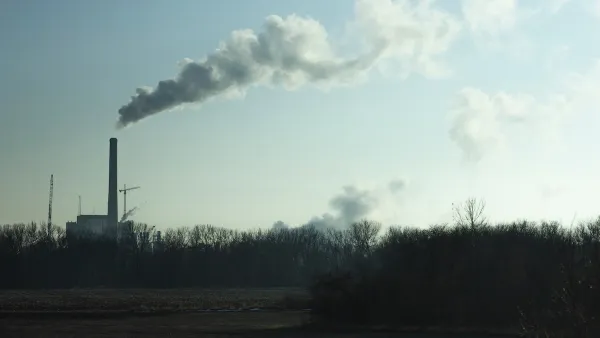
Nation's most wind-powered state turns to coal as data centers increase energy demand
For the first time in decades, Iowa has increased its generation of coal power.

Boston has spent millions making the Green Line more accessible — and there’s no end in sight
While the city has invested millions into expanding and adding platforms to the Green Line to make it more accessible, new train cars set to arrive next year will be too tall for disabled passengers to board without raising the current platforms.

Idaho may see an 18% drop in federal surface transit funding — the largest estimated cut in the US
Transit systems in rural communities are much more reliant on federal funding to provide their services.

How ‘post-disaster gentrification’ alters neighborhoods after natural calamities
After hurricanes, fires or other calamities, the original residents of a community are often replaced by younger, wealthier residents.

FREE Course: Walkable City 1: Why Walkability?
After describing his path towards focusing on walkability as the essence of good planning, Jeff Speck marches through his five principal reasons for making more walkable places.
Reinventing Malls: Planning Alchemy—Turning Gray Fields Into Gold
The course focuses on the opportunities and imperatives that shape reinvention of mall sites.

City of Wisconsin Rapids
Harvard University Graduate School of Design
KFH Group Inc.
The Architects Foundation
University of Cincinnati Online
The Pocatello Development Authority
The Urban Renewal Agency of the City of Pocatello