Mike Lydon discusses "tactical urbanism," a DIY approach to planning that is sweeping the nation, and explains how communities are making lasting impacts at the grassroots level.


Brandon Klayko sat down for an interview with Mike Lydon, the author of Tactical Urbanism, Volume 2, and one of the champions of the movement that's bringing planning to the people.
Lydon explains how he first became interested in tactical urbanism in 2010, claiming that he "began noticing a lot of little things happening that were, in a lot of ways, self-funded or self-organized but having a big, longer-term impact." These grassroots approaches to urban planning, he quickly realized, were happening all over the country. Dallas' Build a Better Block holds weekend events where they perform street reclamation mock-ups, while New York's overnight public plazas became an instant success.
"What's difficult about the traditional planning process is that it's behind closed doors. It can be intimidating for people to get involved, but if you're experimenting with change in real time on the street, on your block, or on your sidewalk, people get a real understanding of what that means," states Lydon. This understanding has lead to an open dialogue which has quickly moved online, where blogs and other online resources are abounding that describe the various approaches communities all over the country are employing to reshape their streets and neighborhoods.
Read the full story: Talking Tactical Urbanism


Minneapolis Activists Use DIY Traffic Circles to Identify, Slow ICE
Residents are using the pop-up roundabouts to slow traffic and make their presence known on Minneapolis streets.
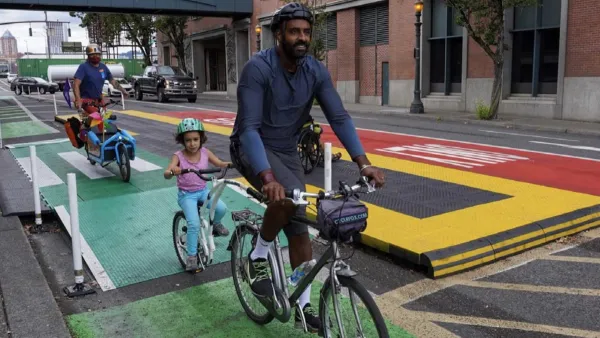
Portland Launches Tool for DIY Community Road Safety Interventions
A set of resources offers safety data and guidance for putting low-cost, quick-build interventions into action.
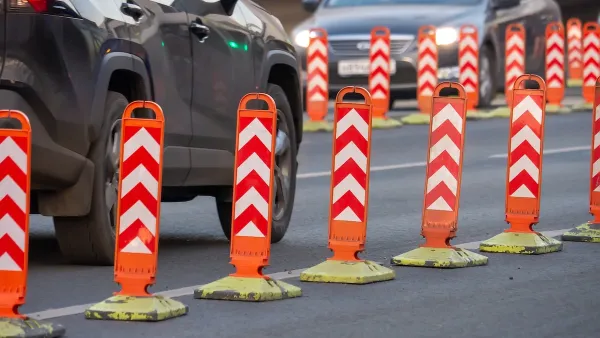
Indianapolis Encourages Tactical Urbanism With Lending Library, Grant Program
Residents can apply to receive assistance with traffic calming projects that can provide valuable data and lead to permanent changes.

Planetizen Federal Action Tracker
A weekly monitor of how Trump’s orders and actions are impacting planners and planning in America.

Chicago breaks ground on $3 billion megadevelopment
The new neighborhood, titled Foundry Park, will one day host 3,700 residences.

This MA town is drowning in its own sewage — and residents like it that way
Susan Murcott, a waste water expert, said if Carlisle didn't address their leaking sewage, the problem could turn “deadly.”

Iowa taxpayers are paying thousands to clean manure out of their water
While the Clean Water Act makes states responsible for regulating factory farms that discharge pollutants, Iowa has turned a blind eye to the polluting farms.

Amtrak cuts ribbon on Seattle Airo maintenance facility
The $250 million, nearly 100,000-square-foot building can house an entire Cascades Airo trainset.

To power data centers, Google seeks autonomous control of thousands of homes’ electricity
The tech company has signed a deal to indirectly pay Mid-Atlantic residents to reduce their power demand when the grid is strained.

FREE Course: Walkable City 1: Why Walkability?
After describing his path towards focusing on walkability as the essence of good planning, Jeff Speck marches through his five principal reasons for making more walkable places.
Reinventing Malls: Planning Alchemy—Turning Gray Fields Into Gold
The course focuses on the opportunities and imperatives that shape reinvention of mall sites.

City of Rosemead
Rutgers University, Edward J. Bloustein School of Planning and Public Policy
One Hundred Miles
The Architects Foundation
University of Cincinnati Online
Montrose County
The Pocatello Development Authority
The Urban Renewal Agency of the City of Pocatello