A new paper by a group of international scientists warns that the planet may be at the tipping point of causing a rapid irreversible transition to a "state unknown in human experience," reports Bettina Boxall


In the paper published this week in the journal Nature, "A group of international scientists is sounding a global alarm, warning that population growth, climate change and environmental destruction are pushing Earth toward calamitous - and irreversible - biological changes," notes Boxall.
Equating human-caused impacts on the environment to mass extinctions of the past, the researchers warn that, "The net effects of what we're causing could actually be equivalent to an asteroid striking the Earth in a worst-case scenario," the paper's lead author, Anthony Barnosky, a professor of integrative biology at UC Berkeley, said in an interview. "I don't want to sound like Armageddon. I think the point to be made is that if we just ignore all the warning signs of how we're changing the Earth, the scenario of losses of biodiversity - 75% or more - is not an outlandish scenario at all."
"To avert a grim future, or at least make it less grim, the paper calls for significant reductions in world population growth and per-capita resource use, more efficient energy use, less reliance on fossil fuels and stepped-up efforts to protect the parts of Earth that have so far escaped human dominance."
Read the full story: Earth may be near tipping point, scientists warn

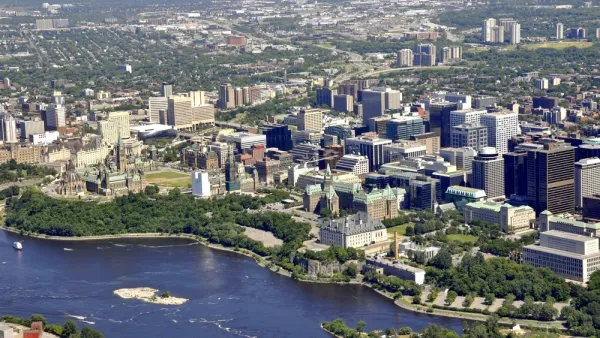
Ottawa’s New Transportation Master Plan Sets 20-Year Planning Priorities
Canada’s capital city recently completed the first step toward adopting a new Transportation Master Plan.

Shrinking Great Salt Lake Is a Ticking Time Bomb
Climate change and population growth are shrinking the Great Salt Lake. The environmental consequences are dire.
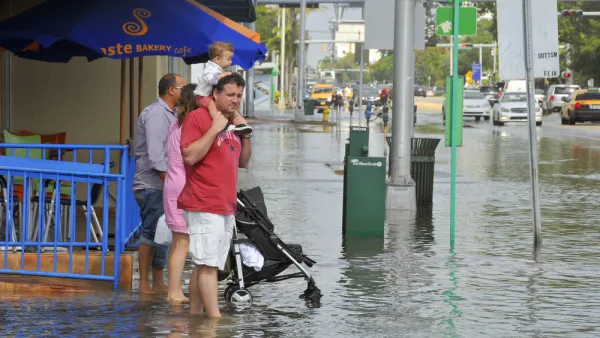
Americans Are Moving Toward Climate Risk
More Americans are ignoring the realities of climate change emigrating—even as more and more climate refugees flee the damage.

Planetizen Federal Action Tracker
A weekly monitor of how Trump’s orders and actions are impacting planners and planning in America.

‘Going backwards:’ Baltimore mayor, students rally against state's transit funding plan
Maryland's proposed six-year plan provides no funding for Baltimore’s BMORE bus program and reduces its road maintenance funding.

Detroit to transform waterfront with $2.2 billion investment
Developers will convert about 18 acres of unused parking lot space into civic spaces.

Battered from federal attacks, Louisiana's offshore wind industry refuses to give up
State Representative Joe Orgeron expressed hope that the state could revitalize its wind industry once President Trump leaves office.

Data center developers are using lawsuits, cash offers to ‘overwhelm’ rural America
Newsrooms in five states worked together to uncover the tactics big tech developers use to buy land from reluctant communities.

U.S.-Iran war may have ‘devastating’ impact on cost to warm homes
Vermont and Maine residents may see a 76% increase in the cost of warming their homes this winter.

FREE Course: Walkable City 1: Why Walkability?
After describing his path towards focusing on walkability as the essence of good planning, Jeff Speck marches through his five principal reasons for making more walkable places.
Reinventing Malls: Planning Alchemy—Turning Gray Fields Into Gold
The course focuses on the opportunities and imperatives that shape reinvention of mall sites.

One Hundred Miles
County of Mendocino
planning NEXT
The Architects Foundation
University of Cincinnati Online
Montrose County
Northern Illinois Transit Authority (NITA)
The Pocatello Development Authority