Tom Stoelker summarizes the tenor of a flurry of bills introduced this week at a City Council hearing that seek to revamp the way business gets done at the Landmarks Preservation Commission.


Eleven bills in all were introduced that take aim at significantly changing the procedures of the Commission, which when taken together, "will effectively hollow out the Landmarks Law from the inside out," testified Preservationist Theodore Grunewald.
At the heart of the showdown is the adversarial relationship between developers and preservationists, specifically around the perceived economic benefits of preservation versus redevelopment, as they gird for a fight over Midtown upzoning and Park Avenue.
And it's one particular bill that has preservationists up in arms. "According to Intro Bill Number 846, new guidelines would require City Planning to review Landmark Commission designations in economic terms to 'analyze the impact of the designation' and 'specifically consider the relationship between the development potential of all properties affected by the designation, both public and private.' The bill would provide City Council a rationale by which to deny landmark designations by pitting long-term planning goals against individual or district landmarking," writes Stoelker.
Read the full story: Battle Landmarkia
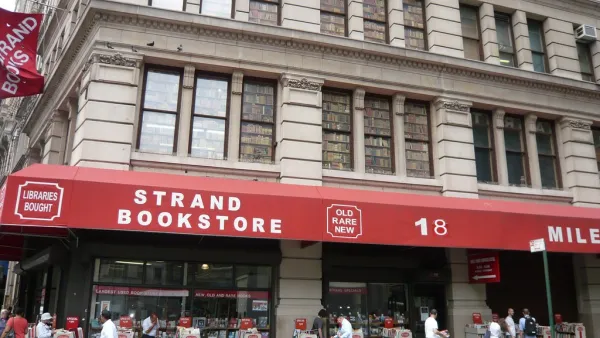
Gentrification Enters Preservation Debate Surrounding NYC's Strand Bookstore
The Renaissance Revival building that houses New York City's beloved Strand Bookstore is under consideration by the city's Landmarks Preservation Commission. The case has provoked debate between rival advocates.
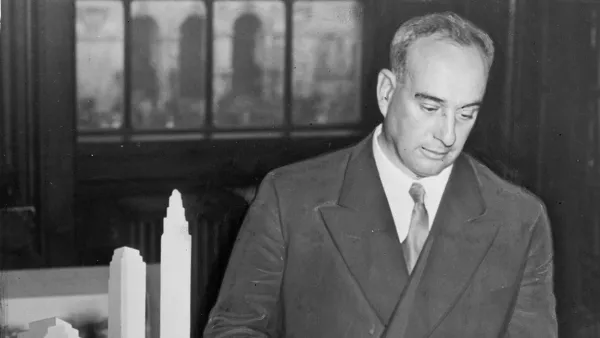
The Robert Moses Nexus to Amazon's Cancellation of Queens HQ2
Last week, Amazon abruptly canceled its decision to invest about $2.5 billion and bring 25,000 high-paying jobs to Queens. A scholar blames their abrupt decision on an arcane state bureaucracy tasked with preventing Robert Moses-like takings.
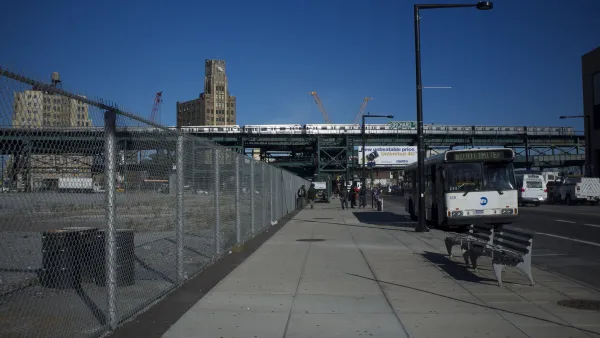
Iconic Queens Clock Tower Anchors 915-Foot Skyscraper
In a complex saga involving the MTA, an 88-year-old tower, and a planned 77-story apartment behemoth, affordable housing may be first to fall by the wayside.

Planetizen Federal Action Tracker
A weekly monitor of how Trump’s orders and actions are impacting planners and planning in America.

California plans to bury El Niño’s downpour
If the state plays its cards right, it may be able to store a billion acre-feet of El Niño’s water in aquifers.

Desperate measures: Advocates weigh draining Lake Powell to fill Colorado River
Draining the reservoir could reduce evaporation losses by a couple hundred thousand acre-feet.

In Texas, data centers are swallowing promised parkland
Residents who moved to Taylor, Texas for a rural community now have to contend with three data centers in their backyard.

How a Chicago-sized wind farm beat the odds and powered on
The project spanned five presidential administrations and a standoff with a U.S. military base.

MTA gives itself 30 days to transform pit into basketball court
The site has been under construction since 2022; the city originally estimated it would finish the court in 2024.

FREE Course: Walkable City 1: Why Walkability?
After describing his path towards focusing on walkability as the essence of good planning, Jeff Speck marches through his five principal reasons for making more walkable places.
Reinventing Malls: Planning Alchemy—Turning Gray Fields Into Gold
The course focuses on the opportunities and imperatives that shape reinvention of mall sites.

City of Rosemead
Rutgers University, Edward J. Bloustein School of Planning and Public Policy
One Hundred Miles
Hunter College, City University of New York (CUNY)
The Architects Foundation
University of Cincinnati Online
City of Cambridge
Montrose County
The Pocatello Development Authority