Mary E. Morrison reports on a precipitous drop in the percentage of renters leasing parking spaces in new downtown Chicago residential buildings, causing developers to rethink the way they build and market their buildings.


The general drop in parking space demand has been observed by developers for the past decade, but has increased markedly over the past three years. According to Morrison, "It's unclear if the drop in demand for parking spots, which can cost $200 to $300 a month at downtown apartment buildings, reflects a lasting change in lifestyle or a temporary response to the economic downturn-or both."
One developer notes a demand for spaces by only 40% of renters, seemingly well below the range of 0.55 to one space per unit required by the city's zoning code.
While not all buildings have seen a decline, and condos seem immune, developers are adding amenities for car-free tenants nonetheless. Such amenities include Zipcar rentals, bike-sharing services, larger and more accessible bike rooms, and higher ratios of bike stalls.
Read the full story: Parking demand declines at new buildings

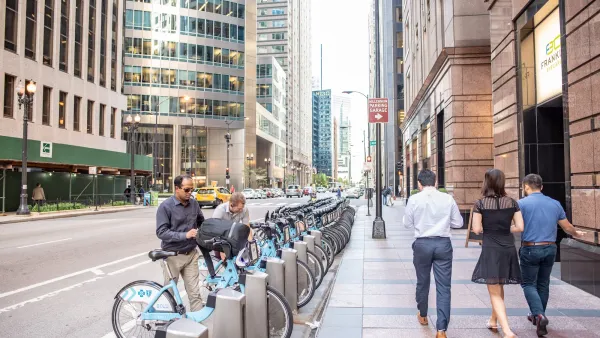
Chicago to Add or Upgrade 200 Bike Share Stations
The Divvy bike share system saw its highest ridership ever in 2025 with 6.8 million trips.
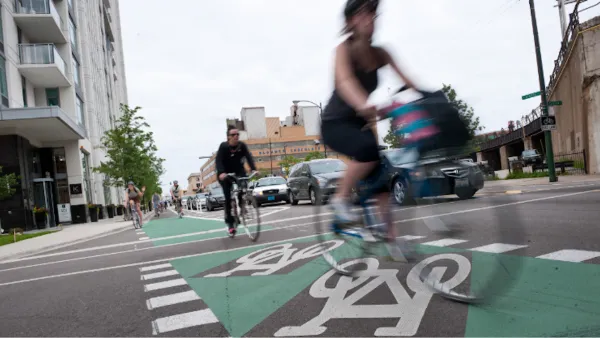
Growing up Car-Free in Chicago
One Chicago youth recounts their experience growing up in a car-free household.

Chicago Tenants’ Union Distributes AC Units to Low-Income Renters
The group wants to draw attention to the dangers of extreme heat and encourage tenants to organize to demand improved conditions.

Planetizen Federal Action Tracker
A weekly monitor of how Trump’s orders and actions are impacting planners and planning in America.

‘Going backwards:’ Baltimore mayor, students rally against state's transit funding plan
Maryland's proposed six-year plan provides no funding for Baltimore’s BMORE bus program and reduces its road maintenance funding.

Detroit to transform waterfront with $2.2 billion investment
Developers will convert about 18 acres of unused parking lot space into civic spaces.

Minnesota seeks to replace fraud-ridden Housing Stabilization Services with new program
Federal prosecutors have charged over a dozen people in fraud cases involving at least $26 million.

A multi-billion dollar problem is brewing under Oakland’s streets
Oakland’s stormwater drainage systems are in desperate need of upgrades and repairs. The El Niño will only further strain the city’s infrastructure.

$2 trillion in economic growth may hide in ‘micropolitan communities’
Small cities hold 39% of America’s population, but receive only 10% of U.S. venture capital investment.

FREE Course: Walkable City 1: Why Walkability?
After describing his path towards focusing on walkability as the essence of good planning, Jeff Speck marches through his five principal reasons for making more walkable places.
Reinventing Malls: Planning Alchemy—Turning Gray Fields Into Gold
The course focuses on the opportunities and imperatives that shape reinvention of mall sites.

One Hundred Miles
County of Mendocino
planning NEXT
The Architects Foundation
University of Cincinnati Online
Montrose County
Northern Illinois Transit Authority (NITA)
The Pocatello Development Authority