The National Low Income Housing Coalition has recently released a map showing their state-by-state findings on housing affordability. And, in no state was a 40-hour work week at minimum wage enough to pay for a two-bedroom unit at Fair Market Rent.


Suzy Khimm shares the distressing results of the NLIHC study, which looked at affordability in every state based on Fair Market Rent, "the government's measure for the monthly cost of a "modest, non luxury rental unit" in a specific area, plus utilities," in a piece for The Washington Post.
"Nationally, the NLIHC calculates that a household needs to earn $37,960 in 2012 to afford a two-bedroom unit at the national average Fair Market Rate of $949 a month. By comparison, someone earning the current federal minimum wage, working 40 hours a week, earns only $15,080 a year."
As rents rise, government assistance falls, and wages continue to stagnate nationwide, the affordable housing crisis is likely to get worse before it gets better.
Read the full story: Why affordable housing is a myth, in one chart

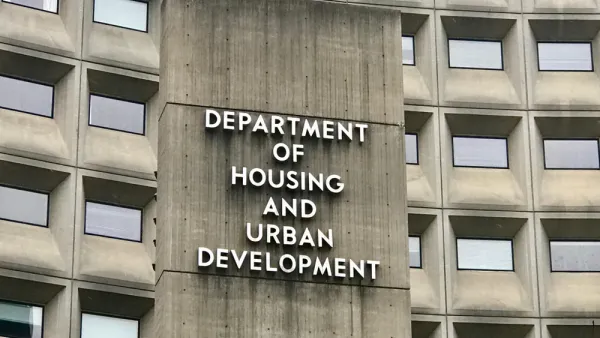
HUD Updates Fair Market Rate Definition
The U.S. Department of Housing and Urban Development announced two actions last week intended to expand the reach of federal housing voucher programs.

Report: Housing Affordability a Problem in Almost All U.S. Counties
The ‘housing wage’ needed to afford housing in most communities is well above minimum wage.

Report Calls for ‘Sustained and Significant’ Investments in Affordable Housing
The National Low Income Housing Coalition’s annual report highlights the shortage of affordable and available housing units for low-income households.

Planetizen Federal Action Tracker
A weekly monitor of how Trump’s orders and actions are impacting planners and planning in America.

‘Going backwards:’ Baltimore mayor, students rally against state's transit funding plan
Maryland's proposed six-year plan provides no funding for Baltimore’s BMORE bus program and reduces its road maintenance funding.

Detroit to transform waterfront with $2.2 billion investment
Developers will convert about 18 acres of unused parking lot space into civic spaces.

Less housing, wasted money: study reveals impact of city parking mandates
The study found that 71% of carless households in the United States pay for a parking space they don’t use.

Minnesota seeks to replace fraud-ridden Housing Stabilization Services with new program
Federal prosecutors have charged over a dozen people in fraud cases involving at least $26 million.

A multi-billion dollar problem is brewing under Oakland’s streets
Oakland’s stormwater drainage systems are in desperate need of upgrades and repairs. The El Niño will only further strain the city’s infrastructure.

FREE Course: Walkable City 1: Why Walkability?
After describing his path towards focusing on walkability as the essence of good planning, Jeff Speck marches through his five principal reasons for making more walkable places.
Reinventing Malls: Planning Alchemy—Turning Gray Fields Into Gold
The course focuses on the opportunities and imperatives that shape reinvention of mall sites.

One Hundred Miles
County of Mendocino
planning NEXT
The Architects Foundation
University of Cincinnati Online
Montrose County
Northern Illinois Transit Authority (NITA)
The Pocatello Development Authority