Yesterday James Corner Field Operations and Diller Scofidio + Renfro unveiled their designs for the third and final phase of the High Line, and The Architect's Newspaper has a plethora of tantalizing renderings.


Construction of the final phase of the High Line, which wraps around Hudson Yards from 30th to 34th streets, is scheduled to be completed by the end of 2013, with a full public opening in spring 2014, reports Tom Stoelker. With the massive Hudson Yards development being developed by a single entity, the Related Companies, "Section 3 will be intimately integrated with one major developer, as opposed to a variety of property owners and stakeholders....Much of the new section will be built cheek to jowl with Related's construction," notes Stoelker.
In "related" news, the developer has selected Diller Scofidio + Renfro to design the first residential building at Hudson Yards. According to The Real Deal, "The building would rise to 800 feet at the northeast corner of Eleventh Avenue and 30th Street with about 700 units."
Read the full story: Design for Final Segment of High Line Revealed!
Critic's Review: Third Phase of the High Line
New York Times Architecture Critic Michael Kimmelman reviews the third phase of the High Line, which opened September 21, 2014.
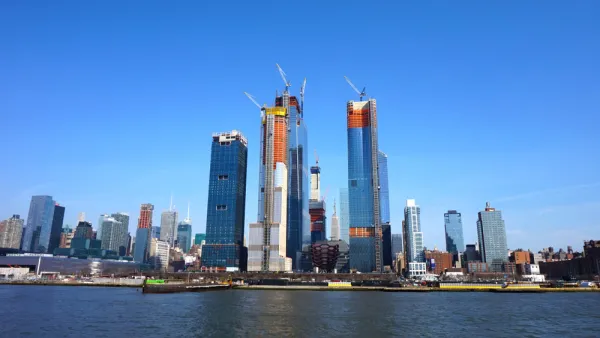
How Mega-Project Financing Tools Gerrymander Distressed Communities
The developers of Hudson Yards received $1.2 billion in financing from the EB-5 program, all made possible by a map that gerrymandered the project into the same neighborhood as Harlem public housing.
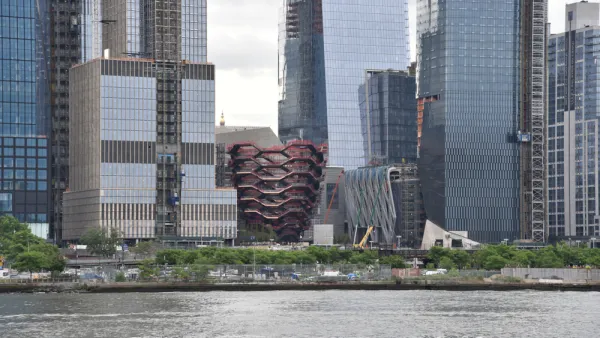
Promised Data-Driven Infrastructure On Hold at Hudson Yards
When the Manhattan megadevelopment got its start, big data was a major part of Hudson Yards' marketing pitch. Now it's "probably the last thing we'll get to."

Planetizen Federal Action Tracker
A weekly monitor of how Trump’s orders and actions are impacting planners and planning in America.

California plans to bury El Niño’s downpour
If the state plays its cards right, it may be able to store a billion acre-feet of El Niño’s water in aquifers.

Desperate measures: Advocates weigh draining Lake Powell to fill Colorado River
Draining the reservoir could reduce evaporation losses by a couple hundred thousand acre-feet.

Chicago voters approve permanent festival grounds, penalty for vacant property owners
Currently, major summer and fall festivals take over public parks for weeks at a time, drawing criticism from nearby residents

NYC votes to cut outdoor dining red tape, speed up permitting
New York City also voted to allow the Department of Transportation to begin work on urgent projects before notifying elected officials.

California appears to reject Prop. 45
The proposition would have expanded the projects that qualify for a streamlined environmental review, effectively paring down the California Environmental Quality Act.

FREE Course: Walkable City 1: Why Walkability?
After describing his path towards focusing on walkability as the essence of good planning, Jeff Speck marches through his five principal reasons for making more walkable places.
Reinventing Malls: Planning Alchemy—Turning Gray Fields Into Gold
The course focuses on the opportunities and imperatives that shape reinvention of mall sites.

City of Rosemead
Rutgers University, Edward J. Bloustein School of Planning and Public Policy
One Hundred Miles
Hunter College, City University of New York (CUNY)
The Architects Foundation
University of Cincinnati Online
City of Cambridge
Montrose County
The Pocatello Development Authority