David Alpert tamps down the recent enthusiasm for the coming age of the self-driving car by asking what its impact will be on pedestrians and street life.


Reacting to a recent story by Emily Badger on the expected efficiencies to be gained by the automation of driving, and a thrillingly elegant simulation of free-flowing traffic at a signal-less intersection, Alpert frets for the pedestrian. Where in that elegant symphony of 24 lanes of seamless traffic is someone supposed to cross the street, or enjoy a stroll?
"Driverless cars, therefore, are poised to trigger a whole new round of pressure to further redesign intersections for the throughput of vehicles above all else..." laments Alpert, "If autonomous cars travel much faster than today's cars and operate closer to other vehicles and obstacles, as we see in the Texas team's simulation, then they may well kill more pedestrians."
While excited about the potential benefits of driverless cars, Alpert anxiously wonders about the dividend for all those liberated from driving.
Read the full story: Why Driverless Cars Will Increase Tensions in Cities and Suburbs Alike
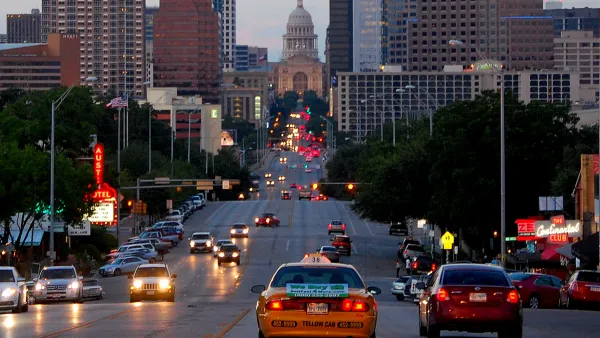
'Texas' Main Street' gets a multimodal glow-up
Congress Avenue in Austin is undergoing a major renovation to receive bike lanes and upgraded pedestrian infrastructure.
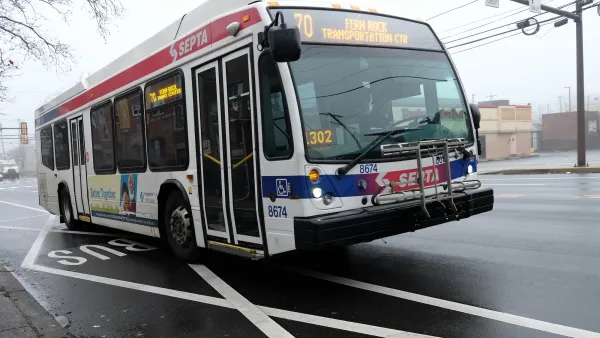
Pennsylvania lawmaker wants to ban fully self-driving buses
State Rep. Ben Waxman's proposed bill would require autonomous buses to have a licensed driver on board.
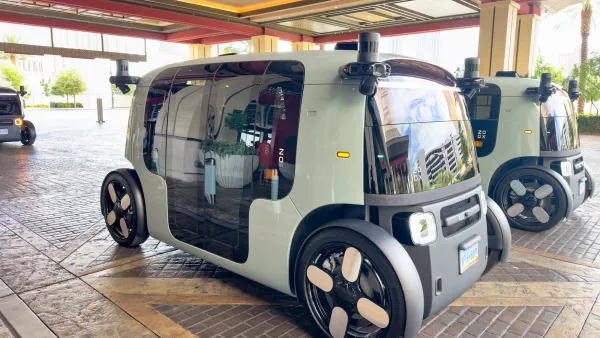
Amazon's steering wheel- and brake pedal-less Zoox robotaxis receive nation's first go-ahead for paid public rides
The NHTSA is giving a temporary permit to some autonomous cars that don't meet current safety standards as it develops a new framework for self-driving vehicles.

Planetizen Federal Action Tracker
A weekly monitor of how Trump’s orders and actions are impacting planners and planning in America.

California plans to bury El Niño’s downpour
If the state plays its cards right, it may be able to store a billion acre-feet of El Niño’s water in aquifers.

Desperate measures: Advocates weigh draining Lake Powell to fill Colorado River
Draining the reservoir could reduce evaporation losses by a couple hundred thousand acre-feet.

US buildings threatened, destroyed by fires set to triple by 2060
Researchers found a high fire risk for socioeconomically vulnerable neighborhoods in the American West.

LA residents may be allowed to paint their own crosswalks
Councilwoman Katy Yaroslavsky put out a motion instructing the Los Angeles Department of Public Transportation to study the feasibility of allowing volunteers to paint crosswalks.

Dallas moves to overhaul its zoning code
The city's zoning reform will allow more multi-family and mixed-use developments.

FREE Course: Walkable City 1: Why Walkability?
After describing his path towards focusing on walkability as the essence of good planning, Jeff Speck marches through his five principal reasons for making more walkable places.
Reinventing Malls: Planning Alchemy—Turning Gray Fields Into Gold
The course focuses on the opportunities and imperatives that shape reinvention of mall sites.

City of Rosemead
Rutgers University, Edward J. Bloustein School of Planning and Public Policy
One Hundred Miles
Hunter College, City University of New York (CUNY)
The Architects Foundation
University of Cincinnati Online
City of Cambridge
Montrose County
The Pocatello Development Authority