Writing for Alternet, Sara Robinson reports on the Sightline Institute's efforts to compile a list of what she calls "zombie laws" that prevent people from living sustainably.


According to Robinson, the Seattle based Sightline Institute has compiled a list of nine outdated city ordinances and homeowners' association policies that prevent people from living more sustainably. The current list, which Sightline is looking to expand, includes bans on such innocuous sounding offenses such as hanging clotheslines, strollers on buses, couchsurfing, and person-to-person car sharing.
Here are some more that Robinson discovered:
"Granny flats in suburban houses: City and county governments are still clinging to the same 1950s ordinances that created suburban sprawl in the first place. If we want to update our suburban infrastructure, simply letting people build infill housing that raises density is the first and most obvious step to take."
"Food cart regulations: Food carts and trucks are a cardinal sign of healthy urbanism. [Yet nearby restaurant owners often] take their concerns to City Hall, where they get ordinances passed that stop the food trucks and carts in their tracks."
Read the full story: Making Sustainability Legal: 9 Zombie Laws That Keep Cities From Going Green


Swapping your gas car for an EV is greener than keeping it, research shows
An EV repays the 'carbon debt' caused by building it after 4,400 miles.

Climate change could double household water costs in some cities, study finds
New research suggests that climate change-related stressors are straining municipal water systems.
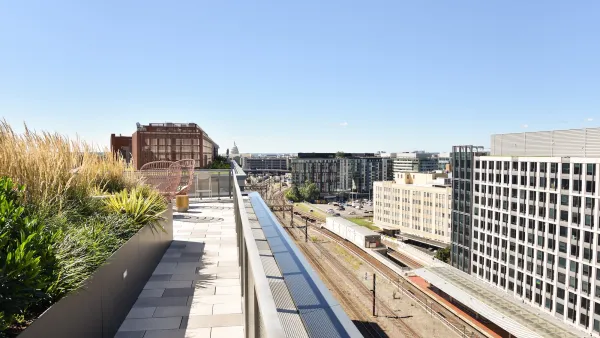
DC energy efficiency rule requires buildings to upgrade their infrastructure or face millions in fines
Building owners and condo co-op members say the upgrades are often prohibitively expensive.

Planetizen Federal Action Tracker
A weekly monitor of how Trump’s orders and actions are impacting planners and planning in America.

Amtrak, CN end decades-long dispute with eight-year agreement
The new operating agreement establishes an updated framework for the companies to work together, including processes to resolve disputes.

Northwest rail fans eager for Sept. 30 debut of Amtrak’s Airo fleet
Get ready for that new train smell and more seats. But they won’t go faster or run more frequently on the Cascades route in Washington and Oregon.

St. Louis Metro to test if single-car trains can reduce operating costs, maintain rider satisfaction
The pilot program will run from October to spring 2027, and begin with one single-car train operating on Metrolink’s Red and Blue lines.

Pennsylvania is building data centers in abandoned mines
Housing data centers in mines provides an alternative to destroying local forests and may spare residents from data centers’ noise and air pollution.

If Corpus Christi can’t revive desalination plant project, it may owe Texas $235 million
Earlier this month, city officials declined to pursue developing the plant for the second time in a year.

FREE Course: Walkable City 1: Why Walkability?
After describing his path towards focusing on walkability as the essence of good planning, Jeff Speck marches through his five principal reasons for making more walkable places.
Reinventing Malls: Planning Alchemy—Turning Gray Fields Into Gold
The course focuses on the opportunities and imperatives that shape reinvention of mall sites.

City of Thousand Oaks
City of Wisconsin Rapids
Harvard University Graduate School of Design
The Architects Foundation
University of Cincinnati Online
The Pocatello Development Authority
The Urban Renewal Agency of the City of Pocatello