As urban parks across the country are being created and refurbished thanks in large part to private philanthropy (e.g. the High Line and Millennium Park), Charles Birnbaum asks who will come to the rescue of Boston's famed Emerald Necklace.


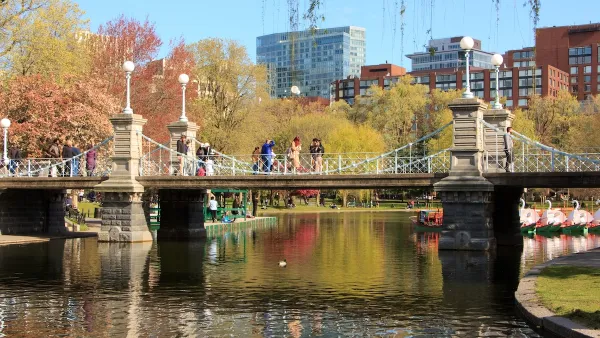
According to Birnbaum, originally designed by Frederick Law Olmsted, Sr. between 1878 and 1895, and with later design involvement by Frederick Law Olmsted, Jr., the Emerald Necklace in Boston was among the (if not the) first urban greenways in the world and was considered by the elder Olmsted as the most important work of his career.
However, whereas the fine arts museums situated on the park have benefited from substantial investment in the past decade, the necklace has suffered from competing causes for philanthropy.
"Bostonians, as we've seen, are rightfully proud of their major art institutions, so why doesn't that translate to the masterwork of one of their greatest artists? Where are the public-private partnerships? Where are the Boston equivalents of major philanthropists like Barry Diller and Diane von Furstenberg who donated $35 million to New York's High Line? When it comes to philanthropy for Boston's parks, is there a grass ceiling?"
Read the full story: City Shaping V: Can Philanthropy for Boston's Parks Break Through the Grass Ceiling?

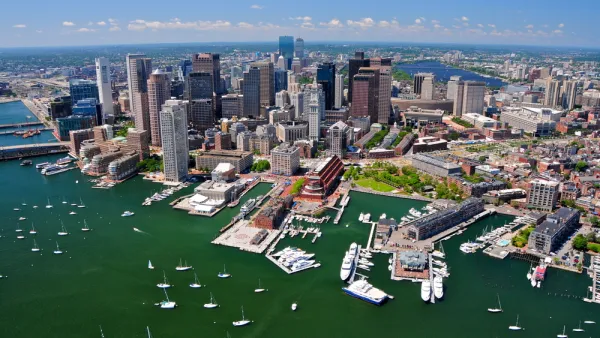
Boston Olympic Plan Includes 8,000 Units of Housing
As it vies to host the 2024 Summer Games, Boston's plan envisions two new permanent neighborhoods built with a mix of public and private investment. The final decision will take place in September.
130 Years on, Boston's Emerald Necklace Still a Model Linear Park
Writer Kaid Benfield used a recent trip the American Society of Landscape Architects annual meeting in Boston to reflect on what that city can teach us about designing urban parks.
Boston sues Trump administration over revoked infrastructure grant
The Trump administration withdrew the infrastructure grant because less than 1% of the money would go to electric vehicle charging infrastructure.

Planetizen Federal Action Tracker
A weekly monitor of how Trump’s orders and actions are impacting planners and planning in America.

‘Going backwards:’ Baltimore mayor, students rally against state's transit funding plan
Maryland's proposed six-year plan provides no funding for Baltimore’s BMORE bus program and reduces its road maintenance funding.

Detroit to transform waterfront with $2.2 billion investment
Developers will convert about 18 acres of unused parking lot space into civic spaces.

Less housing, wasted money: study reveals impact of city parking mandates
The study found that 71% of carless households in the United States pay for a parking space they don’t use.

Minnesota seeks to replace fraud-ridden Housing Stabilization Services with new program
Federal prosecutors have charged over a dozen people in fraud cases involving at least $26 million.

A multi-billion dollar problem is brewing under Oakland’s streets
Oakland’s stormwater drainage systems are in desperate need of upgrades and repairs. The El Niño will only further strain the city’s infrastructure.

FREE Course: Walkable City 1: Why Walkability?
After describing his path towards focusing on walkability as the essence of good planning, Jeff Speck marches through his five principal reasons for making more walkable places.
Reinventing Malls: Planning Alchemy—Turning Gray Fields Into Gold
The course focuses on the opportunities and imperatives that shape reinvention of mall sites.

One Hundred Miles
County of Mendocino
planning NEXT
The Architects Foundation
University of Cincinnati Online
Montrose County
Northern Illinois Transit Authority (NITA)
The Pocatello Development Authority