According to the Ridesharing Institute, filling out cars with more passengers may be the cheapest, simplest way to ease congestion, reports Emily Badger. However novel strategies must be introduced to overcome the broad decline in carpooling.


Whether through carpooling, slugging, or vanpooling, filling in all those empty seats on the highway could be the answer to easing congestion, beginning with just one workday a week. And the Ridesharing Institute isn't necessarily talking about old-school carpooling either: social media and technology is helping the organization push for more convenient, user-accommodating arrangements.
"Developing the best models will require actual R&D (although a small amount has been done and "soft" efforts to change mentalities has shown some promise). But while ridesharing currently accounts for about 10 percent of commuting trips, it gets nowhere near that in budget allocations or R&D funding from transportation agencies or large employers. Transit, bike, and pedestrian infrastructure have a similar problem because, on the whole, most of our attention and money goes toward accommodating single drivers and their cars."
Read the full story: Traffic Solution: Make Drivers Less Lonely

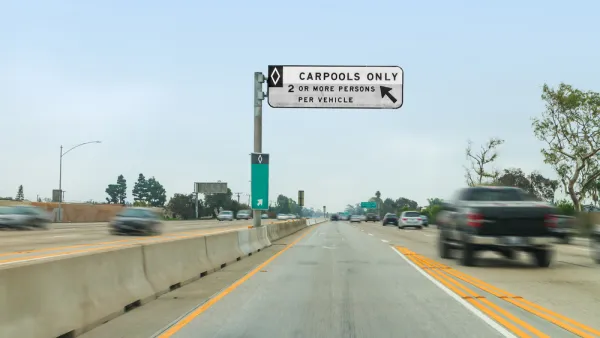
How Lyft and Uber Can Fix—Not Cause—Congestion
While evidence mounts that Uber and Lyft are stealing rides from public transit, there's still a chance for ride-hailing apps to do more to help than hurt congestion. The key: using ride-hailing apps to carpool.
Study Finds UberPOOL Adds to City Traffic by Competing with the Subway
Past studies have shown how ride hailing services have added to congestion. A new study by Bruce Schaller suggests that even ride shares add to traffic, because they pull riders off of more efficient transit options like public transit.
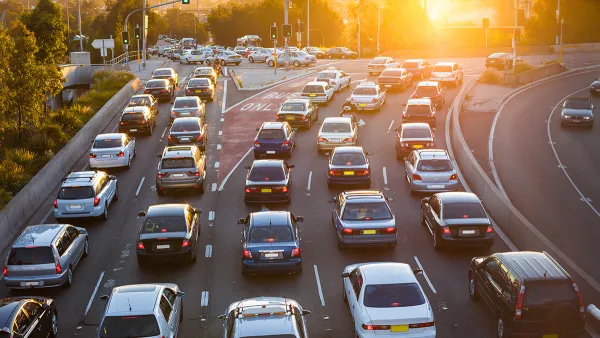
Debate Renewed: Can Uber and Lyft Solve Congestion?
A new study predicts the congestion relief benefits of carpooling services offered by Transportation Network Companies. A skeptical audience replies.

Planetizen Federal Action Tracker
A weekly monitor of how Trump’s orders and actions are impacting planners and planning in America.

Amtrak, CN end decades-long dispute with eight-year agreement
The new operating agreement establishes an updated framework for the companies to work together, including processes to resolve disputes.

Northwest rail fans eager for Sept. 30 debut of Amtrak’s Airo fleet
Get ready for that new train smell and more seats. But they won’t go faster or run more frequently on the Cascades route in Washington and Oregon.

Brightline Florida files for bankruptcy
The transit company is over $5 billion in debt.

St. Louis Metro to test if single-car trains can reduce operating costs, maintain rider satisfaction
The pilot program will run from October to spring 2027, and begin with one single-car train operating on Metrolink’s Red and Blue lines.

Pennsylvania is building data centers in abandoned mines
Housing data centers in mines provides an alternative to destroying local forests and may spare residents from data centers’ noise and air pollution.

FREE Course: Walkable City 1: Why Walkability?
After describing his path towards focusing on walkability as the essence of good planning, Jeff Speck marches through his five principal reasons for making more walkable places.
Reinventing Malls: Planning Alchemy—Turning Gray Fields Into Gold
The course focuses on the opportunities and imperatives that shape reinvention of mall sites.

City of Thousand Oaks
City of Wisconsin Rapids
Harvard University Graduate School of Design
The Architects Foundation
University of Cincinnati Online
The Pocatello Development Authority
The Urban Renewal Agency of the City of Pocatello