Even in New York City, it's a pain to try to "green" a building with insulation, overhangs, and other methods that violate zoning. Katharine Jose reports on the Zone Green Text Amendment, which addresses such impediments, and the team behind it.


"The amendment, which is currently under public review-meaning it's been referred for comment to community boards, borough boards and borough presidents, before city planning approves a version for the City Council to consider-is the product of the Green Codes Task Force, a panel pulled together by the Bloomberg administration and the nonprofit Urban Green Council; last year it released an in-depth analysis of the city's building codes, with a mission 'to remove zoning impediments to the construction and retrofitting of green buildings.'
This was desperately needed because, as [the city's deputy director of sustainability Howard] Slatkin said, standing in front of a black-and-white slide of a just-built LeFrak City, 'a lot of the regulations that were drawn up with zoning were not drawn up with the notion of promoting green buildings.'
According to PlaNYC-the mayor's master plan for the city-buildings generate 75 percent of the city's greenhouse-gas emissions. The zoning code has been in effect for 50 years, since long before the concept of 'greenhouse gasses' even existed."
Read the full story: On making 'green' building in New York City a less terrible experience
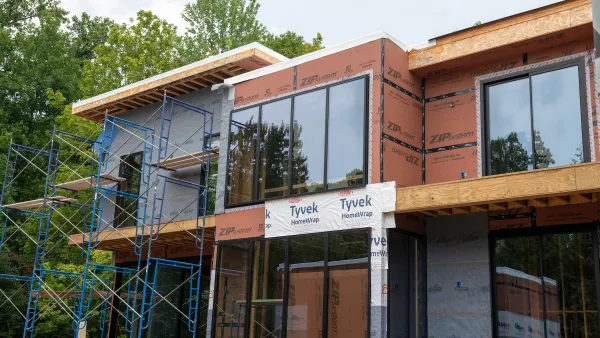
New HUD guidelines call for nixing green building requirements
The newly released 'best practices' advise local governments to streamline permitting processes, cap permitting fees and encourage by-right development of single-family homes.
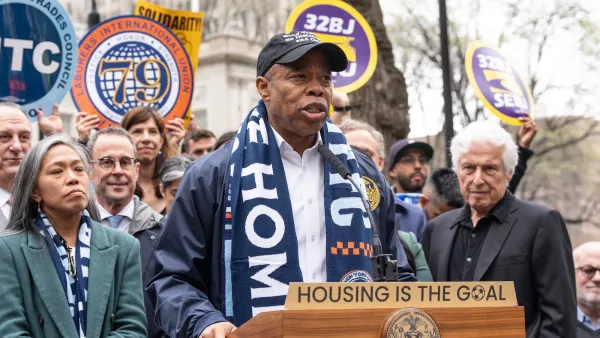
What Actually Got Built Under Eric Adams’ ‘Pro-Housing’ Administration
The outgoing mayor claims credit for hundreds of thousands of new homes. The truth is more complicated.
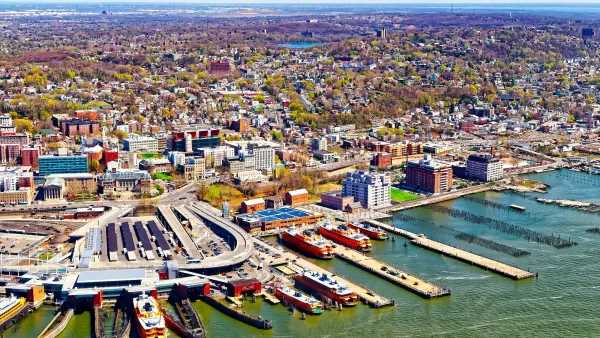
Staten Island Resists ‘City of Yes’ Zoning Reforms
One year after New York City approved major zoning changes, some residents continue to fight increased density.

Planetizen Federal Action Tracker
A weekly monitor of how Trump’s orders and actions are impacting planners and planning in America.

Washington state to charge fee to drivers with fuel-efficient cars
Revenue from the fee will go towards supporting the state’s highways.

Trump to blast ‘hydrocarbon highway’ through ‘world’s longest art gallery’
Environmental and historic preservation groups are suing to stop the project.

Data centers need power – lower income, rural residents pay the price
In 2025, data centers paid only 38% of the energy infrastructure costs linked to their growth, with households, especially rural and low-income residents, bearing the remaining burden.

MBTA Green Line project moved to next phrase of CIG program
The modernization effort will cost $4.08 billion.

22-mile pedestrian and bike path to encircle Atlanta by 2030
The project will also support affordable housing.

FREE Course: Walkable City 1: Why Walkability?
After describing his path towards focusing on walkability as the essence of good planning, Jeff Speck marches through his five principal reasons for making more walkable places.
Reinventing Malls: Planning Alchemy—Turning Gray Fields Into Gold
The course focuses on the opportunities and imperatives that shape reinvention of mall sites.

City of Charlotte
City of Rosemead
Rutgers University, Edward J. Bloustein School of Planning and Public Policy
University of Michigan School for Environment and Sustainability (SEAS)
Hunter College, City University of New York (CUNY)
The Architects Foundation
University District Partnership