Just a year into his term, Christopher Hume delivers a scathing critique of Toronto Mayor Rob Ford and his pro-vehicular policies.


Hume does not believe that the damage caused by Ford's misguided ideas and abrasive tone have mortally wounded the city, but as the city's transit situation "goes from bad to worse", he fears for its future.
"As we're now beginning to understand, it's not LRTs that must be removed from streets like Eglinton, but cars and trucks. And if not removed, reduced in numbers. The current arterial imbalance discriminates, often with deadly results, against pedestrians, cyclists, transit riders and the city itself.
After decades of such thinking, change won't come easily. A pseudo-science such as traffic engineering appears as normal as can be, but it's little more than an organized system for enabling all things vehicular."
FULL STORY: Hume: Rob Ford’s Toronto can’t keep up

2013: A Train Wreck Year for Toronto
Christopher Hume reflects on Toronto’s year of natural, political and transit catastrophes.
How the Ford Fiasco Jeopardizes Toronto’s Financial Future
Taking office on a promise of fiscal responsibility, scandal-plagued mayor Rob Ford threatens Toronto’s reputation and future prosperity. Adam Giambrone shares insights from some of Toronto’s business leaders and financial experts.
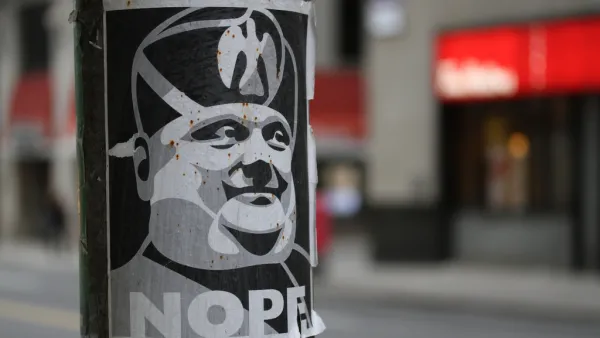
Toronto's Problems Are Bigger Than Rob Ford
Sure, having a boorish crack-smoking mayor who refuses to get help or step down is a problem. But Toronto's existential problems are structural, writes Richard Florida. The city's "outmoded growth model and system of governance" threaten its success.

Planetizen Federal Action Tracker
A weekly monitor of how Trump’s orders and actions are impacting planners and planning in America.

The state-sanctioned urbicide of Austin
People don’t kill cities. Freeways do.

US to reduce Colorado River water deliveries to Mexico
A new Colorado Treaty amendment reduces Mexico’s Colorado River water allocation by 250,000 acre feet.

Guerilla urbanists are building DIY bus stop benches in Chicago
A before-and-after of one of the bus stops with a new bench. The new benches are not officially sanctioned or permitted, but the residents who placed them hope they will be the start of a network of DIY benches across the city.

Mamdani overhauls NYC's Vision Zero plan with 100 new policy goals
The overhaul aims to reduce traffic deaths and make streets safer for pedestrians, cyclists and drivers through lower speed limits, new safety infrastructure and more.

Amtrak not solely to blame for New Jersey commuter rail's unreliability, report finds
A new study from the Garden State Initiative found that NJ Transit’s budget grew 20% across a 4 year period, but reliability declined significantly over the same period.

FREE Course: Walkable City 1: Why Walkability?
After describing his path towards focusing on walkability as the essence of good planning, Jeff Speck marches through his five principal reasons for making more walkable places.
Reinventing Malls: Planning Alchemy—Turning Gray Fields Into Gold
The course focuses on the opportunities and imperatives that shape reinvention of mall sites.

Eagle County Government
Harvard University Graduate School of Design
Nashville Planning Department
The Architects Foundation
University of Cincinnati Online
The Pocatello Development Authority
The Urban Renewal Agency of the City of Pocatello
Journal of the American Planning Association