In new rules published in the Federal Register on Wednesday, the Department of Transportation is amending Bush era policies on awarding grants for Light Rail, Subway, and Bus Rapid Transit projects.


Lisa Caruso reports on the proposed changes which have rankled Bush era officials. The new rules, which will consider a project's "effects on air pollution, energy use, greenhouse-gas emissions and safety, and 'social equity impacts' such as affordable housing and job creation" when evaluating grant applications for the agency's New Starts and Small Starts programs may move DOT somewhat towards addressing the civil and human rights related concerns that were the subject of a piece we linked to earlier this week.
The rules would also streamline the approvals process by at least six months according to Transportation Secretary Ray LaHood.
Not all are happy with the proposed changes, however. "The Federal Transit Administration 'is opening the door to an evaluation that is more subjective than it has been in the past and more prone to forecasting error,' said [David] Horner, a former chief counsel to the agency during the Bush administration."
Read the full story: ‘Social Equity’ to Be Weighed in U.S. Transit Funding Rule

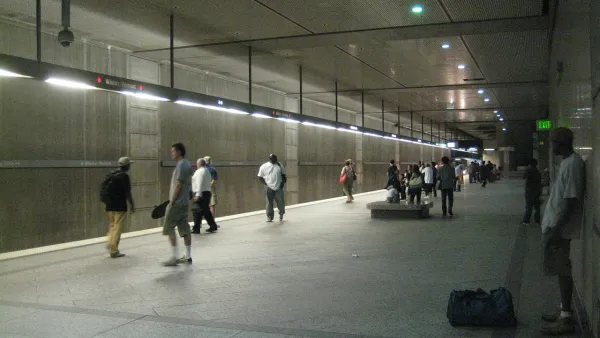
Federal Transit Grants Delayed by the Trump Administration
Congress has continued to fund transit projects despite the Trump Administration's stated desire to end federal funding for federal transit. Now it appears the Trump Administration is killing transit with bureaucracy.

Five Years Later, 'Smart Cities Challenge' Promise Unfulfilled
The "Smart Cities Challenge" paid Columbus, Ohio $50 million to kick start a revolution of urban technology. The revolution never arrived, according to a recent assessment by Wired writer Aarian Marshall.
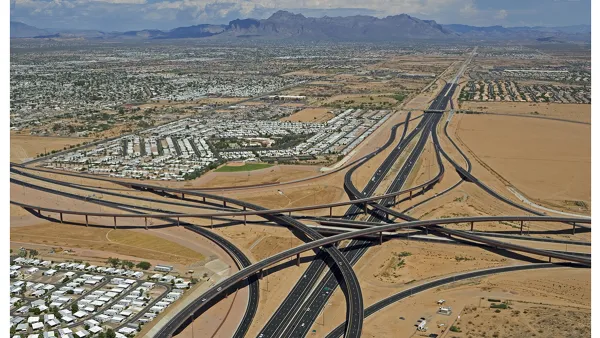
A Call for a New Approach to Federal Transportation Policy
According to this blog post, federal transportation policies are misdirected, inconsistent, and destructive. A comprehensive overhaul of federal transportation policy is necessary.

Planetizen Federal Action Tracker
A weekly monitor of how Trump’s orders and actions are impacting planners and planning in America.

Amtrak, CN end decades-long dispute with eight-year agreement
The new operating agreement establishes an updated framework for the companies to work together, including processes to resolve disputes.

Northwest rail fans eager for Sept. 30 debut of Amtrak’s Airo fleet
Get ready for that new train smell and more seats. But they won’t go faster or run more frequently on the Cascades route in Washington and Oregon.

Trump administration unlawfully slashed $7 billion in clean energy grants, judge rules
The Environmental Protection Agency ended the Solar For All program, which provided the grants, after President Donald Trump’s inauguration.

Record-breaking wildlife overpass in Colorado brings 91% reduction in animal collisions
Prior to the overpass, vehicles were hitting one deer per day on Colorado’s Interstate 25.

California lawmakers approve just 5% of much-needed LA28 transportation funding
State legislators appear just as unwilling as Trump to pay for Olympics-related transportation projects.

FREE Course: Walkable City 1: Why Walkability?
After describing his path towards focusing on walkability as the essence of good planning, Jeff Speck marches through his five principal reasons for making more walkable places.
Reinventing Malls: Planning Alchemy—Turning Gray Fields Into Gold
The course focuses on the opportunities and imperatives that shape reinvention of mall sites.

City of Thousand Oaks
City of Wisconsin Rapids
Harvard University Graduate School of Design
The Architects Foundation
University of Cincinnati Online
The Pocatello Development Authority
The Urban Renewal Agency of the City of Pocatello