Planners and development experts explain why modeling Delhi after cities like Singapore, Hong Kon and Mumbai is misguided and dangerous.


"Before thinking of going vertical, it's important to look at the carrying capacity of the land. How can we build 200 units per acre when our infrastructure is inadequate, power supply is erratic and water is insufficient ? If you have a building with 200 units filled with people, when they all head out of the house and get into their cars, do we have the roads to support them?...
While cities like Singapore, Hong Kong and Mumbai have been cited as examples for why Delhi should go vertical, Aromar Revi, director of the Indian Institute for Human Settlement, says that, unlike Delhi, these are island cities with a paucity of space. "Delhi, on the other hand, has a large amount of space."
Read the full story: Unshackle land, go for high density

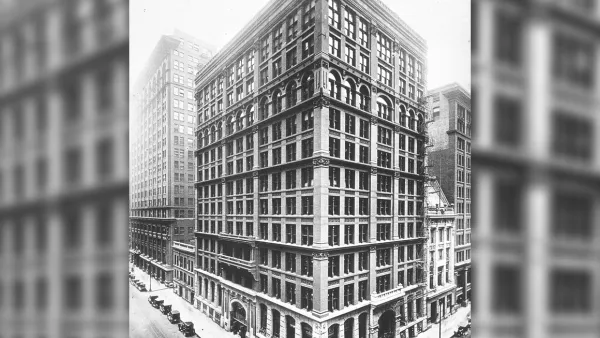
The myth of the 'first skyscraper:' How a clever PR campaign duped the world
The lie that laid claim to the skyscraper’s origins is well documented. Why do we still believe it?
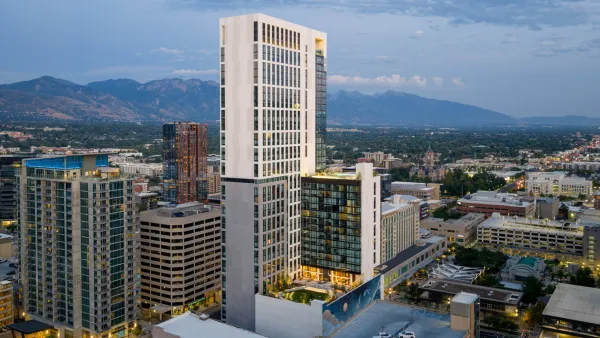
Downtown Salt Lake City Skyscraper Cleans the air Around it
The newly built Astra Tower filters air for its own residents and for the city.

India’s Women-only ‘Pink Parks:’ Safe Refuge or Segregated Enclaves?
Women-only public spaces can provide safety and community, but critics argue they fail to address deeper structural problems.

Planetizen Federal Action Tracker
A weekly monitor of how Trump’s orders and actions are impacting planners and planning in America.

Amtrak, CN end decades-long dispute with eight-year agreement
The new operating agreement establishes an updated framework for the companies to work together, including processes to resolve disputes.

Judges permit Denver to divert 77,000 acre feet from the Colorado River for reservoir expansion
Overuse and climate change have caused the Colorado River’s water levels to plummet.

NYC DOT wants faster, more permanent street upgrades
The city is examining ways to build more concrete infrastructure without getting entangled in 'decades-long' projects.

'Something we’ve never seen before:' rising utility rates could strain city finances nationwide
Data centers, climate change and other factors have caused utility rates in the United States to increase by 38% since 2020.

Trump to overrule local leaders, lease millions of acres of America’s Pacific Island territories’ seafloors to mining companies
International law says that the Indigenous people of America’s territories have a right to prior and informed consent regarding projects that impact their countries.

FREE Course: Walkable City 1: Why Walkability?
After describing his path towards focusing on walkability as the essence of good planning, Jeff Speck marches through his five principal reasons for making more walkable places.
Reinventing Malls: Planning Alchemy—Turning Gray Fields Into Gold
The course focuses on the opportunities and imperatives that shape reinvention of mall sites.

Harvard University Graduate School of Design
KFH Group Inc.
Greater Baltimore Committee
The Architects Foundation
University of Cincinnati Online
The Pocatello Development Authority
The Urban Renewal Agency of the City of Pocatello