Tom Miller, author of "Urban Billion," discusses the pitfalls and shortcomings of a too-quickly urbanizing Beijing in this interview with David Pierson.


In response to the question: "Are planners following the correct model to build their cities? Are they in danger of making the same mistakes as the West?" Miller responds:
"China has nearly one-fifth of the world's population and only 7% of the world's arable land. It makes no sense for China to follow a U.S. model. It has to go with concentrated living because it doesn't have the available land for people to have their own house and their own yard.
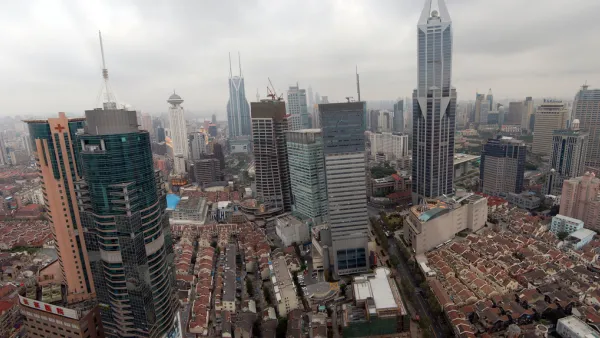
A lot of my American friends come to Beijing and say it looks like a city in the Midwest because everything is so spread out and big. Cities are sprawling in China, particularly Beijing, which has been built around a car economy. Beijing is an example of how not to do things."
Read the full story: China grapples with mass migration from villages to cities
China's Urbanization Boom May Be Slowing
After a period of modernization and urban growth unrivaled in human history, several forces promise a slump, or at least a slowing. Maybe it's time to improve existing cities, not keep building new ones.
Researchers Pushing for Even Bigger Chinese Cities
Research suggests China’s current urbanization policy forgoes $2 trillion in growth over the next ten years. That is, unless the government funnels even more migrants into major population centers and develops for density.

The Superstar Metro Argument... And Why It Fails
One argument against solving the housing shortage in large, expensive cities is that growth in those cities will drain people and wealth from declining areas. Data does not agree.

Planetizen Federal Action Tracker
A weekly monitor of how Trump’s orders and actions are impacting planners and planning in America.

California plans to bury El Niño’s downpour
If the state plays its cards right, it may be able to store a billion acre-feet of El Niño’s water in aquifers.

Desperate measures: Advocates weigh draining Lake Powell to fill Colorado River
Draining the reservoir could reduce evaporation losses by a couple hundred thousand acre-feet.

Los Angeles just elected an urban planner as its mayor
Transportation analysts are optimistic that Raman will be more aggressive in addressing transit issues than Bass.

Mamdani’s pied-à-terre tax survives legal challenge
A panel of judges found that the plaintiffs failed to demonstrate injury as a result of New York City's implementation of the tax.

Eastern Nebraska is running out of electricity
Data centers and electrification are straining eastern Nebraska’s grid, throttling economic development.

FREE Course: Walkable City 1: Why Walkability?
After describing his path towards focusing on walkability as the essence of good planning, Jeff Speck marches through his five principal reasons for making more walkable places.
Reinventing Malls: Planning Alchemy—Turning Gray Fields Into Gold
The course focuses on the opportunities and imperatives that shape reinvention of mall sites.

City of Rosemead
Rutgers University, Edward J. Bloustein School of Planning and Public Policy
One Hundred Miles
University of Michigan School for Environment and Sustainability (SEAS)
Hunter College, City University of New York (CUNY)
The Architects Foundation
City of Cambridge
Montrose County
The Pocatello Development Authority