A new report focusing on the City of Philadelphia found that there is a statistically significant correlation between real estate value (as measured by sales price) and proximity to billboards.


Urban planner Jonathan Snyder, author of the study, found that "[u]sing 2010 sale price data, and taking into account adjacent amenities such as libraries and parks, residential real estate within 500 feet of a billboard is $30,826 less valuable (p=.035) at the time of purchase."
Furthermore, "Billboards negatively impact home values. For each additional billboard in a census tract, there is a $947 decrease in home value."
Scenic America notes that the report concludes "...that cities with stricter billboard controls have greater median incomes, lower poverty rates and lower home vacancy rates than city with less strict billboard controls."
Read the full story: New study shows billboards hurt nearby property values
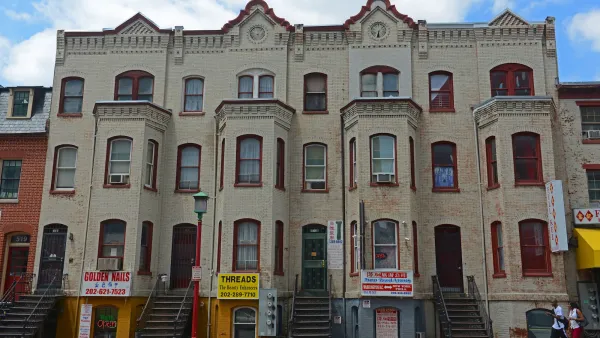
Is this the first wave of de-gentrification?
Valencia, Temescal, H Street and the fickle fortunes of the gentrified neighborhood.
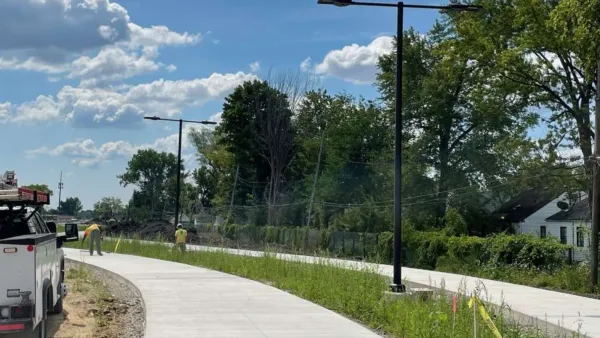
Detroit greenway brings revival — and fears of displacement
The planned Joe Louis Greenway is already bringing change to the neighborhoods near it.
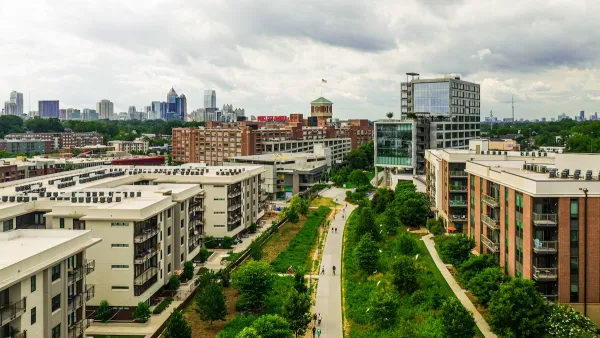
Beltline Surpasses Annual Affordable Housing Goal
The Atlanta Beltline agency is actively working to prevent the displacement of longtime residents along the trail system, where property values are rising rapidly.

Planetizen Federal Action Tracker
A weekly monitor of how Trump’s orders and actions are impacting planners and planning in America.

California plans to bury El Niño’s downpour
If the state plays its cards right, it may be able to store a billion acre-feet of El Niño’s water in aquifers.

Desperate measures: Advocates weigh draining Lake Powell to fill Colorado River
Draining the reservoir could reduce evaporation losses by a couple hundred thousand acre-feet.

Los Angeles just elected an urban planner as its mayor
Transportation analysts are optimistic that Raman will be more aggressive in addressing transit issues than Bass.

Mamdani’s pied-à-terre tax survives legal challenge
A panel of judges found that the plaintiffs failed to demonstrate injury as a result of New York City's implementation of the tax.

Eastern Nebraska is running out of electricity
Data centers and electrification are straining eastern Nebraska’s grid, throttling economic development.

FREE Course: Walkable City 1: Why Walkability?
After describing his path towards focusing on walkability as the essence of good planning, Jeff Speck marches through his five principal reasons for making more walkable places.
Reinventing Malls: Planning Alchemy—Turning Gray Fields Into Gold
The course focuses on the opportunities and imperatives that shape reinvention of mall sites.

City of Rosemead
Rutgers University, Edward J. Bloustein School of Planning and Public Policy
One Hundred Miles
University of Michigan School for Environment and Sustainability (SEAS)
Hunter College, City University of New York (CUNY)
The Architects Foundation
City of Cambridge
Montrose County
The Pocatello Development Authority