Architect David Heymann says that a lot of architects claim to use the specifics of a site's natural features to inspire their design, but most end up with designs that are aggressive to the landscape - and to people.


Heymann pooh-poohs the "ridiculous sustainability tie-in" of working with the landscape, and argues that architects who claim to be using the landscape as inspiration are just as "willful and gestural" as those who do not, if not more so:
Heymann writes that "...many - most - of the buildings conceived by these means over the past two decades are stridently volatile forms, and their landscapes are dramatically altered by their arrival. Consider an early progenitor of the type: Zaha Hadid's fire station for the Vitra complex in Weil am Rhein, Germany, completed in 1993. The design drawings for this project notoriously (and, in architectural design, familiarly) extended the geometric patterns of the adjacent surroundings - farm boundaries, crop plantings, rail lines, road angles, and so forth - back over the constructible area to provide a matrix of controlling lines in what would seem to be - to the parent landscape - a sympathetic first step."
"What's then initially surprising about the actual Fire Station - so sympathetically conceived - is how aggressive it seems to its parent landscape."
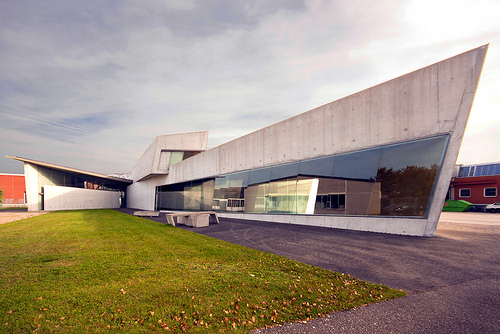
Zaha Hadid's fire station in Weil am Rhein, Germany PHOTO: Wojtekgurak
Read the full story: Landscape Is Our Sex

Zaha Hadid, Trailblazing and World-Renowned Architect, Dies at 65
Zaha Hadid's architectural career took her to the pinnacle of the field, including acknowledgement as the first female Pritzker Prize winner.
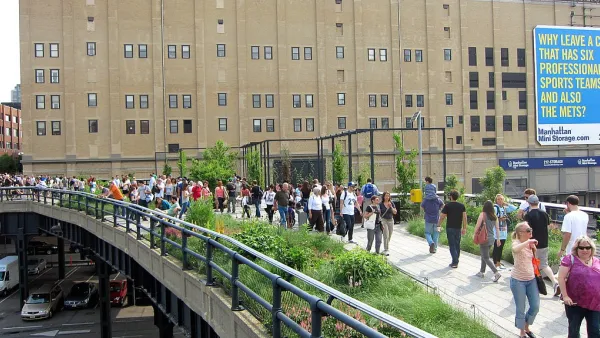
Hidden in Plain Sight: Re-Appropriated Spaces
The projects depicted here re-use and re-appropriate public space, filling gaps in the built environment with parks, open areas, and pedestrian walkways.
Zaha Hadid's $2 Billion Tokyo Stadium Plans Scrapped
Japan has pulled the plug on an ambitious stadium plan, expected to cost $2 billion and designed by one of the world's most famous architects.

Amtrak, CN end decades-long dispute with eight-year agreement
The new operating agreement establishes an updated framework for the companies to work together, including processes to resolve disputes.

Judges permit Denver to divert 77,000 acre feet from the Colorado River for reservoir expansion
Overuse and climate change have caused the Colorado River’s water levels to plummet.
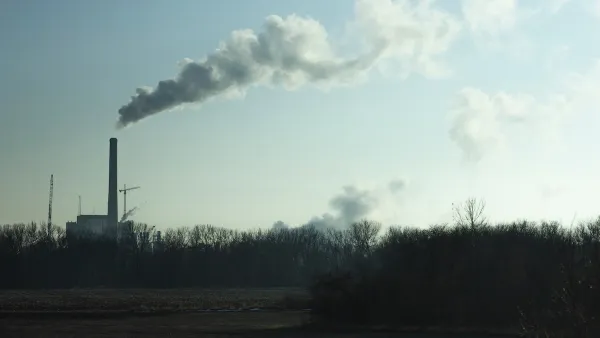
Nation's most wind-powered state turns to coal as data centers increase energy demand
For the first time in decades, Iowa has increased its generation of coal power.

Boston has spent millions making the Green Line more accessible — and there’s no end in sight
While the city has invested millions into expanding and adding platforms to the Green Line to make it more accessible, new train cars set to arrive next year will be too tall for disabled passengers to board without raising the current platforms.

Idaho may see an 18% drop in federal surface transit funding — the largest estimated cut in the US
Transit systems in rural communities are much more reliant on federal funding to provide their services.

How ‘post-disaster gentrification’ alters neighborhoods after natural calamities
After hurricanes, fires or other calamities, the original residents of a community are often replaced by younger, wealthier residents.

FREE Course: Walkable City 1: Why Walkability?
After describing his path towards focusing on walkability as the essence of good planning, Jeff Speck marches through his five principal reasons for making more walkable places.
Reinventing Malls: Planning Alchemy—Turning Gray Fields Into Gold
The course focuses on the opportunities and imperatives that shape reinvention of mall sites.

City of Wisconsin Rapids
Harvard University Graduate School of Design
KFH Group Inc.
The Architects Foundation
University of Cincinnati Online
The Pocatello Development Authority
The Urban Renewal Agency of the City of Pocatello