Japan has pulled the plug on an ambitious stadium plan, expected to cost $2 billion and designed by one of the world's most famous architects.


"The Japanese government has scrapped controversial plans for a dramatic Zaha Hadid-designed $2bn (£1.3bn) stadium envisioned as the focal point of the 2020 Tokyo Olympics, amid concern about rising costs and a growing public backlash," reports Owen Gibson.
Yoshirō Mori, chairman of the Tokyo 2020 organizing committee, "said he had taken the decision after being reassured that there was still time to draw up new plans and complete the new stadium, on the site of the existing national stadium, before the 2020 Olympics."
The decision to scrap the plans for the stadium also impacts the 2019 Rugby World Cup, scheduled to be played in the stadium. The article includes more details about the controversy inspired by the stadium's design in the architecture world.
Read the full story: Japan scraps Zaha Hadid plan for Olympic stadium

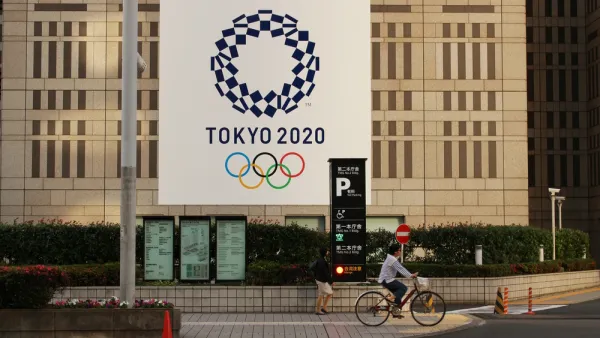
Japan Targeting 2020 Olympics for a Driverless Car System
Japan prioritizes technological advancement to grow its economy.
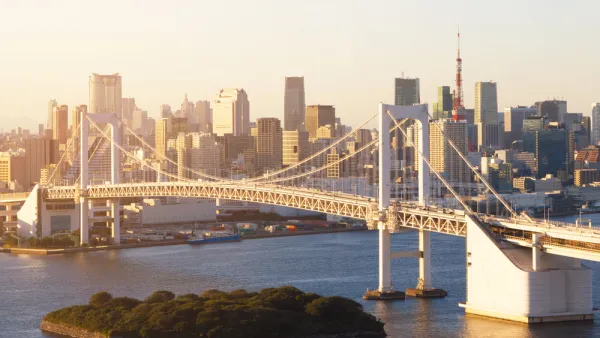
Future Floods May Test Tokyo's Defenses
Despite the presence of a formidable (and expensive) underground flood control system, Tokyo may confront floods and rainfall that will challenge the city's capacity to protect itself.
A National Day of Telecommuting
Companies and workers in the country of Japan are less likely to work from home than in the United States. The government hopes to increase the number of telecommuters during the 2020 Olympics, however.

Planetizen Federal Action Tracker
A weekly monitor of how Trump’s orders and actions are impacting planners and planning in America.

Amtrak, CN end decades-long dispute with eight-year agreement
The new operating agreement establishes an updated framework for the companies to work together, including processes to resolve disputes.

Judges permit Denver to divert 77,000 acre feet from the Colorado River for reservoir expansion
Overuse and climate change have caused the Colorado River’s water levels to plummet.

NYC DOT wants faster, more permanent street upgrades
The city is examining ways to build more concrete infrastructure without getting entangled in 'decades-long' projects.

'Something we’ve never seen before:' rising utility rates could strain city finances nationwide
Data centers, climate change and other factors have caused utility rates in the United States to increase by 38% since 2020.

Trump to overrule local leaders, lease millions of acres of America’s Pacific Island territories’ seafloors to mining companies
International law says that the Indigenous people of America’s territories have a right to prior and informed consent regarding projects that impact their countries.

FREE Course: Walkable City 1: Why Walkability?
After describing his path towards focusing on walkability as the essence of good planning, Jeff Speck marches through his five principal reasons for making more walkable places.
Reinventing Malls: Planning Alchemy—Turning Gray Fields Into Gold
The course focuses on the opportunities and imperatives that shape reinvention of mall sites.

Harvard University Graduate School of Design
KFH Group Inc.
Greater Baltimore Committee
The Architects Foundation
University of Cincinnati Online
The Pocatello Development Authority
The Urban Renewal Agency of the City of Pocatello