With parts of its roof being blown off by strong wind, one architect has defended his work on Beijing's newest airport, blaming poor building material choices rather than the overall design.


"'If the products provided by the suppliers were not up to their highest standards, or if the individual items were not installed properly, then this kind of thing could happen,' said Shao Weiping, an architect with one of the firms that collaborated on the structure, the Beijing Architectural Design and Research Institute.
Shao said he was 'very confident that the design was perfect and involved no mistakes or flaws.'
Terminal 3 was one of several high-profile projects commissioned by the Chinese government in preparation for the 2008 Beijing Olympics. The building was designed by Britain's Norman Foster."
Read the full story: Architect: Beijing airport damage not design flaw

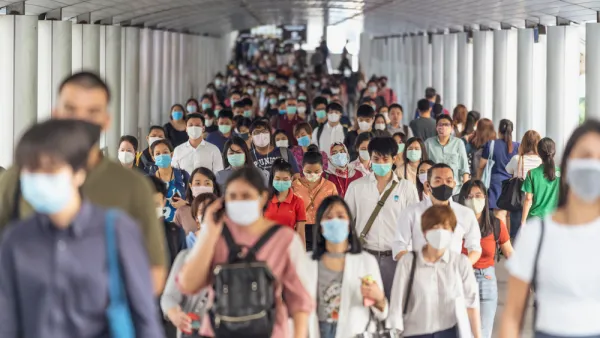
How Cities Are Responding to Automobile Congestion
As economies begin to reopen around the world, some cities are taking action to prevent widespread gridlock.
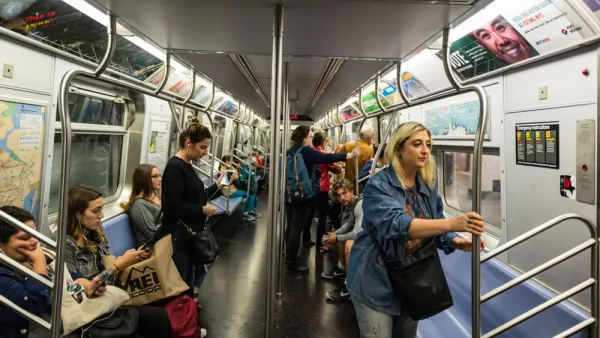
Coronavirus Effects on the Global Transportation System
As the coronavirus continues to move across the globe, its effects on shared transportation modes and freight shipping are becoming more apparent.
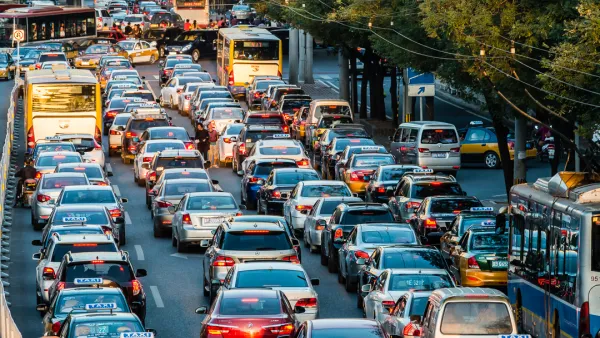
Study Shows Link Between Car Ownership and Decrease in Physical Activity
A study of residents in Beijing, China who became car owners indicates that they used alternative transportation modes less after buying cars.

Planetizen Federal Action Tracker
A weekly monitor of how Trump’s orders and actions are impacting planners and planning in America.

Amtrak, CN end decades-long dispute with eight-year agreement
The new operating agreement establishes an updated framework for the companies to work together, including processes to resolve disputes.

Judges permit Denver to divert 77,000 acre feet from the Colorado River for reservoir expansion
Overuse and climate change have caused the Colorado River’s water levels to plummet.

NYC DOT wants faster, more permanent street upgrades
The city is examining ways to build more concrete infrastructure without getting entangled in 'decades-long' projects.

'Something we’ve never seen before:' rising utility rates could strain city finances nationwide
Data centers, climate change and other factors have caused utility rates in the United States to increase by 38% since 2020.

Trump to overrule local leaders, lease millions of acres of America’s Pacific Island territories’ seafloors to mining companies
International law says that the Indigenous people of America’s territories have a right to prior and informed consent regarding projects that impact their countries.

FREE Course: Walkable City 1: Why Walkability?
After describing his path towards focusing on walkability as the essence of good planning, Jeff Speck marches through his five principal reasons for making more walkable places.
Reinventing Malls: Planning Alchemy—Turning Gray Fields Into Gold
The course focuses on the opportunities and imperatives that shape reinvention of mall sites.

Harvard University Graduate School of Design
KFH Group Inc.
Greater Baltimore Committee
The Architects Foundation
University of Cincinnati Online
The Pocatello Development Authority
The Urban Renewal Agency of the City of Pocatello