Creating livable streets starts at the grassroots level by gathering support from the community. Better Blocks Philly was a project that created temporary changes to streets, promoting the concept of the "complete street" for the residents.


The South of South Street Neighborhood Association (SOSNA) ran a 10-day project that promoted the importance of livable streets by making temporary changes to several streets. With the help of the city, according to The Dirt, they installed "temporary bump-outs, mid-block crossings and pop-up parklets that double as bump-outs."
Not only are the residents changing the streetscape, but the city is also doing their part. In 2009, the city painted bike lanes on two major streets, Pine St. and Spruce St. as an experiment to "determine the effect that the elimination of a travel lane and replacement with bike lanes would have on all modes of traffic," said The Dirt.
The results were positive reducing crash rates and increasing cycling rates that the city has decided to make changes to other streets.
Read the full story: Top-Down Meets Bottom-Up on Philadelphia Streets
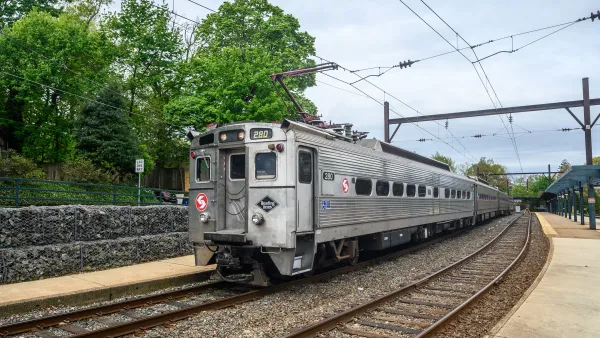
SEPTA receives $13.3 million to replace fire-prone train cars
The transit agency said it could be seven years before the replacement train cars come to Philadelphia.
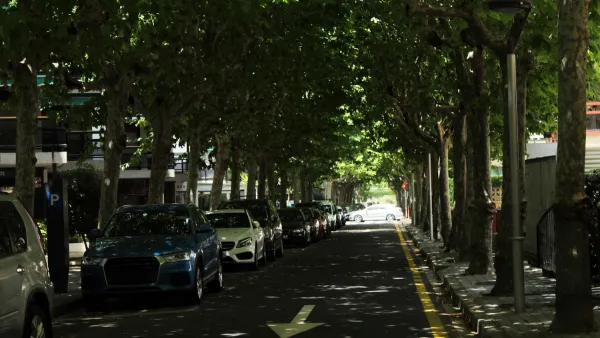
Research: More Complex Streets Are Safer
Streets that offer more perceived obstacles and distractions can force drivers to slow down and drive more carefully.
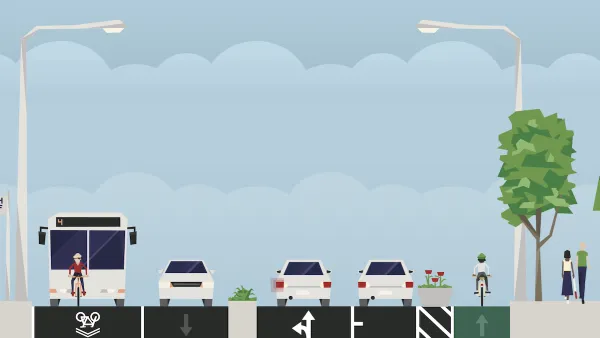
Reimagining Your Street
How to use free online tools to redesign your local streetscape.

Planetizen Federal Action Tracker
A weekly monitor of how Trump’s orders and actions are impacting planners and planning in America.

California plans to bury El Niño’s downpour
If the state plays its cards right, it may be able to store a billion acre-feet of El Niño’s water in aquifers.

Desperate measures: Advocates weigh draining Lake Powell to fill Colorado River
Draining the reservoir could reduce evaporation losses by a couple hundred thousand acre-feet.

Los Angeles just elected an urban planner as its mayor
Transportation analysts are optimistic that Raman will be more aggressive in addressing transit issues than Bass.

Mamdani’s pied-à-terre tax survives legal challenge
A panel of judges found that the plaintiffs failed to demonstrate injury as a result of New York City's implementation of the tax.

Eastern Nebraska is running out of electricity
Data centers and electrification are straining eastern Nebraska’s grid, throttling economic development.

FREE Course: Walkable City 1: Why Walkability?
After describing his path towards focusing on walkability as the essence of good planning, Jeff Speck marches through his five principal reasons for making more walkable places.
Reinventing Malls: Planning Alchemy—Turning Gray Fields Into Gold
The course focuses on the opportunities and imperatives that shape reinvention of mall sites.

City of Rosemead
Rutgers University, Edward J. Bloustein School of Planning and Public Policy
One Hundred Miles
University of Michigan School for Environment and Sustainability (SEAS)
Hunter College, City University of New York (CUNY)
The Architects Foundation
City of Cambridge
Montrose County
The Pocatello Development Authority