The food truck phenomenon is here to stay and stimulating tangential industries that include truck outfitters, permit expediters, lawyers lobbyists, website designers, and marketing professionals.


Once known as 'roach coaches,' peddling sub-par fare at construction sites and other temporary work spaces, these mobile purveyors of ethnic and specialist cuisine are now providing those needing "a new way of making a living a chance to break into a new industry," says Richard Myrick, editor in chief of Mobil Cuisine Magazine.
Culinary schools in Florida, Virginia, and North Carolina have begun offering mobile food courses to their curriculum, alongside others that have added truck fare to their traditional cafeteria offerings. The trend has resulted in new growth opportunities in mobile app production and other web marketing services.
Opposition has come from brick and mortar restaurateurs in many cities and large chains such as Qdoba Mexican Grill and Sizzler are planning to launch competing mobile services to regain market share. New York food vendors have experience a doubling in the cost of a black market vendor license, a jump which has been attributed to the accelerating growth of the city's food truck industry.
FULL STORY: The Food Truck Industrial Complex


Denver Food Truck Ban Could be Unconstitutional
In a letter to city officials, a law firm called on the city to lift restrictions on food trucks, saying the ban “smacks of protectionism” and could violate equal protection guarantees.
Map of Pandemic Real Estate Risk Focuses on New Jersey, Illinois, California
A new study evaluates county-level foreclosure risk, underwater home values, and more real estate market data after two years of the Covid-19 pandemic in the United States.
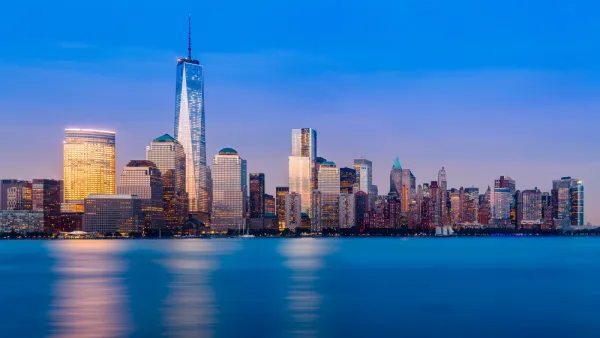
20 Years After 9/11: The 'Age of Skyscrapers' Is Nowhere Near Over
Despite predictions that the events of September 11, 2001 would be the end of skyscrapers, U.S. cities are building more tall buildings than ever.

Planetizen Federal Action Tracker
A weekly monitor of how Trump’s orders and actions are impacting planners and planning in America.

The state-sanctioned urbicide of Austin
People don’t kill cities. Freeways do.

US to reduce Colorado River water deliveries to Mexico
A new Colorado Treaty amendment reduces Mexico’s Colorado River water allocation by 250,000 acre feet.

5 New England states march closer to 800 megawatt wind energy project
Securing federal approval for the project may be complicated under the Trump administration, which has historically been hostile towards domestic wind power.

Baltimore to break ground on $50 million Transit Priority Project
The project will bring faster bus trips, safer streets and better bike connections to Baltimore.

Airbnb launches $250 million 'last-dollar financing' housing accelerator, makes first investment in Austin
The company will put $6.4 million towards affordable housing development in Texas’ capital.

FREE Course: Walkable City 1: Why Walkability?
After describing his path towards focusing on walkability as the essence of good planning, Jeff Speck marches through his five principal reasons for making more walkable places.
Reinventing Malls: Planning Alchemy—Turning Gray Fields Into Gold
The course focuses on the opportunities and imperatives that shape reinvention of mall sites.

Eagle County Government
Harvard University Graduate School of Design
Nashville Planning Department
The Architects Foundation
University of Cincinnati Online
The Pocatello Development Authority
The Urban Renewal Agency of the City of Pocatello
Journal of the American Planning Association