In a study published in this month’s American Economic Review, researchers contended that congestion pricing is the only solution to decrease congestion, writes Eric Jaffe for The Atlantic Cities.


The two economists from the University of Toronto analyzed traffic data and road capacity in U.S. cities from 1983 to 2003 to find that increasing road capacity or expanding public transportation cannot solve congestion.
If increasing road capacity is ineffective, expanding public transportation usually touted as the real solution, but the paper's authors argue that is not the case.
"There is such an enormous latent demand for road space, they believe, that whenever a driver shifts onto public transportation, another one quickly grabs the open lane."
Congestion pricing programs in London and Stockholm have decreased overall car use and delays during peak hours by half.
Read the full story: The Only Hope for Reducing Traffic

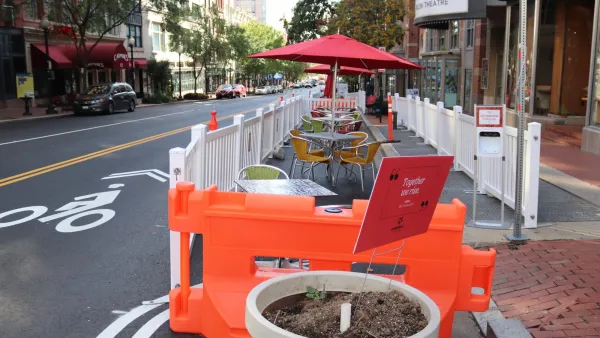
Opinion: Post-Pandemic Recovery Cannot Privilege Car Owners
Robust investment in the region's public transportation network can ensure a more equitable and sustainable path forward.
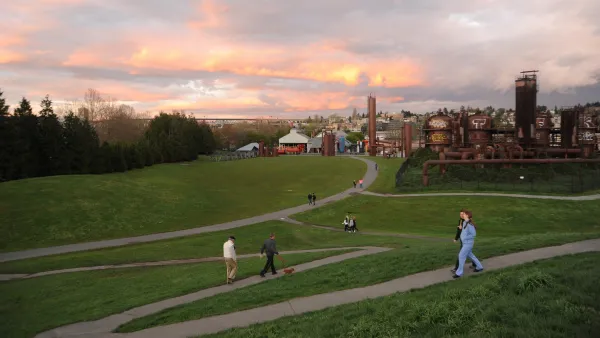
Seattle's 'Electrification Blueprint' Sets Ambitious Goals
The city's new transportation plan focuses on eliminating carbon emissions in its transportation sector, reducing congestion, and boosting public transit.
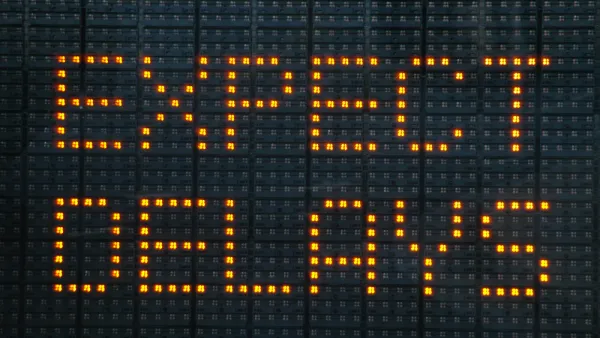
Op-Ed: 'Public Mood' Has Turned Against Cars in Cities
A survey of recent planning decisions demonstrates that cities are no longer necessarily looking to more and bigger highways to solve their traffic problems.

Planetizen Federal Action Tracker
A weekly monitor of how Trump’s orders and actions are impacting planners and planning in America.

Amtrak, CN end decades-long dispute with eight-year agreement
The new operating agreement establishes an updated framework for the companies to work together, including processes to resolve disputes.

Judges permit Denver to divert 77,000 acre feet from the Colorado River for reservoir expansion
Overuse and climate change have caused the Colorado River’s water levels to plummet.

NYC DOT wants faster, more permanent street upgrades
The city is examining ways to build more concrete infrastructure without getting entangled in 'decades-long' projects.

'Something we’ve never seen before:' rising utility rates could strain city finances nationwide
Data centers, climate change and other factors have caused utility rates in the United States to increase by 38% since 2020.

Trump to overrule local leaders, lease millions of acres of America’s Pacific Island territories’ seafloors to mining companies
International law says that the Indigenous people of America’s territories have a right to prior and informed consent regarding projects that impact their countries.

FREE Course: Walkable City 1: Why Walkability?
After describing his path towards focusing on walkability as the essence of good planning, Jeff Speck marches through his five principal reasons for making more walkable places.
Reinventing Malls: Planning Alchemy—Turning Gray Fields Into Gold
The course focuses on the opportunities and imperatives that shape reinvention of mall sites.

Harvard University Graduate School of Design
KFH Group Inc.
Greater Baltimore Committee
The Architects Foundation
University of Cincinnati Online
The Pocatello Development Authority
The Urban Renewal Agency of the City of Pocatello