New York City is getting ready to roll out their bicycle share program and has decided not to require cyclists to wear helmets.


Farrell says that while city officials and advocates believe that helmets are best, the disdain from the public for more regulation causes them to steer clear of requiring helmets while riding.
"Helmets, however, despite their ubiquity in the city's advertisements to encourage bicycling, are not mandatory for adults in New York. And neither city officials nor cycling advocacy groups are proposing a law to require them."
"Making helmets compulsory, they contend, could actually make cycling less safe. The more bikes on the street, their thinking goes, the safer bike-riding is; and helmet laws discourage people from joining in, because of either the cost and inconvenience of buying a helmet or fears of fines. City officials and some experts say helmet laws have hindered bike-share programs in other places."
Thanks to Cathie Pagano
Read the full story: A Gentle Push for Bikers, Not a Shove

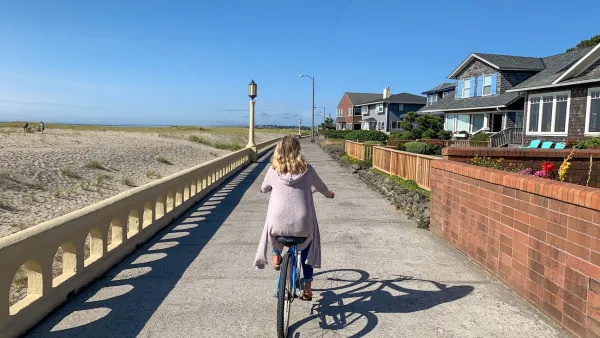
Oregon updates coastal bike map for the first time in a decade
The printed guide helps cyclists navigate the coastal region where cellular service can be unpredictable.

Unleashing the Power of Cycling With Smart Messaging
Lloyd Alter describes how creative design and copywriting can flip the script and promote active transport.
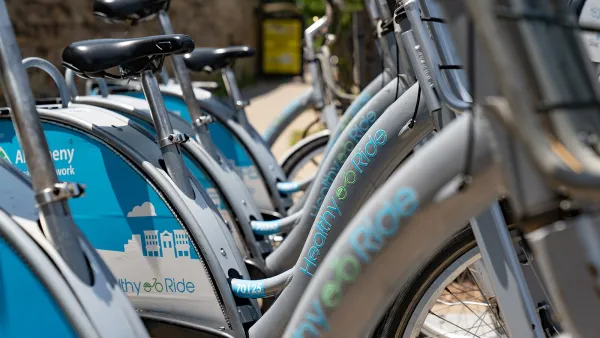
Pittsburgh To Revamp its Bike Share System With E-Bikes, New Stations
The system overhaul is partly due to nextbike's shift to focusing on its European markets. The new fleet will include 350 e-bikes and expand service to new neighborhoods.

Planetizen Federal Action Tracker
A weekly monitor of how Trump’s orders and actions are impacting planners and planning in America.

‘Going backwards:’ Baltimore mayor, students rally against state's transit funding plan
Maryland's proposed six-year plan provides no funding for Baltimore’s BMORE bus program and reduces its road maintenance funding.
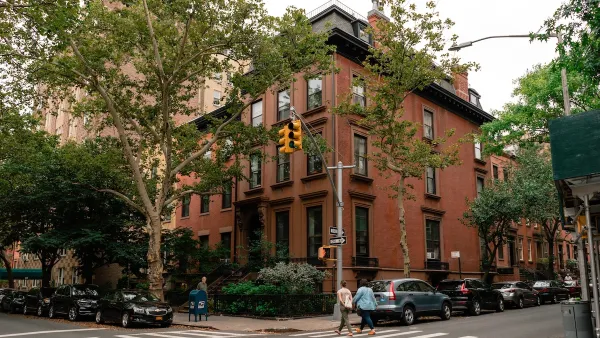
Mamdani sent nearly 6,000 pied-à-terre tax warnings to homes that didn’t qualify
A judge has ordered the administration to cancel thousands of pied-à-terre tax notices after it sent 35% of them erroneously.

Alaska takes public comment on new long-term plan for roads, bridges and more
Alaska's draft Statewide Transportation Improvement Program includes over $1 billion for the Alaska Marine Highway System.

A Colorado neighborhood is the testing ground for the future of home energy
A start up may have found a way to quickly bring geothermal energy to new communities.

Mamdani sent nearly 6,000 pied-à-terre tax warnings to homes that didn’t qualify
A judge has ordered the administration to cancel thousands of pied-à-terre tax notices after it sent 35% of them erroneously.

FREE Course: Walkable City 1: Why Walkability?
After describing his path towards focusing on walkability as the essence of good planning, Jeff Speck marches through his five principal reasons for making more walkable places.
Reinventing Malls: Planning Alchemy—Turning Gray Fields Into Gold
The course focuses on the opportunities and imperatives that shape reinvention of mall sites.

City of Thousand Oaks
City of Wisconsin Rapids
Harvard University Graduate School of Design
The Architects Foundation
University of Cincinnati Online
Northern Illinois Transit Authority (NITA)
The Pocatello Development Authority
The Urban Renewal Agency of the City of Pocatello