Bowing to increased opposition in the Central Valley, the struggling rail authority asked for an additional 2 weeks before releasing its business plan, a key document the legislature has requested. Deadlines loom.


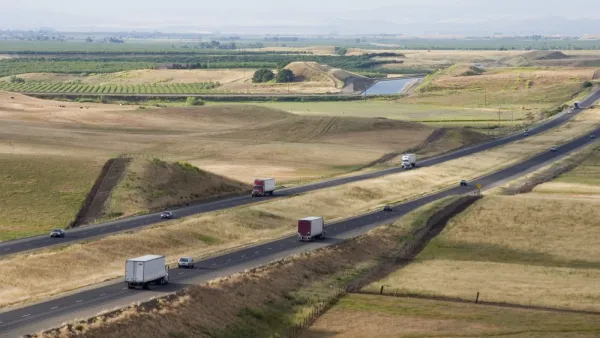
In order to have access to the full $6.3 billion in funding to begin building the 140-mile Central Valley segment, construction must begin in 2012. A looming deadline is Jan. 1 when the state legislature must approve their business plan.
"They have to answer some very skeptical legislators and general public with an adequate business plan," said state Sen. Alan Lowenthal (D-Long Beach). "Every report until now has been challenged. Let's deal with reality for a change."
"The plan will include new projections on construction costs, ridership and passenger fares. In another report expected next month, the authority also is supposed to identify the sources of money to build the system."
The authority has a new, well-financed opponent in the Central Valley to confront in the nation's largest farm, J.G. Boswell Co., who claims that the tracks will "shut down a company cotton gin complex, seed oil plant, private airport and maze of irrigation canals and levees, according to a company attorney."
Thanks to E&E Publishing - Greenwire
Read the full story: High-speed rail authority delays release of business plan

California Lawmakers Debate Killing High Speed Rail Funding
The cost increases and delays on the Central Valley project have some state lawmakers wondering whether funds should go toward local transit systems instead.
California High Speed Rail Breaks Ground Today in Fresno
The long-beleaguered California High Speed Rail project will have a historic moment today, January 6. The media's coverage of the event indicates the yet-to-be-determined future of the project.
California Supreme Court Rebuffs High Speed Rail Opponents
The California Supreme Court gave a green light to the state's embattled High Speed Rail Authority to begin issuing $8.6 billion in voter-approved bonds by rejecting the appeal by Central Valley opponents of the project.

Planetizen Federal Action Tracker
A weekly monitor of how Trump’s orders and actions are impacting planners and planning in America.

California plans to bury El Niño’s downpour
If the state plays its cards right, it may be able to store a billion acre-feet of El Niño’s water in aquifers.

Chicago breaks ground on $3 billion megadevelopment
The new neighborhood, titled Foundry Park, will one day host 3,700 residences.

This road in NYC is infamously dangerous — and Mamdani can't fix it
New York City's Ocean Parkway is known for reckless driving, but the power to implement safety measures lies with the state rather than the city.

One of Denver’s busiest corridors to gain BRT
The project will span 18 miles and contain 74 bus rapid transit stations.

275,000 bus trips are at stake on Seattle's ballot
If passed, the Seattle Transit Measure would trigger a 0.3% sales tax and raise an average of $138 million per year to maintain and expand Seattle’s bus services.

FREE Course: Walkable City 1: Why Walkability?
After describing his path towards focusing on walkability as the essence of good planning, Jeff Speck marches through his five principal reasons for making more walkable places.
Reinventing Malls: Planning Alchemy—Turning Gray Fields Into Gold
The course focuses on the opportunities and imperatives that shape reinvention of mall sites.

City of Rosemead
Rutgers University, Edward J. Bloustein School of Planning and Public Policy
One Hundred Miles
Hunter College, City University of New York (CUNY)
The Architects Foundation
University of Cincinnati Online
City of Cambridge
Montrose County
The Pocatello Development Authority