"...all architecture – most especially that which thinks its not – is now Post Modern," writes Sam Jacob.


Jacob presents an excerpt from his commentary in the new Architecture Design Magazine which he's calling, "How I Learned To Stop Worrying And Love Post Modernism.":
"The argument here is that it was a grave error for Post Modernism to allow itself to be cast as a style rather than an attitude and that beyond the most superficial of glances there was a far more complex, ambitious and politicised project."
Jacob argues that the conditions of the 21st century, particularly the Internet, have flattened out the arc of history:
"Post-Modernism's pluralism – once radical – has been co-opted as free market choice. The effects of fully fledged neo-liberal capitalism on our physical, social and economic landscapes is profound and disorientating. In the wake of such pretzel logics as credit default swaps – the standard-bearing instrument of deregulated, dematerialised financial product – we might add confusion to Post-Modernism's complexity and contradiction."
Read the full story: Radical Post Modernism

Planetizen Federal Action Tracker
A weekly monitor of how Trump’s orders and actions are impacting planners and planning in America.

Washington state to charge fee to drivers with fuel-efficient cars
Revenue from the fee will go towards supporting the state’s highways.
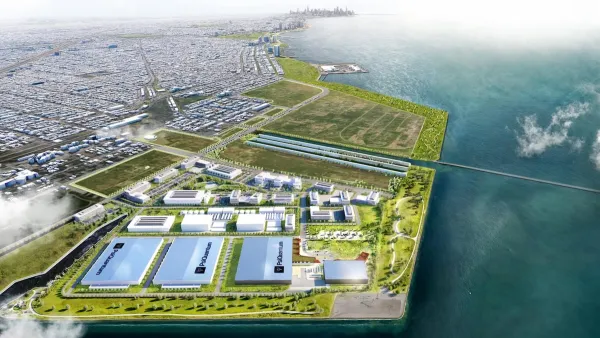
Illinois considers spending $1 billion in taxpayer money on data center
A quantum computing campus and data center are currently under construction in Chicago.

Corpus Christi drilled wells at 'lightning speed,' leaving neighbors fearing for their water supply
Underground water became a critical fix through the worst of Corpus Christi’s drought. But experts warn against depending on wells for too long.

Nearly billion-dollar budget deficit looms over MTA
Metropolitan Transit Authority officials say the cost of healthcare, wages, electricity and fuel is outpacing revenue from tolls, taxes and fares.

Senate passes bill overhauling permitting
The bill still needs to pass the House.

FREE Course: Walkable City 1: Why Walkability?
After describing his path towards focusing on walkability as the essence of good planning, Jeff Speck marches through his five principal reasons for making more walkable places.
Reinventing Malls: Planning Alchemy—Turning Gray Fields Into Gold
The course focuses on the opportunities and imperatives that shape reinvention of mall sites.

City of Charlotte
City of Rosemead
Rutgers University, Edward J. Bloustein School of Planning and Public Policy
University of Michigan School for Environment and Sustainability (SEAS)
Hunter College, City University of New York (CUNY)
The Architects Foundation
University District Partnership