As consumer real estate debt surpasses $9 trillion, TIME magazine examines four radical proposals that top policymakers and economists think will help turn things around.


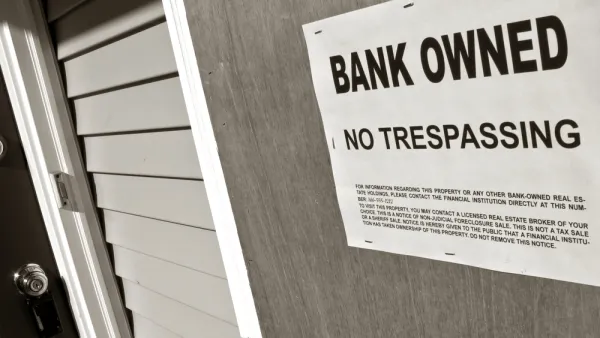
"Two and a half years on from the crisis, just 760,000 Americans, or 1.5% of the country's 51 million mortgage holders, have received modifications through Barack Obama's signature program, the Home Affordable Modification Program - and nearly half of them have defaulted anyway. After a total of $18 billion in government spending on housing bailouts since 2008, the President declared in early July that the efforts had largely failed," report Massimo Calabresi and Stephen Gangel.
Cognizant that housing will once again be on voters' minds in the upcoming 2012 elections, the Obama White House is ready to roll out another program to ameliorate the financial distress facing homeowners across the nation.
Weighing in on the top four proposals, Calabresi and Gangel write, "[E]conomists and politicians are embracing increasingly radical ideas as a seemingly obvious fact gains consensus. America can't get out of its economic doldrums until it fixes the problem that caused the crisis in the first place: housing."
Read the full story: How To Save The Housing Market: Destroy Houses

Proposed Bill Would Outlaw Nearly Half of Cleveland's Airbnbs
The proposed new ordinance aims to help combat the Cleveland's housing crunch and eliminate nuisance complaints related to short-term rental properties.
Mapping Tool Enables Housing Action in Detroit and Beyond
A web tool that helped Detroit develop a housing plan may ultimately provide public data on every parcel in the country.

Revolving loan funds: The hottest trend in housing finance
A housing policy tool is gaining momentum that could stimulate lots of mixed-income homes for a relatively small investment. Will partisan ideology stand in the way of its spread?

Planetizen Federal Action Tracker
A weekly monitor of how Trump’s orders and actions are impacting planners and planning in America.

Washington state to charge fee to drivers with fuel-efficient cars
Revenue from the fee will go towards supporting the state’s highways.

Illinois considers spending $1 billion in taxpayer money on data center
A quantum computing campus and data center are currently under construction in Chicago.

Senate passes bill overhauling permitting
The bill still needs to pass the House.

Did data centers change how voters cast their ballots?
Texas, Ohio, and Georgia all flipped party control. But in rural counties, the effect of local data centers was mixed.

Amtrak invests in eight new Airo trainsets
The new trainsets will begin serving passengers in 2031.

FREE Course: Walkable City 1: Why Walkability?
After describing his path towards focusing on walkability as the essence of good planning, Jeff Speck marches through his five principal reasons for making more walkable places.
Reinventing Malls: Planning Alchemy—Turning Gray Fields Into Gold
The course focuses on the opportunities and imperatives that shape reinvention of mall sites.

City of Charlotte
City of Rosemead
Rutgers University, Edward J. Bloustein School of Planning and Public Policy
University of Michigan School for Environment and Sustainability (SEAS)
Hunter College, City University of New York (CUNY)
The Architects Foundation
University District Partnership