Neighborhoods in New York City have built temporary "pop-up" playgrounds in an effort to encourage more physical activity among children.


"During a two-month period last year, seven civic coalitions in New York neighborhoods like East Harlem and the South Bronx got permits from the city to close certain local streets to traffic for designated periods of time - say, between 10 a.m. and 3 p.m. on a summer weekday. Working with the police and other city agencies, they re-designated the areas as temporary "play streets," encouraging neighborhood children to use them for exercise and offering a range of free games, athletic activities and coaching.
Call them pop-up playgrounds.
The experiment was successful. According to Karen Lee of the Department of Health and Mental Hygiene, which helped oversee the project, data collected from the sites indicates that families visited local play streets for one to two and a half hours on average - time that many would have otherwise spent inside, according to a majority of the parents surveyed."
12 pop-up playgrounds have been built this year.
Read the full story: Presto, Instant Playground

The New Way to Play
New playground designs are shaking up public parks around the world. So long, slides, hello interpretive playscapes.
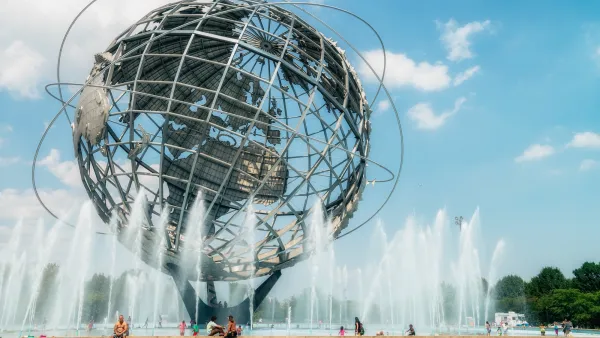
Historic Queens park is getting a $120M upgrade
The borough's largest park will undergo significant upgrades for accessibility, flood mitigation and historic preservation.

Jim Crow Robbed America of Public Pools. It’s Time to get Them Back.
Disparity amongst who can and can’t swim in America isn’t an accident — and it's deadly. Let’s reclaim the community pool as an essential public space.

Planetizen Federal Action Tracker
A weekly monitor of how Trump’s orders and actions are impacting planners and planning in America.

Northwest rail fans eager for Sept. 30 debut of Amtrak’s Airo fleet
Get ready for that new train smell and more seats. But they won’t go faster or run more frequently on the Cascades route in Washington and Oregon.
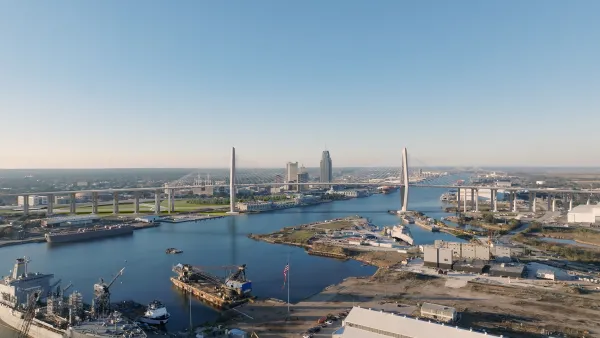
Alabama scores up to $2.5 billion federal loan for largest infrastructure project in state’s history
The Mobile River Bridge and Bayway Project aims to ease congestion at Alabama’s worst bottleneck.

Novel study finds extreme state-by-state disparity in housing construction timelines
The first comprehensive working paper on U.S. construction timelines also found that the permitting process for multi-family projects has slowed nationwide.

California may destroy its beaches trying to save homes from El Niño
Boulders and seawalls can protect homes from waves, but ultimately destroy sandy beaches.

California high-speed rail accomplishes only one legislative goal in 2026
The majority of the agency's failed pitches were never developed into written proposals.

FREE Course: Walkable City 1: Why Walkability?
After describing his path towards focusing on walkability as the essence of good planning, Jeff Speck marches through his five principal reasons for making more walkable places.
Reinventing Malls: Planning Alchemy—Turning Gray Fields Into Gold
The course focuses on the opportunities and imperatives that shape reinvention of mall sites.

City of Thousand Oaks
City of Wisconsin Rapids
Harvard University Graduate School of Design
The Architects Foundation
University of Cincinnati Online
Northern Illinois Transit Authority (NITA)
The Pocatello Development Authority
The Urban Renewal Agency of the City of Pocatello