As Singapore's population booms, officials are working through plans to help the city absorb its people but also provide them with adequate green space.


"In Singapore's next "green road map," its 10-year development plan, the country aims to go from being "a garden city" to "a city in a garden." "The difference might sound very small," says Poon Hong Yuen, the chief executive of the country's National Parks Board, "but it's a bit like saying my house has a garden and my house is in the middle of a garden. What it means is having pervasive greenery, as well as biodiversity, including wildlife, all around you."
More and more cities are waking up to the need to be more than sweatshops on a citywide scale. Singapore rose to international prominence by constructing a country that was orderly and efficient. But being globally competitive today is about more than productivity. It is about sustainability, too."
It's a strategy the city-state has employed since the 1960s.
Read the full story: An Urban Jungle for the 21st Century
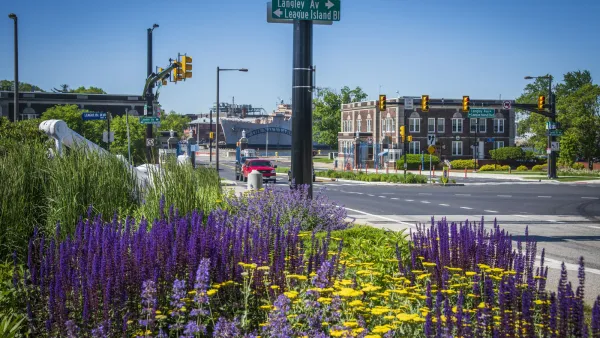
Philadelphia sees 29% drop in gun violence near new green spaces
A city-backed program that cleans up blighted and vacant lots is creating new public spaces and reducing crime in surrounding communities.
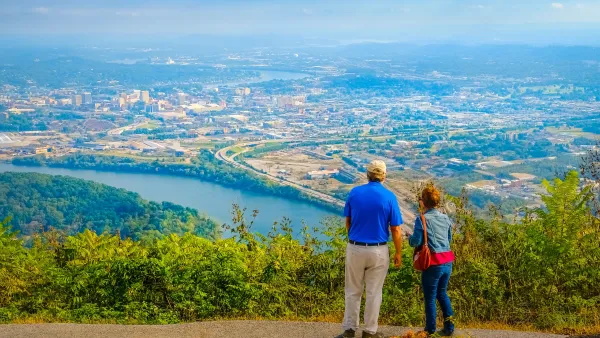
Chattanooga Earns North America’s First ‘National Park City’ Designation
The award recognizes cities that prioritize biodiversity and resident access to parks and green spaces.

When Airports Become Parks
In Berlin and elsewhere, defunct airstrips are transformed into valuable public space.

Planetizen Federal Action Tracker
A weekly monitor of how Trump’s orders and actions are impacting planners and planning in America.

Eastern Nebraska is running out of electricity
Data centers and electrification are straining eastern Nebraska’s grid, throttling economic development.

Washington state to charge fee to drivers with fuel-efficient cars
Revenue from the fee will go towards supporting the state’s highways.

Instead of building new housing, LA developers are turning mansions into mega-mansions
In the richest areas, the number of houses valued at $30 million with demolition permits has skyrocketed since 2018.

Illinois considers spending $1 billion in taxpayer money on data center
A quantum computing campus and data center are currently under construction in Chicago.

As development costs rise, Boston moves to lessen affordable housing requirements
The Boston Zoning Commission and the City Council still need to approve Boston Mayor Michelle Wu’s proposed changes

FREE Course: Walkable City 1: Why Walkability?
After describing his path towards focusing on walkability as the essence of good planning, Jeff Speck marches through his five principal reasons for making more walkable places.
Reinventing Malls: Planning Alchemy—Turning Gray Fields Into Gold
The course focuses on the opportunities and imperatives that shape reinvention of mall sites.

City of Charlotte
City of Rosemead
Rutgers University, Edward J. Bloustein School of Planning and Public Policy
University of Michigan School for Environment and Sustainability (SEAS)
Hunter College, City University of New York (CUNY)
The Architects Foundation
University District Partnership
City of Cambridge
The Pocatello Development Authority