New ideas are emerging to address the mobility issues faced by cities. One specific project focuses on the epicenter of congested America: Los Angeles.


"Gensler Los Angeles recently designed a phone-based application, Network_LA Transit, which generates flexible vehicle choices, by managing individual commuting needs through a system of data. The network adapts and restructures existing transportation systems such as bicycles, scooters and the LA Metro, while personalizing them to individual commuter needs. It works by keeping current transportation stops, but also liberating the routes to respond to user demands. Network_LA Transit integrates real-time data from ground transport, stops and users through a GPS application, tripFinder, to generate optimal itineraries for each user."
A video explains the idea, though as this post suggests, such a project would likely require many users to have a noticeable effect.
Read the full story: Towards a Car-less California
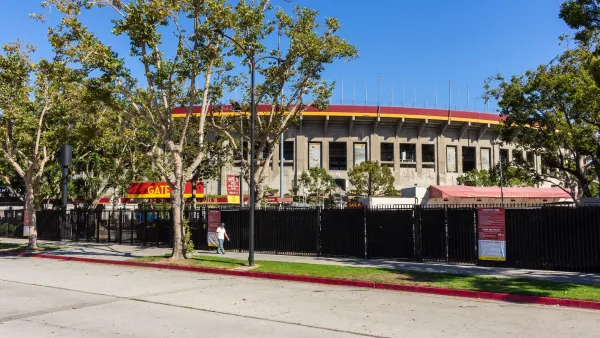
LA authorizes $9.5M for sidewalk repairs around Olympic venues
The city is hosting the Olympic and Paralympic Games in 2028.

Car Trips are Down, With Young People Leading the Charge
Americans are driving less, and we have Gen Z to thank for it.
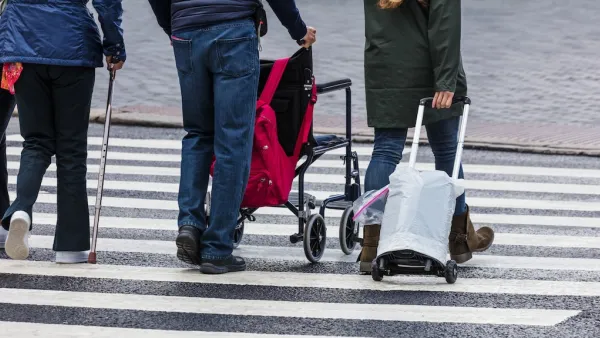
‘Week Without Driving’ Highlights Needs of Non-Drivers
The event encourages public officials to use their local public transit and engage with the people who rely on it every day.

Planetizen Federal Action Tracker
A weekly monitor of how Trump’s orders and actions are impacting planners and planning in America.

Eastern Nebraska is running out of electricity
Data centers and electrification are straining eastern Nebraska’s grid, throttling economic development.

Washington state to charge fee to drivers with fuel-efficient cars
Revenue from the fee will go towards supporting the state’s highways.

Instead of building new housing, LA developers are turning mansions into mega-mansions
In the richest areas, the number of houses valued at $30 million with demolition permits has skyrocketed since 2018.

Illinois considers spending $1 billion in taxpayer money on data center
A quantum computing campus and data center are currently under construction in Chicago.

As development costs rise, Boston moves to lessen affordable housing requirements
The Boston Zoning Commission and the City Council still need to approve Boston Mayor Michelle Wu’s proposed changes

FREE Course: Walkable City 1: Why Walkability?
After describing his path towards focusing on walkability as the essence of good planning, Jeff Speck marches through his five principal reasons for making more walkable places.
Reinventing Malls: Planning Alchemy—Turning Gray Fields Into Gold
The course focuses on the opportunities and imperatives that shape reinvention of mall sites.

City of Charlotte
City of Rosemead
Rutgers University, Edward J. Bloustein School of Planning and Public Policy
University of Michigan School for Environment and Sustainability (SEAS)
Hunter College, City University of New York (CUNY)
The Architects Foundation
University District Partnership
City of Cambridge
The Pocatello Development Authority