The rate of workers who commute by bike continues to increase, but it reflects a decidedly white demographic, specifically men. The Washington Post examines biking through the lens of race and gender.


"Statistics suggest that biking is not as popular with African Americans as it with whites. A report released this spring called 'Bicycling Renaissance in North America?' found that cycling has grown significantly in the past decade. However, most of the growth is among middle- and upper-income white men," Vanessa Williams reports.
In the article, Williams profiles an African-American bicycle activist Veronica Davis. Ms. Davis is the co-founder of Black Women Bike DC, an organization that coalesces and advocates biking as a means of transportation among blacks. The group also clamors for the construction of bike infrastructure in black neighborhoods.
"Black Women Bike has attracted women with varied interests and skill levels - from triathletes, to women who are returning after years away from cycling, to women who don't even own bikes yet."
Read the full story: Black women take their place in D.C.’s bike lanes
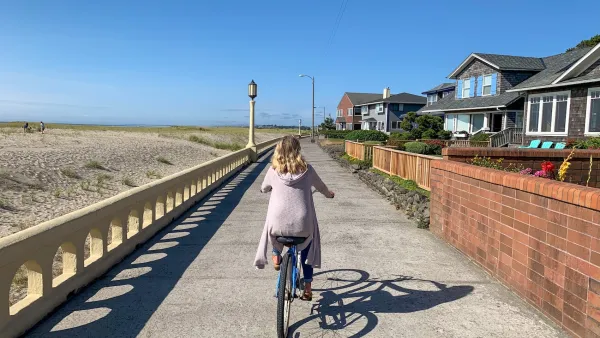
Oregon updates coastal bike map for the first time in a decade
The printed guide helps cyclists navigate the coastal region where cellular service can be unpredictable.
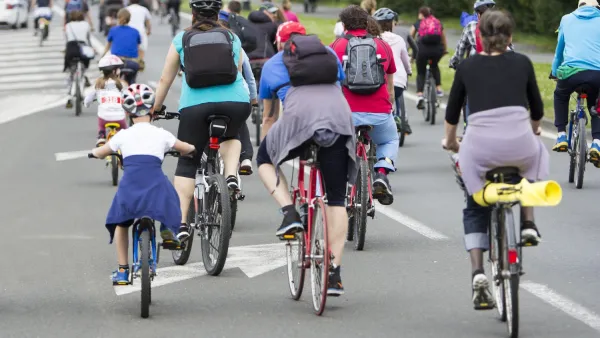
Unleashing the Power of Cycling With Smart Messaging
Lloyd Alter describes how creative design and copywriting can flip the script and promote active transport.
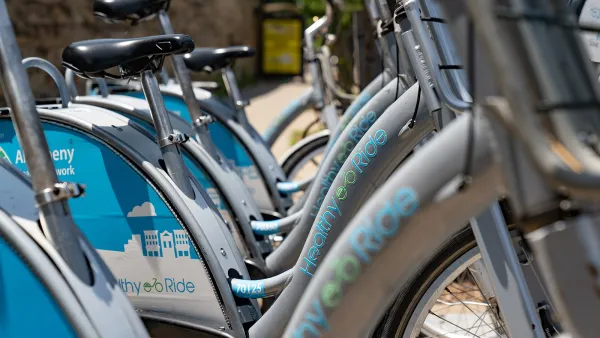
Pittsburgh To Revamp its Bike Share System With E-Bikes, New Stations
The system overhaul is partly due to nextbike's shift to focusing on its European markets. The new fleet will include 350 e-bikes and expand service to new neighborhoods.

Planetizen Federal Action Tracker
A weekly monitor of how Trump’s orders and actions are impacting planners and planning in America.

California plans to bury El Niño’s downpour
If the state plays its cards right, it may be able to store a billion acre-feet of El Niño’s water in aquifers.

Desperate measures: Advocates weigh draining Lake Powell to fill Colorado River
Draining the reservoir could reduce evaporation losses by a couple hundred thousand acre-feet.

US buildings threatened, destroyed by fires set to triple by 2060
Researchers found a high fire risk for socioeconomically vulnerable neighborhoods in the American West.

LA residents may be allowed to paint their own crosswalks
Councilwoman Katy Yaroslavsky put out a motion instructing the Los Angeles Department of Public Transportation to study the feasibility of allowing volunteers to paint crosswalks.

Dallas moves to overhaul its zoning code
The city's zoning reform will allow more multi-family and mixed-use developments.

FREE Course: Walkable City 1: Why Walkability?
After describing his path towards focusing on walkability as the essence of good planning, Jeff Speck marches through his five principal reasons for making more walkable places.
Reinventing Malls: Planning Alchemy—Turning Gray Fields Into Gold
The course focuses on the opportunities and imperatives that shape reinvention of mall sites.

City of Rosemead
Rutgers University, Edward J. Bloustein School of Planning and Public Policy
One Hundred Miles
Hunter College, City University of New York (CUNY)
The Architects Foundation
University of Cincinnati Online
City of Cambridge
Montrose County
The Pocatello Development Authority