Campaigning blindly to encourage people to relinquish cars and take public transit is not enough. Policymakers need to develop business school marketing strategies to brand their campaigns, experts say.


The global car industry spends more than $20 billion annually on marketing to get people behind the wheels, reports The Dirt. Transit agencies do not need to squander their capital and match that figure in order to give public transportation a fighting chance in the competition. Instead, what these agencies need is a smart game plan.
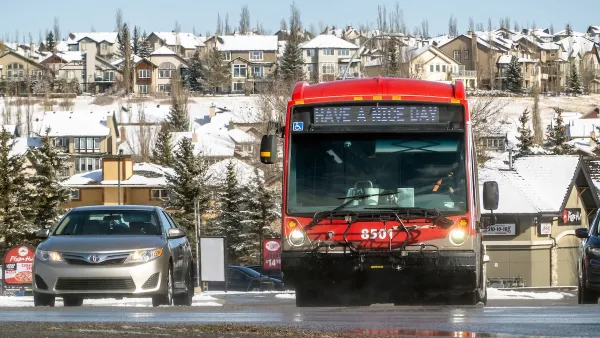
Transportation think tank EMBARQ discusses several marketing options that will help retain ridership, attract new customers, and secure political base and financial support. Some of the branding strategies include defining core values of public transit, avoiding terms that come with a stigma (e.g. bus), building coalition at different levels of government, and making user education for new services readily available.
Read the full story: Increasing Public Transport Use with Smart Campaigns

For Better Public Transit, We Need Better Stories
Public transportation provides many often-overlooked benefits. We can do better at communicating the value of transit investments. We have good stories to tell.
Why Saving Transit Matters
Jarrett Walker argues that letting transit systems die has impacts that go far beyond transit riders.

‘It’s Been 50 years’: Public Transit Law Passes in Montana
Legislation would fix transportation district issue, allow for greater reach on city bus routes.

Planetizen Federal Action Tracker
A weekly monitor of how Trump’s orders and actions are impacting planners and planning in America.

Amtrak, CN end decades-long dispute with eight-year agreement
The new operating agreement establishes an updated framework for the companies to work together, including processes to resolve disputes.

Judges permit Denver to divert 77,000 acre feet from the Colorado River for reservoir expansion
Overuse and climate change have caused the Colorado River’s water levels to plummet.

NYC DOT wants faster, more permanent street upgrades
The city is examining ways to build more concrete infrastructure without getting entangled in 'decades-long' projects.

'Something we’ve never seen before:' rising utility rates could strain city finances nationwide
Data centers, climate change and other factors have caused utility rates in the United States to increase by 38% since 2020.

Trump to overrule local leaders, lease millions of acres of America’s Pacific Island territories’ seafloors to mining companies
International law says that the Indigenous people of America’s territories have a right to prior and informed consent regarding projects that impact their countries.

FREE Course: Walkable City 1: Why Walkability?
After describing his path towards focusing on walkability as the essence of good planning, Jeff Speck marches through his five principal reasons for making more walkable places.
Reinventing Malls: Planning Alchemy—Turning Gray Fields Into Gold
The course focuses on the opportunities and imperatives that shape reinvention of mall sites.

Harvard University Graduate School of Design
KFH Group Inc.
Greater Baltimore Committee
The Architects Foundation
University of Cincinnati Online
The Pocatello Development Authority
The Urban Renewal Agency of the City of Pocatello