House Transportation Committee Chairman John Mica has proposed a bill to privatize Northeast Corridor rail operations. This post from Pedestrian Observations looks at what such a plan would mean.


Amtrak, the operator of the Northeast Corridor and the Acela train, is not particularly happy about the idea.
"This will be done more like European rather than Japanese privatization: Amtrak will not be privatized directly, but instead the Amtrak-owned trackage and rolling stock in the Northeast will be transferred to a separate government-owned company, which will award a design-build-operate-maintain contract based on competitive bidding and lease the infrastructure to the winning bidder for 99 years.
Amtrak President Joseph Boardman replied, 'This is broader than the northeast at this point. This is the Privatize Passenger Rail for America Act. The overall impact is this takes Amtrak apart, from an infrastructure standpoint, and replaces it with a government entity.'"
Read the full story: Mica Introduces NEC Privatization Bill
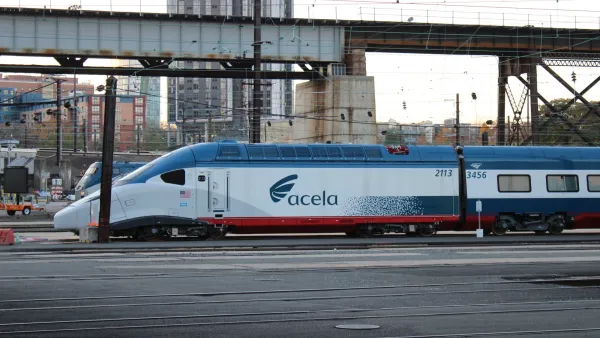
Amtrak expands $10 'Night Owl Fares' on Northeast Corridor
Passengers can buy $10-30 tickets for overnight trips between all Northeast Corridor destinations.
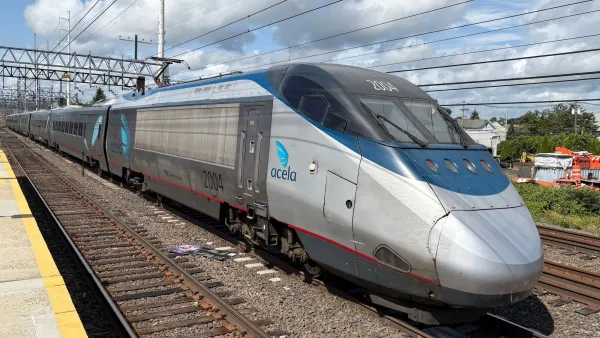
Amtrak cancels over a dozen trains due to extreme heat
The eastern side of the country faces a scorching holiday heat wave.
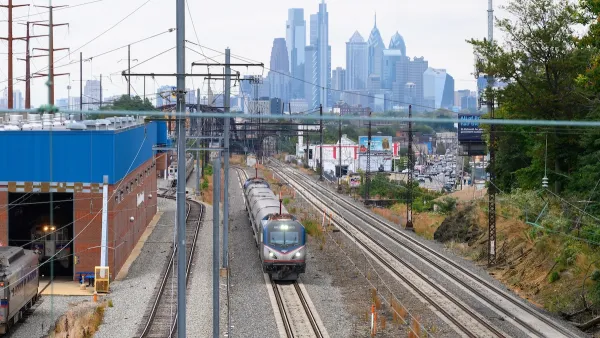
Loss of SEPTA Funding Could Kill Amtrak’s Fifth Busiest Line
The Philadelphia transit agency’s funding challenges could eliminate its contributions to Amtrak’s Keystone Service linking Philly and NYC.

Desperate measures: Advocates weigh draining Lake Powell to fill Colorado River
Draining the reservoir could reduce evaporation losses by a couple hundred thousand acre-feet.

Eastern Nebraska is running out of electricity
Data centers and electrification are straining eastern Nebraska’s grid, throttling economic development.

Move over, LA: St. Louis gears up for Olympics, invests millions in downtown redevelopment
The Missouri city will host the 2028 Olympic soccer group stage and knockout matches.

Mass. votes against statewide minimum lot size for single-family homes
Over 2 million residents voted on Question 7; it was decided by just over 30,000 votes.

Maryland’s $15 billion bridge project gains key approval
The Maryland Transit Authority said the project will create over 60,000 jobs and add $23 billion to the local economy.

‘No clear next steps’ for Chicago's permanent festival grounds
Eleventh Ward Ald. Nicole Lee has suggested Soldier Field as a possible location for the permanent event space.

FREE Course: Walkable City 1: Why Walkability?
After describing his path towards focusing on walkability as the essence of good planning, Jeff Speck marches through his five principal reasons for making more walkable places.
Reinventing Malls: Planning Alchemy—Turning Gray Fields Into Gold
The course focuses on the opportunities and imperatives that shape reinvention of mall sites.

City of Rosemead
Rutgers University, Edward J. Bloustein School of Planning and Public Policy
One Hundred Miles
University of Michigan School for Environment and Sustainability (SEAS)
Hunter College, City University of New York (CUNY)
The Architects Foundation
City of Cambridge
Montrose County
The Pocatello Development Authority