25 years after the publication of Cadillac Desert, scientists have scrutinized the predictions of the hallmark history of water in the Western U.S. and find that its dire warnings are not far off.


Published in 1986, author Marc Reisner's book was the most comprehensive look at water issues in the West. But few if any studies had ever been done to see how its predictions turned out, which inspired John Sabo, an Arizona State University professor, to take a look.
"[W]hile Sabo thinks the term apocalypse is overstated, he believes Reisner accurately depicted "region-wide hydrologic dysfunction" in the West. "In many ways," says Sabo, "Reisner was visionary." And that was before widespread knowledge about climate change reshuffled the cards.
The late journalist's insights and analysis extend to the mid-19th century, when "Go West, young man" echoed through the urbanizing East. Back then, Los Angeles had fewer than 2,000 people, and Denver barely existed. But the now-iconic call to action was followed by an equally transformative, if lesser-known maxim, "Rain follows the plow," a cultish belief inspired by a mere coincidence. For in a key period of those heady days of relentless western expansion, the so-called Great American Desert was soaked by uncharacteristic rainfall, prompting many to attribute the increased moisture to the building of towns, creation of mines and plowing of land.
Read the full story: Greening the Desert? Not So Fast!

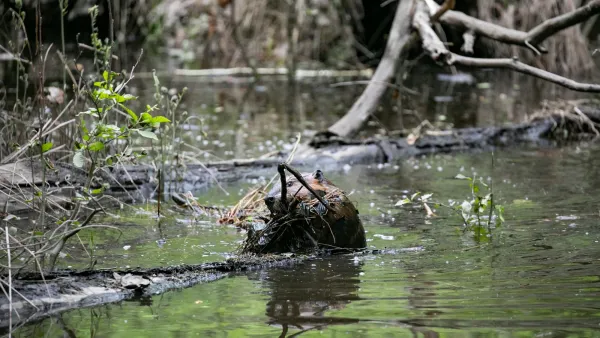
Two years after California reintroduced beavers, they are transforming the landscape into a 'climate-resilient powerhouse'
A beaver restoration program is proving that ancient solutions can help solve modern problems.
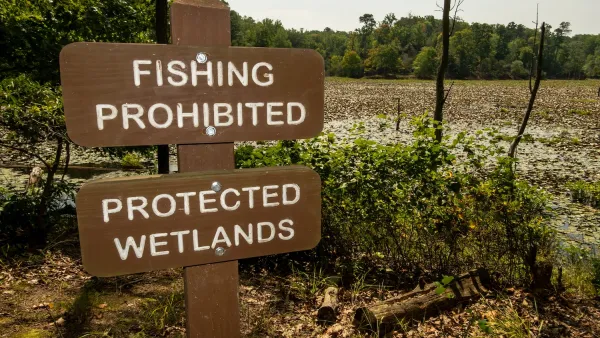
Proposed EPA Rule Change Would Exclude Millions of Acres of Wetlands and Waterways From Federal Protection
A proposed change to the Waters of the United States Rule would narrow the definition of protected waterways.
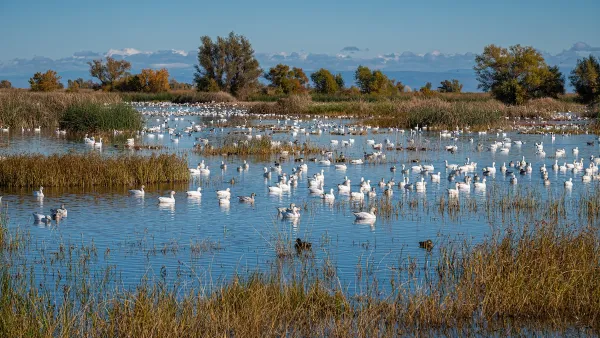
California Lawmakers Move to Protect Waterways
Anticipating that the Trump EPA will reinstate a 2017 policy that excluded seasonal wetlands and waterways from environmental protections.

Planetizen Federal Action Tracker
A weekly monitor of how Trump’s orders and actions are impacting planners and planning in America.

Amtrak, CN end decades-long dispute with eight-year agreement
The new operating agreement establishes an updated framework for the companies to work together, including processes to resolve disputes.

Judges permit Denver to divert 77,000 acre feet from the Colorado River for reservoir expansion
Overuse and climate change have caused the Colorado River’s water levels to plummet.

NYC DOT wants faster, more permanent street upgrades
The city is examining ways to build more concrete infrastructure without getting entangled in 'decades-long' projects.

'Something we’ve never seen before:' rising utility rates could strain city finances nationwide
Data centers, climate change and other factors have caused utility rates in the United States to increase by 38% since 2020.

Trump to overrule local leaders, lease millions of acres of America’s Pacific Island territories’ seafloors to mining companies
International law says that the Indigenous people of America’s territories have a right to prior and informed consent regarding projects that impact their countries.

FREE Course: Walkable City 1: Why Walkability?
After describing his path towards focusing on walkability as the essence of good planning, Jeff Speck marches through his five principal reasons for making more walkable places.
Reinventing Malls: Planning Alchemy—Turning Gray Fields Into Gold
The course focuses on the opportunities and imperatives that shape reinvention of mall sites.

Harvard University Graduate School of Design
KFH Group Inc.
Greater Baltimore Committee
The Architects Foundation
University of Cincinnati Online
The Pocatello Development Authority
The Urban Renewal Agency of the City of Pocatello