The U.N.'s population division has increased their world population projection, previously set to peak at mid-century at 9 billion. Now they say it will continue growing to reach 10.1 billion by 2100, with Africa tripling its numbers.


"The new report comes just ahead of a demographic milestone, with the world population expected to pass 7 billion in late October. Dr. Zlotnik, director of the United Nations population division said in an interview that the revised numbers were based on new forecasting methods and the latest demographic trends. But she cautioned that any forecast looking 90 years into the future comes with many caveats."
While Africa's population is expected to more than triple from 1 billion currently to 3.6 billion by 2100, the "United States population will rise from today's 311 million to 478 million by 2100." By comparison, "Nigeria, the most populous country in Africa...will rise from today's 162 million to 730 million by 2100."
And what of the world's most populous country?
"China, which has for decades enforced restrictive population policies, could soon enter the ranks of countries with declining populations, peaking at 1.4 billion in the next couple of decades, then falling to 941 million by 2100."
Read the full story: U.N. Forecasts 10.1 Billion People by Century’s End

US casts sole dissenting vote against UN road safety declaration
The UN declaration calls for cutting road deaths in half by 2030.

Celebrating World Environment Day
Commemorate the 51st World Environment Day with this curated list of Planetizen articles highlighting research and projects that promote a healthier, more sustainable world.
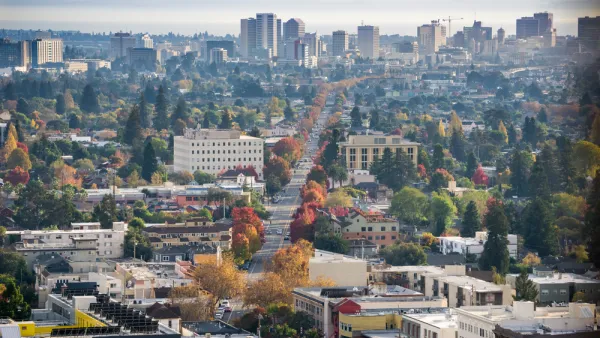
California Exodus: Population Drops Below 39 Million
Never mind the 40 million that demographers predicted the Golden State would reach by 2018. The state's population dipped below 39 million to 38.965 million last July, according to Census data released in March, the lowest since 2015.

Planetizen Federal Action Tracker
A weekly monitor of how Trump’s orders and actions are impacting planners and planning in America.

Eastern Nebraska is running out of electricity
Data centers and electrification are straining eastern Nebraska’s grid, throttling economic development.

Study reveals best places in the U.S. for cycling, walking
New research from Streetlight Data examines bicycle and pedestrian miles per capita in the 100 largest U.S. cities by population.

DSA members accuse Mamdani of 'abandoning values' over housing redevelopment
New York City's mayor plans to replace about 2,000 units of public housing with private, mixed-income housing.

All sides of BRT debate unhappy with CDOT’s most recent move
The Colorado Department of Transportation is no longer considering center-running bus lanes for Colorado Boulevard.

Massachusetts bogs generate both power, and cranberries
Putting solar panels above farmland is one way Massachusetts is advancing toward its goal of net-zero carbon emissions by 2050.

FREE Course: Walkable City 1: Why Walkability?
After describing his path towards focusing on walkability as the essence of good planning, Jeff Speck marches through his five principal reasons for making more walkable places.
Reinventing Malls: Planning Alchemy—Turning Gray Fields Into Gold
The course focuses on the opportunities and imperatives that shape reinvention of mall sites.

City of Rosemead
Rutgers University, Edward J. Bloustein School of Planning and Public Policy
One Hundred Miles
University of Michigan School for Environment and Sustainability (SEAS)
Hunter College, City University of New York (CUNY)
The Architects Foundation
City of Cambridge
The Pocatello Development Authority
The Urban Renewal Agency of the City of Pocatello