Transit agencies brace for reduced ridership but will keep running -- for a little while, at least.


Whether or not transit agencies will have to shut down because of the Federal government's stalemate depends on who you talk to. Streetsblog's Tanya Snyder has the story:
Just a month ago, AASHTO sounded the warning that the transportation sector could lose up to $100 million a day in case of a government shutdown, which now looks all but inevitable. However, Congress's extension of SAFETEA-LU through the end of the fiscal year (September 30) has put their minds at ease. Now, AASHTO spokesperson Tony Dorsey says spending for federal highway programs will continue unabated, despite a shutdown. "At this point," Dorsey said, "we're not anticipating any issues." Still, he said, they're hoping that "should there be a shutdown, it will be a very, very short one."
But that's not the whole story."
Thanks to Tanya Snyder
Read the full story: Government Shutdown Would Be a Punch in the Gut to Transit Agencies

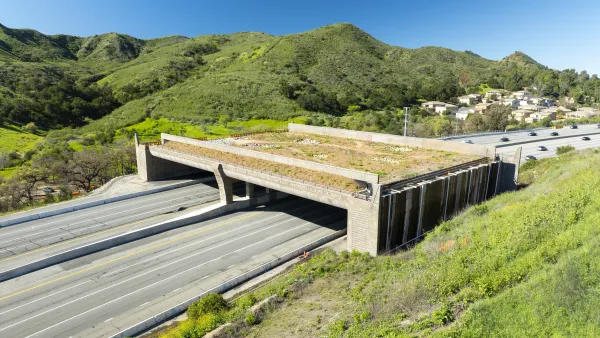
California invests $2.7 billion in over 150 transportation projects
The fund allocates money to transit upgrades and safety improvements to streets surrounding schools, among other ventures.
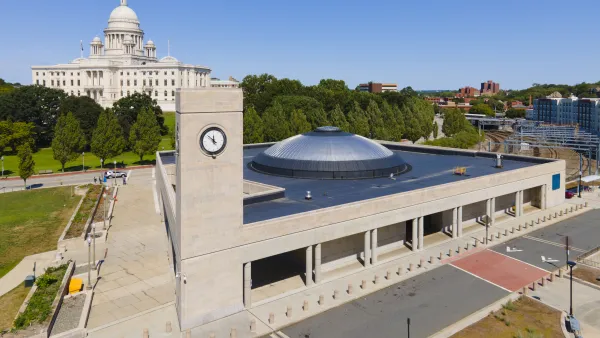
Providence train station to gain new bus hub
The new hub will replace the one currently located at Kennedy Plaza.
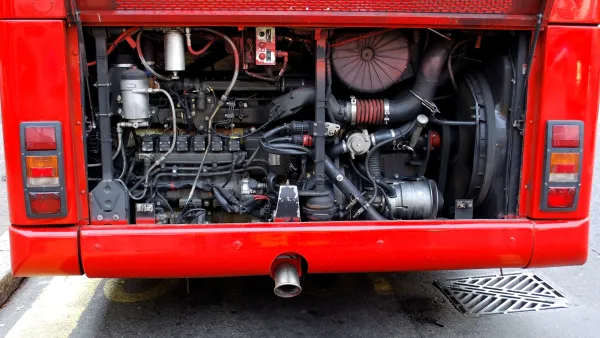
APTA Requests CDL Testing Change to Address Bus Operator Shortage
Eighty-four percent of U.S. transit agencies surveyed said CDL complexity was a hiring obstacle, with the “under-the-hood” requirement being the most challenging.

Planetizen Federal Action Tracker
A weekly monitor of how Trump’s orders and actions are impacting planners and planning in America.

Amtrak, CN end decades-long dispute with eight-year agreement
The new operating agreement establishes an updated framework for the companies to work together, including processes to resolve disputes.

Judges permit Denver to divert 77,000 acre feet from the Colorado River for reservoir expansion
Overuse and climate change have caused the Colorado River’s water levels to plummet.

Northwest rail fans eager for Sept. 30 debut of Amtrak’s Airo fleet
Get ready for that new train smell and more seats. But they won’t go faster or run more frequently on the Cascades route in Washington and Oregon.

NYC DOT wants faster, more permanent street upgrades
The city is examining ways to build more concrete infrastructure without getting entangled in 'decades-long' projects.

'Something we’ve never seen before:' rising utility rates could strain city finances nationwide
Data centers, climate change and other factors have caused utility rates in the United States to increase by 38% since 2020.

FREE Course: Walkable City 1: Why Walkability?
After describing his path towards focusing on walkability as the essence of good planning, Jeff Speck marches through his five principal reasons for making more walkable places.
Reinventing Malls: Planning Alchemy—Turning Gray Fields Into Gold
The course focuses on the opportunities and imperatives that shape reinvention of mall sites.

Harvard University Graduate School of Design
KFH Group Inc.
Greater Baltimore Committee
The Architects Foundation
University of Cincinnati Online
The Pocatello Development Authority
The Urban Renewal Agency of the City of Pocatello