In the housing crash of 2007, Atlanta's Pittsburgh community was a focal point for mortgage fraud, mortgage defaults, and foreclosure. By forming a nonprofit community land trust, Atlanta is working to turn the neighborhood around.


Mtamanika Youngblood and Harold M. Barnette write an extensive analysis for shelter force on how the nonprofit community land trust (or CLT) is working:
"The vision for the Pittsburgh CLT was generated by community stakeholders who wanted to see "the construction of quality new homes, a variety of commercial services and retail outlets, clean and safe public spaces, high quality schools, and well maintained homes and buildings." The CLT was originally conceived as a freestanding, nonprofit organization that would operate alongside PCIA, which was charged with facilitating its development. The CLT was to have an independent board with a majority of its members appointed by a fiscal agent. This arrangement would necessitate a third-party organization to perform administrative and fiscal duties for the CLT's first three years of operation. It was anticipated that a team of consultants would perform the administrative and fiscal duties."
Thanks to Matthew Brian Hersh
Read the full story: Atlanta’s Pittsburgh Neighborhood: Building the Sustainable Urban Community

Preserving Affordability As Atlanta's BeltLine Takes Off
The Atlanta BeltLine brings much promise to the city of Atlanta, but will elevated housing costs be an unwelcome addition? Atlanta is looking to a community land trust to preserve affordability for the long-term near this new asset.
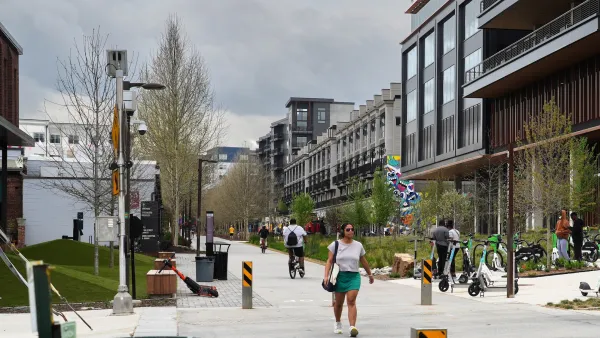
Atlanta's Beltline hits 79% of its affordable housing goal
The walking, biking, and transit corridor set a goal to create 5,600 affordable housing units in the area by 2030.
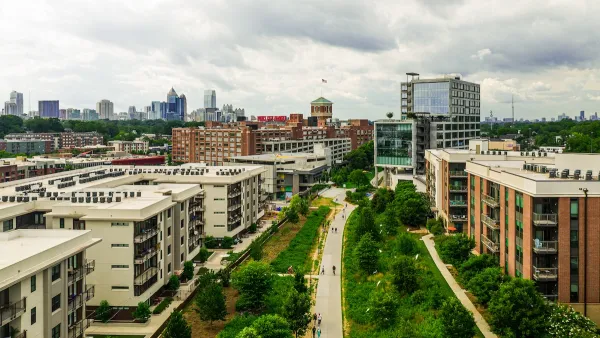
Beltline Surpasses Annual Affordable Housing Goal
The Atlanta Beltline agency is actively working to prevent the displacement of longtime residents along the trail system, where property values are rising rapidly.

Planetizen Federal Action Tracker
A weekly monitor of how Trump’s orders and actions are impacting planners and planning in America.

Amtrak, CN end decades-long dispute with eight-year agreement
The new operating agreement establishes an updated framework for the companies to work together, including processes to resolve disputes.

Judges permit Denver to divert 77,000 acre feet from the Colorado River for reservoir expansion
Overuse and climate change have caused the Colorado River’s water levels to plummet.

NYC DOT wants faster, more permanent street upgrades
The city is examining ways to build more concrete infrastructure without getting entangled in 'decades-long' projects.

'Something we’ve never seen before:' rising utility rates could strain city finances nationwide
Data centers, climate change and other factors have caused utility rates in the United States to increase by 38% since 2020.

Trump to overrule local leaders, lease millions of acres of America’s Pacific Island territories’ seafloors to mining companies
International law says that the Indigenous people of America’s territories have a right to prior and informed consent regarding projects that impact their countries.

FREE Course: Walkable City 1: Why Walkability?
After describing his path towards focusing on walkability as the essence of good planning, Jeff Speck marches through his five principal reasons for making more walkable places.
Reinventing Malls: Planning Alchemy—Turning Gray Fields Into Gold
The course focuses on the opportunities and imperatives that shape reinvention of mall sites.

Harvard University Graduate School of Design
KFH Group Inc.
Greater Baltimore Committee
The Architects Foundation
University of Cincinnati Online
The Pocatello Development Authority
The Urban Renewal Agency of the City of Pocatello