The federal government should play a larger role in lending money to local governments for transit projects, and not just spending money, according to this oped.


Citing the example of Los Angeles County increasing its sales taxes to create a fund for transportation project, authors Gloria Ohland and Denny Zane argue that the federal government should try harder to allow these sorts of innovative tax funds to secure low-income loans.
"The idea of mobilizing local voters to create local revenue streams that can be used to secure low-interest federal loans has tremendous appeal nationally as a way to finance infrastructure projects like those President Obama talked about in his State of the Union address. The goal is to accelerate the growth of jobs and the economy, significantly reduce construction costs by negotiating contracts now, and keep us competitive with China, India and other countries that are making dramatic investments in upgrading infrastructure. Happily, investments in public transportation would also accelerate environmental and cost-of-living benefits.
The key is that local voters are far more likely to pass a tax or other measures to fund infrastructure investment - as Los Angeles voters did in 2008 when they approved the Measure R by a two-thirds vote, even in the midst of a howling recession - than Congress is likely to find new revenues for infrastructure."
Read the full story: Gloria Ohland: Feds should be a lender, not just a spender
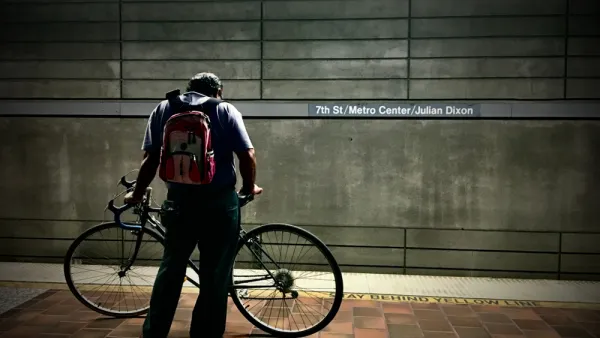
Scooter Revenue, Empty Streets Allow for Quick Construction of Bike Lane in L.A.
A busy corridor, popular with bike and scooter riders, is gaining a new protected bike lane in Los Angeles.
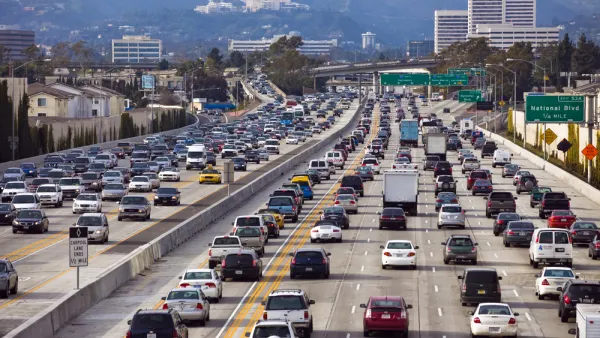
Congestion Pricing Marks the End of an Era
A New York Times article marks the historic significance of congestion pricing—gone are the days of treating roads like they're free while ignoring their costs.
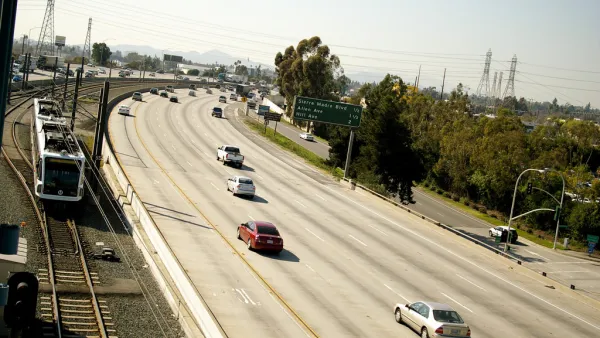
Congestion Pricing in Los Angeles?
The city of Los Angeles is looking for ways to close a $26.2 billion funding gap for its plan to complete 28 transportation projects by the 2028 Summer Olympics.

Desperate measures: Advocates weigh draining Lake Powell to fill Colorado River
Draining the reservoir could reduce evaporation losses by a couple hundred thousand acre-feet.

Eastern Nebraska is running out of electricity
Data centers and electrification are straining eastern Nebraska’s grid, throttling economic development.

Malls are becoming the midtowns of the future
Mall and office park redevelopments are a generational opportunity to create new nodes of urbanity.

NYC breaks ground on anti-flooding infrastructure project
New York City's new system will reduce stormwater flows to local sewers by 90%.

One Kentucky town’s secret to affordable housing
The Smoketown Community Land Trust has already built seven affordable homes for community members.

Houston gains petal-shaped cooling infrastructure to make streets more ‘delightful’
The city has installed the pavilions along 15 blocks in Houston.

FREE Course: Walkable City 1: Why Walkability?
After describing his path towards focusing on walkability as the essence of good planning, Jeff Speck marches through his five principal reasons for making more walkable places.
Reinventing Malls: Planning Alchemy—Turning Gray Fields Into Gold
The course focuses on the opportunities and imperatives that shape reinvention of mall sites.

City of Rosemead
Rutgers University, Edward J. Bloustein School of Planning and Public Policy
One Hundred Miles
University of Michigan School for Environment and Sustainability (SEAS)
Hunter College, City University of New York (CUNY)
The Architects Foundation
City of Cambridge
Montrose County
The Pocatello Development Authority