In his new book "Triumph of The City," Glaeser gives high regard to high-density urbanism and the city but criticizes planners and historic preservationists for over-regulation in land use planning.


Lydia DePillis says that Glaeser scrutinizes historic preservation boards and unnecessary zoning regulations for obstructing growth and believes some powers should be diminished.
She sees that "Glaeser tends toward the assumption that complicated regulations are necessarily anti-urban. But just like good schools, low crime, and affordable housing, designing with the public realm in mind-which developers are warming to, but don't necessarily always do on their own-makes cities a viable alternative to the suburbs for all those folks who'd otherwise be carbon bigfoots. And that, as I understand it, is the whole point of Glaeser's book."
Read the full story: What Does Ed Glaeser Have Against Planning?

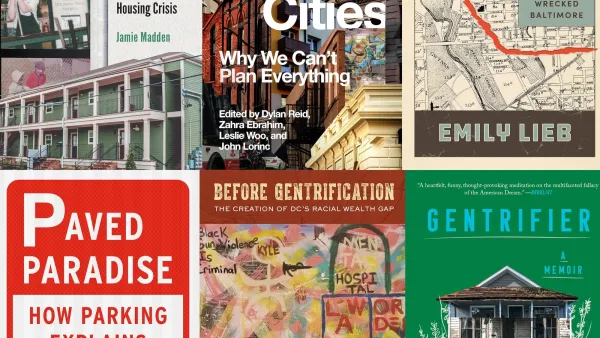
10 great urban planning summer reads
Wherever you're going (or staying) this summer, here are some suggestions for books to bring along.
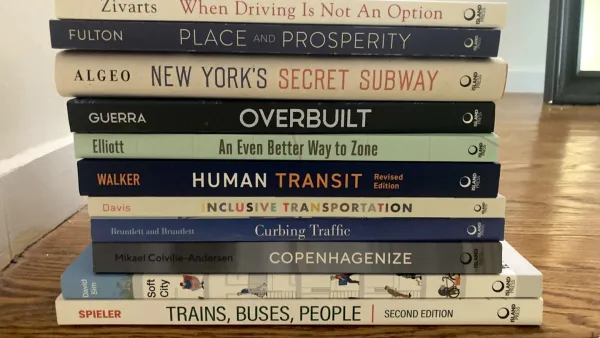
Publishing for Planners: A New Era for Island Press
As the legendary legacy publisher transitions into a new life phase, publisher Heather Boyer and senior editor Stacy Eisenstark reflect on the past and the future of creating books for planners.

Planetizen’s Top Urban Planning Books of 2024
Top of mind in 2024 were the far-reaching impacts of climate displacement, zoning as a solution to the housing crisis, and the potential for safer roads and better public transit in American cities.

Planetizen Federal Action Tracker
A weekly monitor of how Trump’s orders and actions are impacting planners and planning in America.

Amtrak, CN end decades-long dispute with eight-year agreement
The new operating agreement establishes an updated framework for the companies to work together, including processes to resolve disputes.

Judges permit Denver to divert 77,000 acre feet from the Colorado River for reservoir expansion
Overuse and climate change have caused the Colorado River’s water levels to plummet.

NYC DOT wants faster, more permanent street upgrades
The city is examining ways to build more concrete infrastructure without getting entangled in 'decades-long' projects.

'Something we’ve never seen before:' rising utility rates could strain city finances nationwide
Data centers, climate change and other factors have caused utility rates in the United States to increase by 38% since 2020.

Trump to overrule local leaders, lease millions of acres of America’s Pacific Island territories’ seafloors to mining companies
International law says that the Indigenous people of America’s territories have a right to prior and informed consent regarding projects that impact their countries.

FREE Course: Walkable City 1: Why Walkability?
After describing his path towards focusing on walkability as the essence of good planning, Jeff Speck marches through his five principal reasons for making more walkable places.
Reinventing Malls: Planning Alchemy—Turning Gray Fields Into Gold
The course focuses on the opportunities and imperatives that shape reinvention of mall sites.

Harvard University Graduate School of Design
KFH Group Inc.
Greater Baltimore Committee
The Architects Foundation
University of Cincinnati Online
The Pocatello Development Authority
The Urban Renewal Agency of the City of Pocatello