The Urban Land Institute recently awarded Campus Martius Park in Detroit the 2010 Urban Open Space Award for helping to rejuvenate the historic city center.


Since the park opened in late 2004 as a part of Detroit 300, a group celebrating the city's 300th anniversary, investments of around $500 million have poured into the area surrounding the urban park, including two high-rise office buildings and several residential developments and restaurants.
Bill McGraw contends:
"Urban parks can return focus to a downtown. To develop a vision, Detroit 300 turned to the Project for Public Spaces (PPS), a New York City–based nonprofit organization that emphasizes a place-making process drawing on extensive consultations with a wide variety of local people rather than professional planners. PPS, Gregory, and a task force also examined successful urban spaces from New York City to London and came up with a list of 25 must-have features, including year-round activity, a water focus, a café, gardens, stages, and an emphasis on showing off the best of Detroit culture. "
FULL STORY: http://urbanland.uli.org/Articles/2011/Jan/McGrawCampus

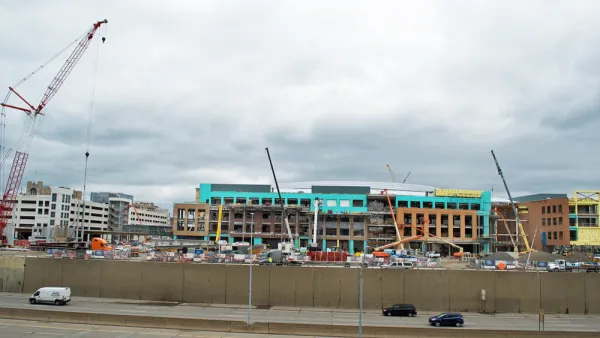
Saying No to Surface Parking in Downtown Detroit
Multiple proposals to demolish downtown buildings and put up surface parking lots are meeting resistance.
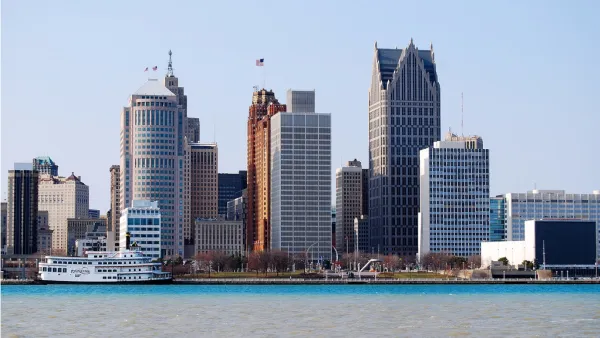
Dan Gilbert's Detroit Buying Spree Continues
The Quicken Loans founder and real estate mogul now controls 78 downtown properties. His investment choices can set the tone for life in what used to be an abandoned city center.
Reviving Struggling Urban Areas with Parks
Three cities -- St. Louis, Houston and Detroit -- have gained new urban parks that are playing big roles in reviving parts of town.

Planetizen Federal Action Tracker
A weekly monitor of how Trump’s orders and actions are impacting planners and planning in America.

The state-sanctioned urbicide of Austin
People don’t kill cities. Freeways do.

US to reduce Colorado River water deliveries to Mexico
A new Colorado Treaty amendment reduces Mexico’s Colorado River water allocation by 250,000 acre feet.

5 New England states march closer to 800 megawatt wind energy project
Securing federal approval for the project may be complicated under the Trump administration, which has historically been hostile towards domestic wind power.

Baltimore to break ground on $50 million Transit Priority Project
The project will bring faster bus trips, safer streets and better bike connections to Baltimore.

Airbnb launches $250 million 'last-dollar financing' housing accelerator, makes first investment in Austin
The company will put $6.4 million towards affordable housing development in Texas’ capital.

FREE Course: Walkable City 1: Why Walkability?
After describing his path towards focusing on walkability as the essence of good planning, Jeff Speck marches through his five principal reasons for making more walkable places.
Reinventing Malls: Planning Alchemy—Turning Gray Fields Into Gold
The course focuses on the opportunities and imperatives that shape reinvention of mall sites.

Eagle County Government
Harvard University Graduate School of Design
Nashville Planning Department
The Architects Foundation
University of Cincinnati Online
The Pocatello Development Authority
The Urban Renewal Agency of the City of Pocatello
Journal of the American Planning Association