Three cities -- St. Louis, Houston and Detroit -- have gained new urban parks that are playing big roles in reviving parts of town.


"In cities such as St. Louis, Houston and Detroit - all victims of disinvestment in the 1960s and '70s - new parks are charged with spurring development and creating downtowns that are places to live, not just work. It's a role previously assigned to the '80s-era performing arts center and the '90s-era downtown sports venue. Thanks to parks' across-the-board appeal, wide diversity of uses and heavy programming, though, they may be the piece that ultimately completes the puzzle.
For visitors, these new downtown parks offer more than tantalizing glimmers of hope and welcome rays of sunshine. In St. Louis, world-class sculpture is the standout; in Detroit, a varied slate of live entertainment keeps things hopping; and in Houston, boccie courts and model boat racing offer a perfect afternoon of family fun."
This piece from The Washington Post profiles the three parks and their impacts on the cities.
Read the full story: City parks, bringing urban centers back to life

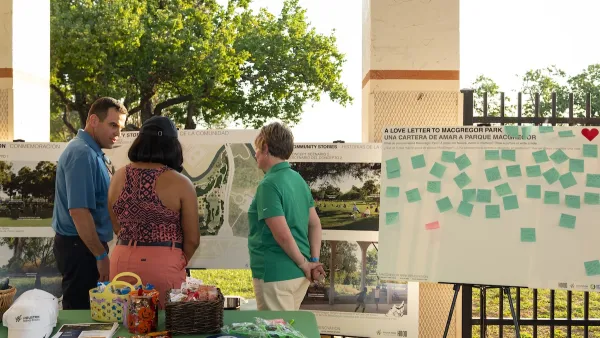
Public and Private Collaboration Advances Park Development in Houston
Houston may be known to some as a concrete jungle, but its greenspaces continue to expand thanks to combined support from the public, private, and philanthropic sectors.
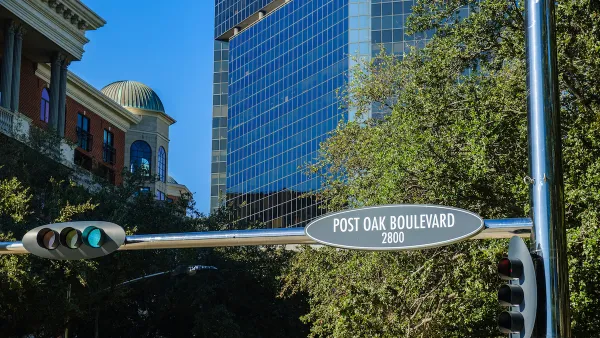
Houston Awarded $18.5M for Trail Linking Uptown and Memorial Park
The grant will make the freeway-bounded park more accessible to pedestrians and cyclists.
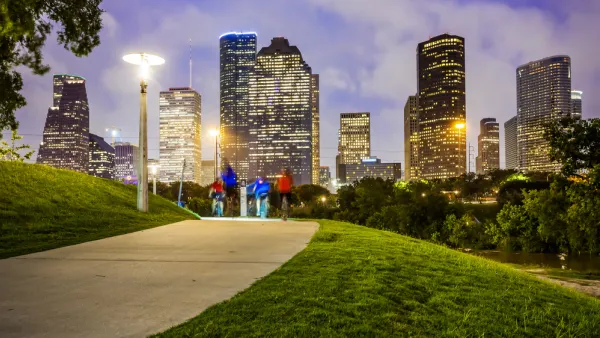
Houston Residents Want to Build Pocket Parks on City-Owned Lots
In a park-poor neighborhood, vacant lots provide an untapped opportunity for small-scale parks.

Planetizen Federal Action Tracker
A weekly monitor of how Trump’s orders and actions are impacting planners and planning in America.

‘Going backwards:’ Baltimore mayor, students rally against state's transit funding plan
Maryland's proposed six-year plan provides no funding for Baltimore’s BMORE bus program and reduces its road maintenance funding.
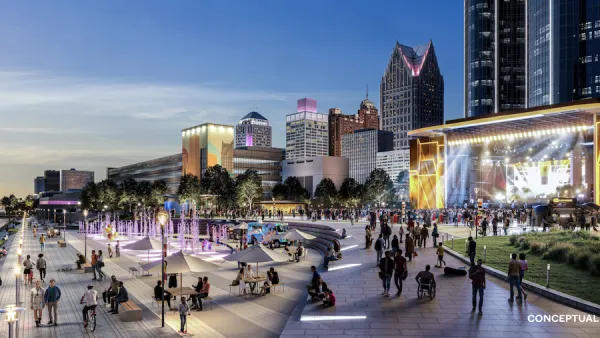
Detroit to transform waterfront with $2.2 billion investment
Developers will convert about 18 acres of unused parking lot space into civic spaces.

$2 trillion in economic growth may hide in ‘micropolitan communities’
Small cities hold 39% of America’s population, but receive only 10% of U.S. venture capital investment.

'I can't live in this:' Mississippi town besieged by power plant noise
A plant powering Elon Musk’s xAI data centers is subjecting Southaven, Mississippi residents to ceaseless noise.

Battered from federal attacks, Louisiana's offshore wind industry refuses to give up
State Representative Joe Orgeron expressed hope that the state could revitalize its wind industry once President Trump leaves office.

FREE Course: Walkable City 1: Why Walkability?
After describing his path towards focusing on walkability as the essence of good planning, Jeff Speck marches through his five principal reasons for making more walkable places.
Reinventing Malls: Planning Alchemy—Turning Gray Fields Into Gold
The course focuses on the opportunities and imperatives that shape reinvention of mall sites.

One Hundred Miles
County of Mendocino
planning NEXT
The Architects Foundation
University of Cincinnati Online
Montrose County
Northern Illinois Transit Authority (NITA)
The Pocatello Development Authority