Three years ago, Boulder grabbed international attention when it announced plans to construct a "smart grid" of high tech tools to help cut its electricity consumption. But that project has gone way over budget.


Despite the project racking up huge costs, city leaders are still pushing it forward, arguing that as early adopters of a new idea they had to expect some hurdles.
"Xcel spent $44.8 million on SmartGridCity, a whopping three times what the utility had planned to spend alone. Xcel argues that the pilot project - which relied in part on donations from corporate partners to cover a total budget of $100 million - was the best way to get answers on how to roll out smart grid more widely. 'Somebody has to go out first, and get a bloody nose on it. That's the bleeding edge of technology,' says Ken Wilson, Boulder's deputy mayor who is also a smart-grid consultant.
Getting the smart grid right is hugely important, not just for Boulder but for cities everywhere. The concept of the smart grid is to use information technology, such as sensors and digital meters, to help cities mitigate the strain of rising energy use. In theory, the smart grid allows utilities and consumers to make smarter choices about power usage."
FULL STORY: For Electricity 2.0, a Short Circuit in Boulder

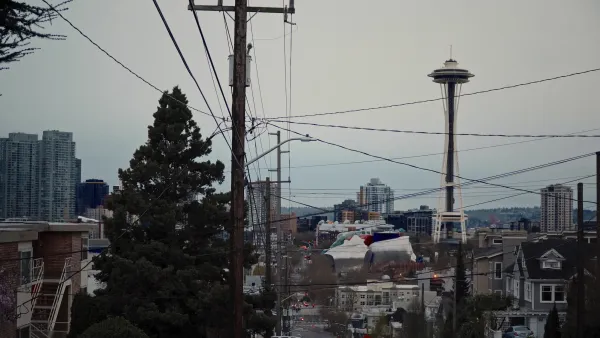
Seattle Density Increase Stymied by Underground Power Line Requirement
A new policy that requires buildings with four or more units to bury their electrical lines is making housing development more costly and causing months-long delays.
Using Machine Learning to Optimize Utility Management
Discover how machine learning optimizes city utility management for enhanced efficiency and reduced operational costs.

Texas Grid Holds Up to Freezing Temperatures
Efforts made to prepare the state’s infrastructure for winter storms after 2021’s disastrous freeze are paying off.

Planetizen Federal Action Tracker
A weekly monitor of how Trump’s orders and actions are impacting planners and planning in America.

The state-sanctioned urbicide of Austin
People don’t kill cities. Freeways do.

US to reduce Colorado River water deliveries to Mexico
A new Colorado Treaty amendment reduces Mexico’s Colorado River water allocation by 250,000 acre feet.

Mamdani overhauls NYC's Vision Zero plan with 100 new policy goals
The overhaul aims to reduce traffic deaths and make streets safer for pedestrians, cyclists and drivers through lower speed limits, new safety infrastructure and more.

Amtrak not solely to blame for New Jersey commuter rail's unreliability, report finds
A new study from the Garden State Initiative found that NJ Transit’s budget grew 20% across a 4 year period, but reliability declined significantly over the same period.

EPA erases limits on planet-warming pollution from power plants
Under Monday’s plan, power plants would still have some limits on how much mercury, arsenic and other contaminants they can emit.

FREE Course: Walkable City 1: Why Walkability?
After describing his path towards focusing on walkability as the essence of good planning, Jeff Speck marches through his five principal reasons for making more walkable places.
Reinventing Malls: Planning Alchemy—Turning Gray Fields Into Gold
The course focuses on the opportunities and imperatives that shape reinvention of mall sites.

Eagle County Government
Harvard University Graduate School of Design
Nashville Planning Department
The Architects Foundation
University of Cincinnati Online
The Pocatello Development Authority
The Urban Renewal Agency of the City of Pocatello
Journal of the American Planning Association