The decline in housing prices during the Great Depression of the thirties peaked at a average loss of 25.9%. In November of last year, the current decline ticked past that landmark to hit 26%.


While signs are still looking up for the economic climate as a whole, housing prices failed to stabilize or grow at the end of 2010, according to Zillow.
The San Jose Mercury News reports that November "marked the 53rd consecutive month of home value declines, with the Zillow Home Value Index (ZHVI) falling 0.8% from October to November, and falling 5.1% year-over-year."
But Jonathan Berr at the 24/7 Wall Street blog says Zillow's data smells fishy:
"For one thing, the Zillow Home Value Index describes itself as 'the Mid-point of Zestimate valuations for the US.' The Zestimate, for the uninitiated, is 'Zillow's estimated market value, computed using a proprietary formula. It is not an appraisal. It is a starting point in determining a home's value.'"
Read the full story: Home value declines surpass those of Great Depression

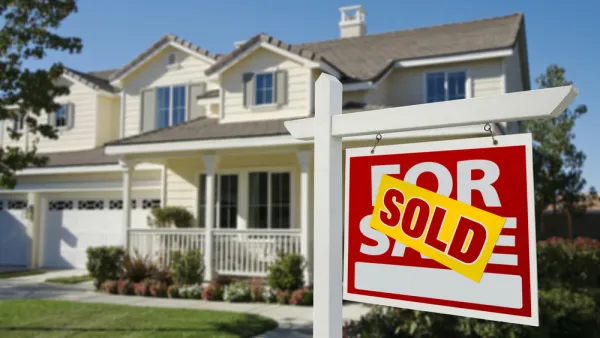
Home Prices Expected to Hit a Coronavirus Speed Bump in 2020
A report by Zillow predicts a sudden reversal for the housing market, which has been soaring in many places around the country ever since the worst of the financial crisis and housing market crash of the Great Recession.
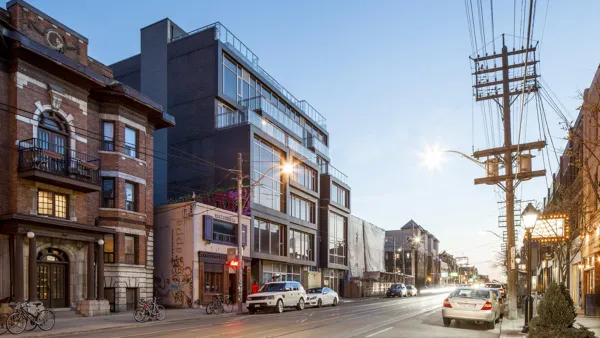
Zillow: Suburbs Becoming More Like Cities
According to the real estate website, urban home values are growing faster than those in the suburbs, bucking a longtime trend. This isn't exactly surprising, but it has serious social justice implications.
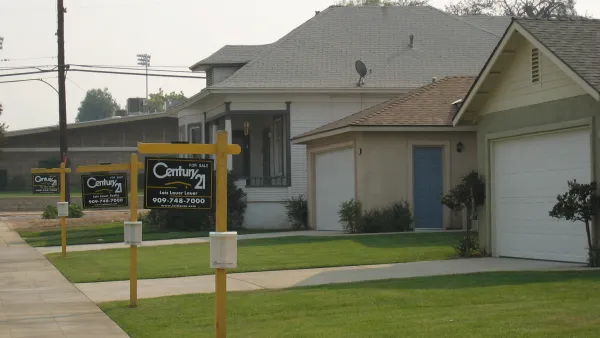
The ‘Lock-In Effect’ Keeping Home Prices High
Housing prices dropped slightly last year, but first-time and middle-income buyers found little price relief due to the “lock-in effect” of the historically low interest rates in effect for more than a decade prior to 2022.

Planetizen Federal Action Tracker
A weekly monitor of how Trump’s orders and actions are impacting planners and planning in America.

Amtrak, CN end decades-long dispute with eight-year agreement
The new operating agreement establishes an updated framework for the companies to work together, including processes to resolve disputes.

Judges permit Denver to divert 77,000 acre feet from the Colorado River for reservoir expansion
Overuse and climate change have caused the Colorado River’s water levels to plummet.

NYC DOT wants faster, more permanent street upgrades
The city is examining ways to build more concrete infrastructure without getting entangled in 'decades-long' projects.

'Something we’ve never seen before:' rising utility rates could strain city finances nationwide
Data centers, climate change and other factors have caused utility rates in the United States to increase by 38% since 2020.

Trump to overrule local leaders, lease millions of acres of America’s Pacific Island territories’ seafloors to mining companies
International law says that the Indigenous people of America’s territories have a right to prior and informed consent regarding projects that impact their countries.

FREE Course: Walkable City 1: Why Walkability?
After describing his path towards focusing on walkability as the essence of good planning, Jeff Speck marches through his five principal reasons for making more walkable places.
Reinventing Malls: Planning Alchemy—Turning Gray Fields Into Gold
The course focuses on the opportunities and imperatives that shape reinvention of mall sites.

KFH Group Inc.
Greater Baltimore Committee
Eagle County Government
The Architects Foundation
University of Cincinnati Online
The Pocatello Development Authority
The Urban Renewal Agency of the City of Pocatello