By charging drivers for each mile they travel, rather than a fixed amount, pay-as-you-drive insurance could cut driving by eight percent nationally, or more than eleven percent in New York State, says a Brookings Institution report.


According to Noah Kazis at Streetsblog, the NY DOT is "...looking for information about what barriers currently stand in the way of pay-as-you-drive in New York, what it would take to make a program successful, and different ways the data might be collected."
Kazis explains, "The idea is simple. Right now, most car insurance policies cost the same whether you drive 500 miles in a year or 50,000. While some of the costs of car-ownership change based on how you drive, like fuel or maintenance, insurance doesn't. If insurance premiums rose with every mile you drove, it would be one more incentive for drivers to keep the mileage down."
Thanks to Noah Kazis
Read the full story: DOT Pursues Pay-As-You-Drive Insurance, Which Could Cut Traffic

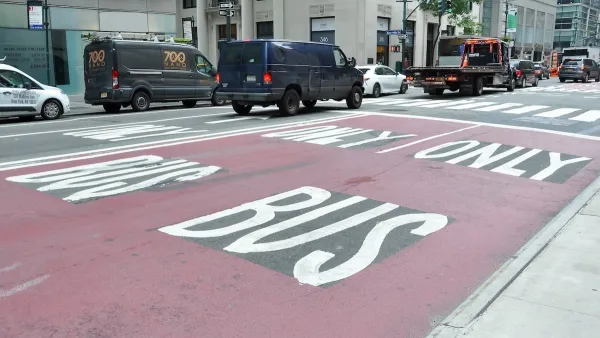
NYC DOT wants faster, more permanent street upgrades
The city is examining ways to build more concrete infrastructure without getting entangled in 'decades-long' projects.

Community feedback ushers in changes to NYC’s Park Avenue redesign
New aspects of the design include a two-way bike lane and separate paths for cyclists and pedestrians.
NYC DOT Podcast Makes Transportation Planning Accessible
‘Curb Enthusiasm’ features transportation experts and discussions on local, national, and global transportation planning topics.

Planetizen Federal Action Tracker
A weekly monitor of how Trump’s orders and actions are impacting planners and planning in America.

Amtrak, CN end decades-long dispute with eight-year agreement
The new operating agreement establishes an updated framework for the companies to work together, including processes to resolve disputes.

Judges permit Denver to divert 77,000 acre feet from the Colorado River for reservoir expansion
Overuse and climate change have caused the Colorado River’s water levels to plummet.

Idaho may see an 18% drop in federal surface transit funding — the largest estimated cut in the US
Transit systems in rural communities are much more reliant on federal funding to provide their services.

How ‘post-disaster gentrification’ alters neighborhoods after natural calamities
After hurricanes, fires or other calamities, the original residents of a community are often replaced by younger, wealthier residents.

Maryland local governments examine if they should have more power to raise property taxes
Maryland’s housing market is out of reach for the majority of moderate-income residents.

FREE Course: Walkable City 1: Why Walkability?
After describing his path towards focusing on walkability as the essence of good planning, Jeff Speck marches through his five principal reasons for making more walkable places.
Reinventing Malls: Planning Alchemy—Turning Gray Fields Into Gold
The course focuses on the opportunities and imperatives that shape reinvention of mall sites.

Harvard University Graduate School of Design
KFH Group Inc.
Greater Baltimore Committee
The Architects Foundation
University of Cincinnati Online
The Pocatello Development Authority
The Urban Renewal Agency of the City of Pocatello