National Geographic tackles the controversial issue of population growth, and the sustainability of a growing population. Should we worry about maxing out the planet? Not necessarily, according to Nat. Geo.


Author Robert Kunzig takes an expansive view of the topic, from the burden of overpopulation in India to the strain of too many retirees in the Netherlands. He concludes that the answer to the question of "How many people can the world support?" is basically unknowable:
"For centuries population pessimists have hurled apocalyptic warnings at the congenital optimists, who believe in their bones that humanity will find ways to cope and even improve its lot. History, on the whole, has so far favored the optimists, but history is no certain guide to the future. Neither is science. It cannot predict the outcome of People v. Planet, because all the facts of the case-how many of us there will be and how we will live-depend on choices we have yet to make and ideas we have yet to have."
Read the full story: Population 7 Billion

Is the built environment partly to blame for population decline?
The way communities are designed could be contributing to lower birth rates.
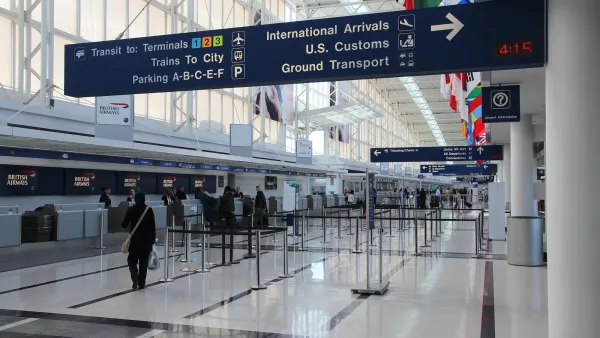
US Population Growth Slowest Since 2020 Due to Declining Immigration
Net international migration dropped from 2.7 million to 1.3 million in the year spanning July 2024 to July 2025.
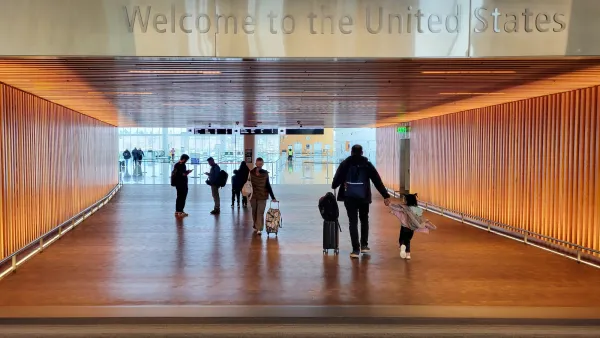
Adult Immigration to the US Dropped by Over 1.4M in 2025
Mass deportations and stricter immigration restrictions are causing a drop in new immigrants.

Planetizen Federal Action Tracker
A weekly monitor of how Trump’s orders and actions are impacting planners and planning in America.

California plans to bury El Niño’s downpour
If the state plays its cards right, it may be able to store a billion acre-feet of El Niño’s water in aquifers.

Desperate measures: Advocates weigh draining Lake Powell to fill Colorado River
Draining the reservoir could reduce evaporation losses by a couple hundred thousand acre-feet.

US buildings threatened, destroyed by fires set to triple by 2060
Researchers found a high fire risk for socioeconomically vulnerable neighborhoods in the American West.

LA residents may be allowed to paint their own crosswalks
Councilwoman Katy Yaroslavsky put out a motion instructing the Los Angeles Department of Public Transportation to study the feasibility of allowing volunteers to paint crosswalks.

Dallas moves to overhaul its zoning code
The city's zoning reform will allow more multi-family and mixed-use developments.

FREE Course: Walkable City 1: Why Walkability?
After describing his path towards focusing on walkability as the essence of good planning, Jeff Speck marches through his five principal reasons for making more walkable places.
Reinventing Malls: Planning Alchemy—Turning Gray Fields Into Gold
The course focuses on the opportunities and imperatives that shape reinvention of mall sites.

City of Rosemead
Rutgers University, Edward J. Bloustein School of Planning and Public Policy
One Hundred Miles
Hunter College, City University of New York (CUNY)
The Architects Foundation
University of Cincinnati Online
City of Cambridge
Montrose County
The Pocatello Development Authority