When an Apple Store wanted to move into the Georgetown neighborhood in D.C., the Design Review Board pushed for a more fitting facade. After a backlash from residents eager for an Apple, the trademark building went in. Is Georgetown better off?


Edward T. McMahon, a senior resident fellow at the Urban Land Institute, thinks not. He says that the Apple Store is an example of a pervasive sameness of the landscape that is erasing the differences between American cities and towns:
"Over the past 40 years America's commercial landscape has progressed from unique to uniform, from the stylized to the standardized."
"To foster a sense of place, communities must plan for built environments and settlement patterns that are uplifting and memorable -- and that create a special feeling of belonging and stewardship by residents."
Read the full story: The Place Making Dividend

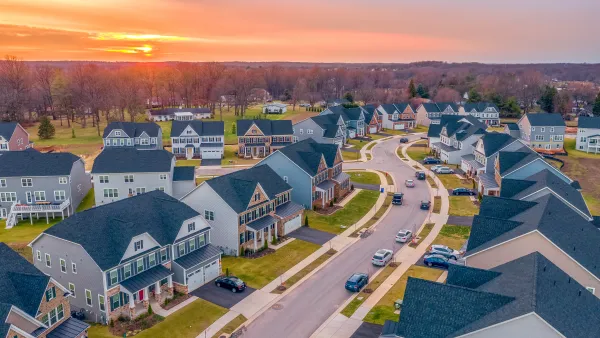
Remote Work and the Shift to Suburbia
Is the growth of working from home turning America into a ‘suburban nation?’

Homeownership—American Dream or Nightmare?
Owning a home has long been considered the ultimate aspiration. But social and economic realities mean the stories about and the path to homeownership are not simple and straightforward.
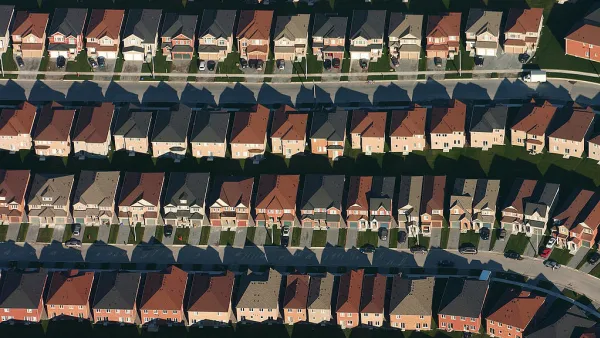
Opinion: The Old Visions of Suburbia Are an Anachronism
Low-density suburbs are on their way out, and the suburbs of the future will better address the present-day needs of the people living in them.

Planetizen Federal Action Tracker
A weekly monitor of how Trump’s orders and actions are impacting planners and planning in America.

Amtrak, CN end decades-long dispute with eight-year agreement
The new operating agreement establishes an updated framework for the companies to work together, including processes to resolve disputes.
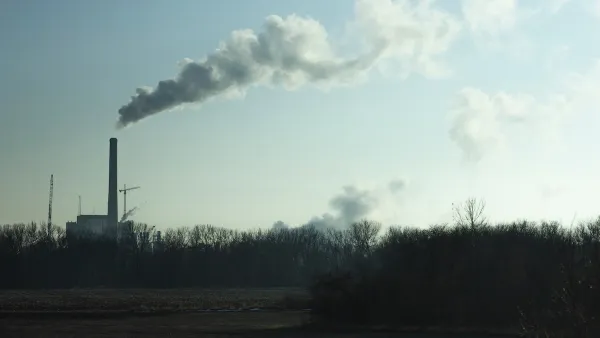
Nation's most wind-powered state turns to coal as data centers increase energy demand
For the first time in decades, Iowa has increased its generation of coal power.

Alabama scores up to $2.5 billion federal loan for largest infrastructure project in state’s history
The Mobile River Bridge and Bayway Project aims to ease congestion at Alabama’s worst bottleneck.

Trump is considering data centers on 6 states' public land — some state officials say they had no idea
If the administration approves the proposed projects, data center and data center-related developments will cover 17,600 acres of public land.

Despite court ruling, Trump is keeping nearly all wind projects in the US on hold
At least 110 wind energy projects have not heard from the government since a federal judge ruled that the Trump administration's freeze on wind turbine clearances was likely illegal.

FREE Course: Walkable City 1: Why Walkability?
After describing his path towards focusing on walkability as the essence of good planning, Jeff Speck marches through his five principal reasons for making more walkable places.
Reinventing Malls: Planning Alchemy—Turning Gray Fields Into Gold
The course focuses on the opportunities and imperatives that shape reinvention of mall sites.

KFH Group Inc.
Greater Baltimore Committee
Eagle County Government
The Architects Foundation
University of Cincinnati Online
The Pocatello Development Authority
The Urban Renewal Agency of the City of Pocatello