New York City presents three options for transforming the six-lane Brooklyn-Queens Expressway by covering it with vegetation and making streetscape improvements.


The designs, by Starr Whitehouse Landscape Architects, respond to community concerns about pollution and noise from traffic as well as bicycle and pedestrian safety. Residents in the Brooklyn neighborhoods of Carroll Gardens, Cobble Hill and Columbia Street Waterfront, where the project would be built, also expressed desire for a greener streetscape.
Brandon Klayko says that cost is a major consideration in the proposals. The baseline scheme would cost $10.7 to 18.7 million, while the "dream scheme" has a pricetag of up to $82.7 million.
Klayko writes: "Three proposed designs offer increasing levels of complexity and ambition with an eye toward construction and financial feasibility. It remains to be seen what proposed intervention will actually be implemented, but nearly any change to this urban sore can be seen as an improvement."
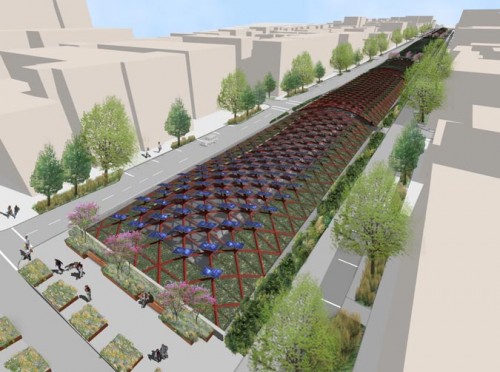
Read the full story: Envisioning a Green Future for the BQE

A $1.7 Billion Highway Project Looms in Brooklyn
The Brooklyn-Queens Expressway (BQE) is built atop of crumbling series of bridges. The city is expected to go in high gear on construction on Brooklyn's only interstate highway by the beginning of the next decade.
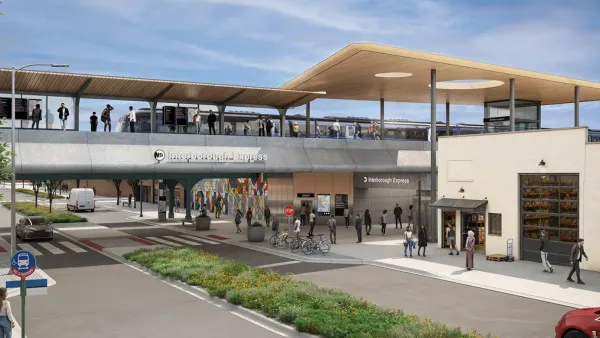
NYC releases new renderings for $5.5 billion Interborough Express
The slated stations will have a modern look, enhanced lighting and improved audio announcements.
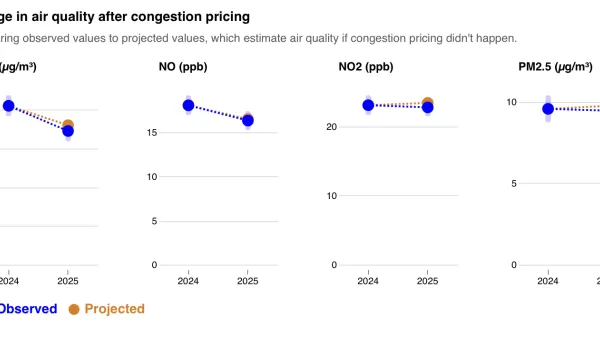
First study of NYC congestion zone’s air quality impact shows improvements
The study also examined air quality around freeways which experts worried would see increased traffic from people avoiding the tolls.

Planetizen Federal Action Tracker
A weekly monitor of how Trump’s orders and actions are impacting planners and planning in America.

Amtrak, CN end decades-long dispute with eight-year agreement
The new operating agreement establishes an updated framework for the companies to work together, including processes to resolve disputes.

Northwest rail fans eager for Sept. 30 debut of Amtrak’s Airo fleet
Get ready for that new train smell and more seats. But they won’t go faster or run more frequently on the Cascades route in Washington and Oregon.

Atlanta City Council unanimously backs $3.5 billion Beltline light rail project
The resolution was drafted after Atlanta Mayor Andre Dickens pulled support for the Atlanta Streetcar extension last year.

SEPTA to bring nearby frequent transit to over 1 million new riders as part of decade-long plan
The agency's Accelerate plan will also bring frequent transit to twice the amount of jobs that are currently located near it.

NYC plants over 18,000 trees, the most new foliage in a decade
Many of the trees were planted in communities vulnerable to extreme heat.

FREE Course: Walkable City 1: Why Walkability?
After describing his path towards focusing on walkability as the essence of good planning, Jeff Speck marches through his five principal reasons for making more walkable places.
Reinventing Malls: Planning Alchemy—Turning Gray Fields Into Gold
The course focuses on the opportunities and imperatives that shape reinvention of mall sites.

City of Thousand Oaks
City of Wisconsin Rapids
Harvard University Graduate School of Design
The Architects Foundation
University of Cincinnati Online
The Pocatello Development Authority
The Urban Renewal Agency of the City of Pocatello